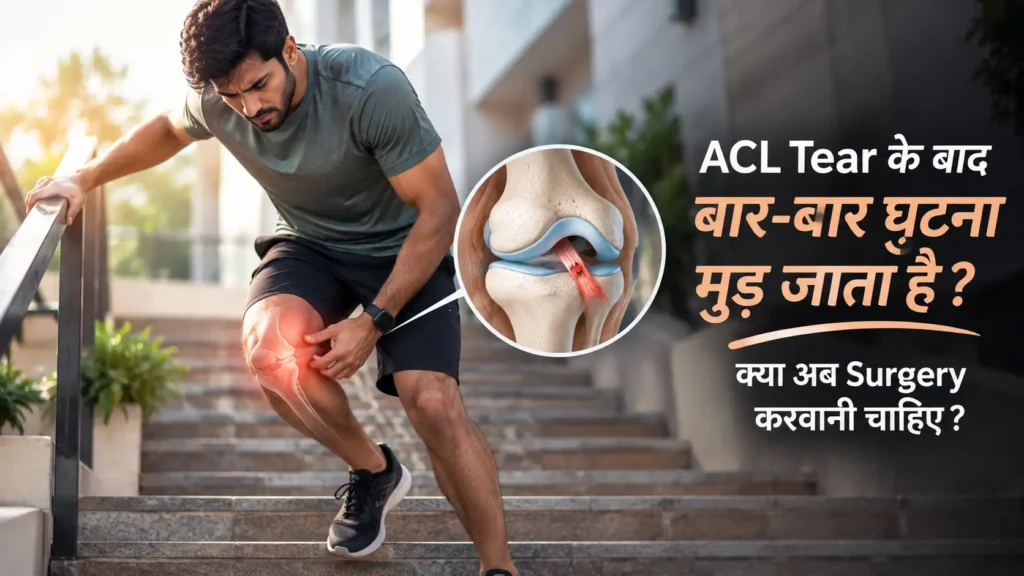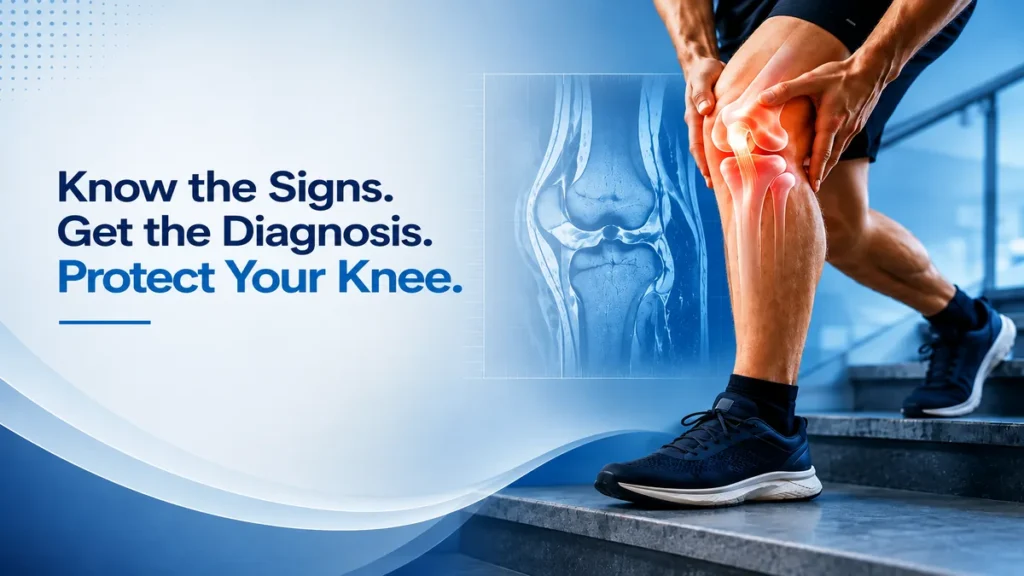
Think of your knee joint like a door hinge. When you walk on flat ground, that hinge opens and closes gently. But when you climb stairs? That same hinge now has to lift a heavy weight every single time it moves. That is exactly why knee pain while climbing stairs hits so much harder than regular walking. Your knee is doing way more work on stairs – and if something is even slightly off inside the joint, stairs will expose it first.
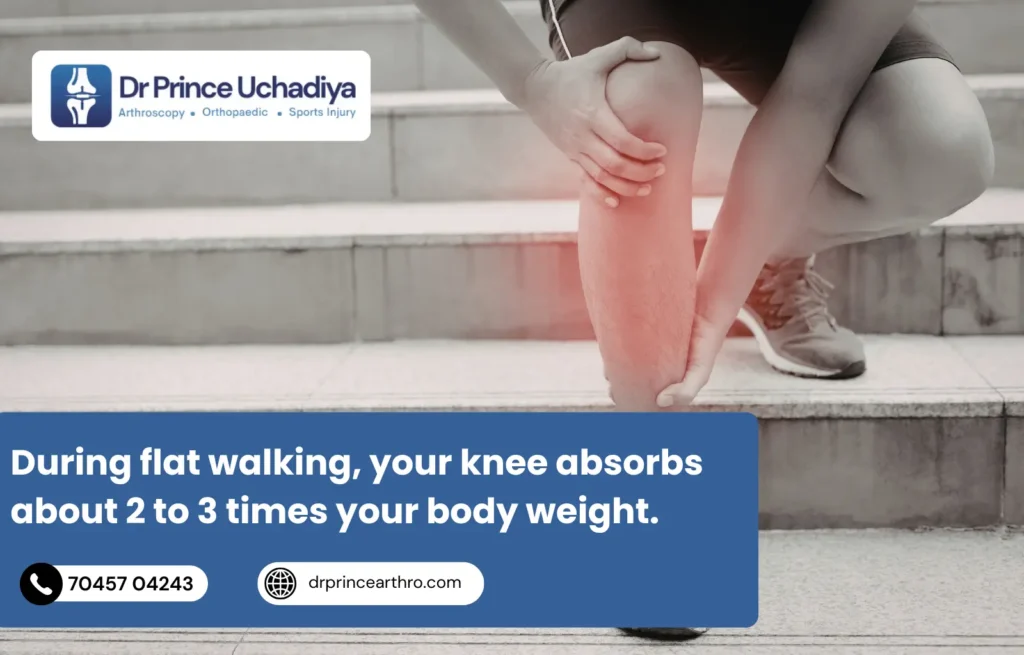
Here is the number that surprises most people. During flat walking, your knee absorbs about 2 to 3 times your body weight. On stairs, that force jumps to 4 to 6 times your body weight. So if you weigh 70 kg, your knee is handling roughly 280 to 420 kg of force with every single step on a staircase. No wonder it hurts.
As orthopedic researchers put it: “The patellofemoral joint reaction force is one-half of body weight during normal walking, increasing up to over three times body weight during stair climbing.” That is just the force behind your kneecap alone. Add the load on the rest of the joint, and you can see why stairs are the ultimate stress test for your knees.
What Actually Happens Inside Your Knee on Stairs
When you step up a stair, your knee bends much deeper than it does during walking. This deeper bend – around 60 to 90 degrees of flexion – does three things that flat walking does not:
- Pushes your kneecap harder against the thigh bone. The deeper the bend, the tighter the kneecap presses into its groove. If the cartilage behind the kneecap is worn or the kneecap tracks off-center, this pressure creates pain instantly.
- Forces your quadriceps to work overtime. Your thigh muscles have to generate enough power to lift your entire body weight upward. Weak quads mean the knee joint itself absorbs the load instead of the muscles. That is a recipe for pain.
- Compresses already damaged cartilage. If you have any cartilage thinning or early arthritis, the increased compression during stair climbing squeezes those damaged surfaces together harder than any other daily activity.
Think of it like a sponge. A healthy sponge compresses and bounces back. A dried-out, worn sponge crumbles under the same pressure. That worn sponge is what cartilage looks like in an arthritic knee – and stairs apply maximum squeeze to it.
5 Conditions That Cause Knee Pain While Climbing Stairs
Stair pain is a symptom, not a diagnosis. Here are the 5 most common conditions behind it:
1. Patellofemoral Pain Syndrome (Runner’s Knee)
The most common culprit. Your kneecap does not slide smoothly in its groove because of muscle imbalances, poor alignment, or overuse. The result? A dull, aching pain right around or behind the kneecap that gets worse on stairs, squatting, and sitting for long periods.
- Pain is usually in the front of the knee
- Worse going down stairs (the kneecap absorbs even more force during descent)
- Common in women, runners, and people with weak hip muscles
2. Osteoarthritis (Cartilage Wear and Tear)
The cartilage that cushions your knee has worn down over years. Bones start grinding closer together. Stairs make this worse because of the massive force multiplier we talked about. According to Mayo Clinic’s osteoarthritis guidelines, pain that worsens with activity and improves with rest is the hallmark of this condition.
- Gradual onset, gets worse over months
- Morning stiffness that fades within 30 minutes
- Grinding or crunching sensation during movement
- Most common after age 45-50
3. Patellar Tendonitis (Jumper’s Knee)
The tendon connecting your kneecap to your shinbone gets inflamed. Every stair step pulls on that irritated tendon. The pain is sharp and pinpoint – usually just below the kneecap.
- Common in athletes and people who suddenly increase activity
- Sharp pain right below the kneecap
- Worse with jumping, running, and stair climbing
4. Meniscus Tears
The meniscus is a C-shaped cartilage disc that acts as a shock absorber between your thigh bone and shin bone. When it tears, the knee loses its cushioning. Stairs load the joint heavily in exactly the position where meniscus tears hurt the most.
- Pain along the side of the knee (inner or outer)
- Catching, clicking, or locking sensation
- Knee Swelling that comes and goes
5. Weak Quadriceps and Hip Muscles
This is the one most people overlook. Your thigh muscles and hip stabilizers are supposed to do the heavy lifting on stairs. When these muscles are weak, your knee joint takes the hit directly. As Cleveland Clinic’s physical therapy team puts it: “Inactivity makes knee osteoarthritis worse. Motion is lotion.”
- No specific injury but knees hurt on stairs anyway
- Common in people with desk jobs or sedentary lifestyles
- Improves significantly with targeted strengthening exercises
Going Up vs Going Down – Why the Pain Feels Different
Patients often ask: “Why do my knees hurt more going down stairs than going up?” Good question. The reason is biomechanical.
- Going UP: Your muscles generate force to lift you. The quadriceps contract concentrically (they shorten). The load is heavy but controlled.
- Going DOWN: Your muscles have to act as brakes. The quadriceps contract eccentrically (they lengthen under load). This braking action pushes your kneecap even harder against the thigh bone. That is why descending stairs often hurts more than climbing them.
Analogy: Going up stairs is like pressing the gas pedal – your muscles do the work. Going down is like pressing the brake on a steep hill – more stress, more heat, more strain on the mechanism.
When to See a Doctor for Knee Pain on Stairs
Not every stair ache needs a doctor visit. But these signs mean you should get it checked:
- Pain that lasts more than 2 weeks without improvement
- Swelling that does not go down with rest and ice
- Knee locking, catching, or giving way
- Pain that wakes you up at night
- Difficulty bearing weight on the affected leg
- Visible deformity or change in knee shape
If you are in Indore and dealing with persistent knee pain on stairs, getting a proper knee pain evaluation from an orthopedic specialist is the smart first step. Early diagnosis means more treatment options and better outcomes.
5 Things You Can Do Right Now to Reduce Knee Pain on Stairs
- Strengthen your quadriceps. Straight leg raises, wall squats, and terminal knee extensions build the muscles that protect your kneecap. Strong quads absorb the stair load so your joint does not have to. Check out these knee rehab exercises for a practical routine.
- Lose excess weight. Every kilo you lose takes about 4 kg of pressure off your knee on stairs. Even a 5 kg loss makes a noticeable difference. Obesity and knee pain are directly connected – this is not optional advice, it is the most effective free treatment available.
- Use the handrail. Seriously. Holding a handrail takes roughly 15-20% of the load off your knees. That is a significant reduction for zero effort.
- Lead with the right leg. Going up, lead with your stronger (less painful) leg. Going down, lead with the weaker (painful) leg. This simple trick reduces the workload on the affected knee.
- Ice after stair heavy days. Apply ice for 15-20 minutes after days with a lot of stair use. This reduces inflammation and prevents pain from building up overnight.