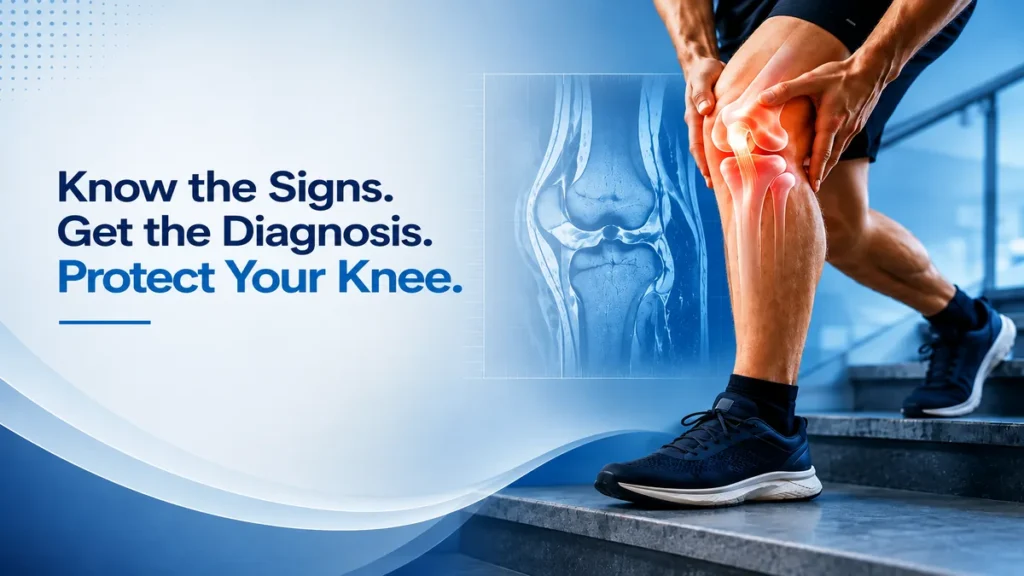
Let me tell you about Ramesh. He is 52, runs a small garment shop near Rajwada, and one morning he woke up to find his right knee looking like a balloon. No fall. No injury. No cricket match the day before. Just a knee that had quietly filled with fluid overnight. He ignored it for a week, popped some painkillers, wrapped it with a cloth, and kept working. By the time he finally walked into an orthopedic clinic, his knee had swollen so badly that he could barely bend it past 30 degrees.
Ramesh’s story is not unusual. It plays out in homes across Indore every single day. People notice a swollen knee, assume it is “just water,” try some home jugaad, and only seek proper knee swelling treatment in Indore when the problem has already become serious.
This article is for every Ramesh out there. If your knee is swollen right now – or if it keeps swelling up and settling down like a pattern you cannot figure out – this is the guide that explains what is actually happening inside your joint and what to do about it.
Why Does a Knee Swell? The Real Story Behind That Puffy Joint
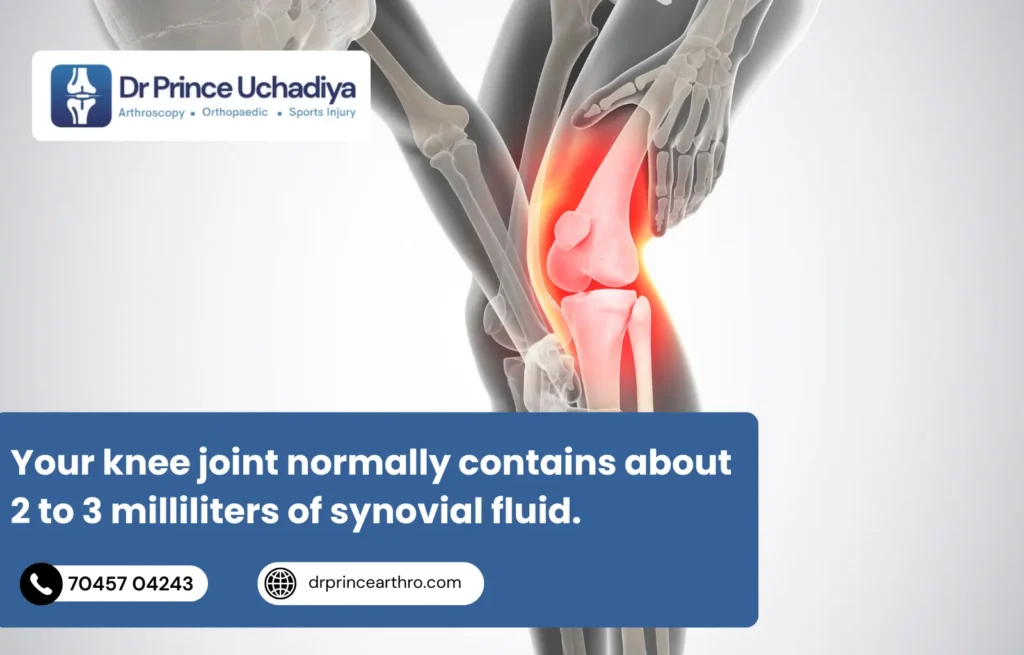
Your knee joint normally contains about 2 to 3 milliliters of synovial fluid. Think of this fluid as the oil in your car engine – it keeps everything moving smoothly. When something goes wrong inside the joint, your body’s alarm system kicks in and floods the area with extra fluid. That flood is what you see as swelling.
But here is the thing most people get wrong: knee swelling is never the problem itself. It is always a signal that something deeper is going on.
The extra fluid is your body’s fire truck arriving at the scene. The real question is – what started the fire? Here are the most common causes of knee joint swelling:
Injury-Related Swelling (Comes On Fast)
- Ligament tears (ACL, MCL): The knee swells dramatically within hours of injury. Often happens during sports, sudden twists, or falls.
- Meniscus tears: The C-shaped cartilage cushion rips, and fluid builds up over 24-48 hours. You might feel clicking or locking along with the knee inflammation.
- Fractures around the knee: Bone breaks near the joint cause rapid, painful swelling. This is an emergency.
- Knee swelling after injury from a fall, road accident, or sports collision needs immediate evaluation – do not try to “walk it off.”
Non-Injury Swelling (Creeps Up Gradually)
- Osteoarthritis: Years of cartilage wear triggers chronic knee inflammation. The knee may swell after activity and settle with rest. This is the most common cause of arthritis knee swelling in patients over 45 in Indore.
- Rheumatoid arthritis: An autoimmune condition where your body attacks its own joint lining. Both knees often swell together, with morning stiffness lasting over an hour.
- Gout: Sudden, intense swelling with redness and extreme tenderness – often striking at night. Caused by uric acid crystal deposits in the joint.
- Bursitis: The small fluid-filled sacs (bursae) around your knee get irritated from repetitive kneeling or pressure. Common in people who sit cross-legged for long hours or do floor-based work.
- Baker’s cyst: A fluid-filled pocket that forms behind the knee, often linked to arthritis or meniscus problems. Feels like a tight lump at the back of your knee.
- Infection (septic arthritis): The most dangerous cause. The knee becomes hot, red, extremely painful, and you may have fever. This is a medical emergency requiring urgent knee swelling treatment in Indore – delay can cause permanent joint damage.
The Kitchen Sink Mistake – Why Random Home Remedies Do Not Work for Every Swollen Knee
Here is where most people go wrong. They Google “reduce knee swelling fast,” find a list of 10 home remedies, and try all of them at once like throwing everything at the wall to see what sticks.
The truth? A swollen knee from arthritis needs a completely different approach than a swollen knee from a ligament tear. And a swollen knee from gout needs something entirely different from both. That is why seeing a swollen knee doctor in Indore who can diagnose the actual cause matters more than any home remedy.
That said, there is one approach that works as a safe starting point for almost every type of knee swelling. Doctors call it RICE.
The RICE Protocol – Your Immediate First Response to a Swollen Knee
Before you see a doctor, before you panic, before you start wrapping your knee in turmeric paste – do this:
- Rest: Stop doing whatever aggravated your knee. No walking through pain. No “let me just finish this one task.” Sit down. Take the load off.
- Ice: Wrap ice cubes in a thin towel (never directly on skin) and apply to the swollen knee for 15 minutes on, 15 minutes off. Repeat every 2-4 hours for the first 48 hours. Ice slows down the flood of inflammatory fluid.
- Compression: Wrap a crepe bandage or elastic knee sleeve snugly around the knee. Not tight enough to cut circulation – just enough to gently squeeze the swelling down. If your foot or toes start tingling, loosen it.
- Elevation: Prop your leg up on 2-3 pillows so your knee sits above heart level. Gravity helps drain the excess fluid away from the joint. Do this while icing for maximum effect.
According to Cleveland Clinic’s swollen knee treatment guidelines, the RICE method is the recommended first response for most causes of knee effusion. It is simple, it is safe, and it buys you time while you arrange a proper evaluation.
What Happens When You Visit a Doctor for Knee Swelling Treatment in Indore
Let us go back to Ramesh for a moment. When he finally saw an orthopedic doctor for swollen knee evaluation, here is what the examination looked like:
Step 1 – The detective work. The doctor asked detailed questions. When did the swelling start? Was there an injury? Does it come and go? Is it worse in the morning or evening? Any fever or redness? Any family history of arthritis or gout?
Step 2 – The physical exam. The doctor checked for warmth, redness, fluid movement (a test called the “patellar tap”), range of motion, and stability of the ligaments. He compared both knees side by side.
Step 3 – Imaging. An X-ray showed narrowed joint space, confirming osteoarthritis. No fractures, no bone damage.
Step 4 – Fluid analysis (if needed). In some cases, the doctor uses a needle to draw out a sample of knee fluid. This is called arthrocentesis or knee fluid removal. The fluid is tested for infection, blood, uric acid crystals (gout), or inflammatory markers. This test alone can pinpoint the exact cause of swelling. As Mayo Clinic explains, removing fluid also immediately reduces pressure and pain in the joint.
Ramesh’s diagnosis? Moderate osteoarthritis with a reactive knee effusion triggered by a long day of standing at his shop. Not an emergency – but not something to ignore either.
Treatment Options That an Orthopedic Doctor in Indore Will Actually Recommend
Once the cause is identified, knee swelling treatment in Indore follows a step-by-step approach. Your doctor will not jump to surgery. Here is the typical treatment ladder:
For Mild to Moderate Swelling (Most Patients)
- RICE protocol at home for immediate relief
- NSAIDs (ibuprofen, naproxen) to reduce knee inflammation from the inside out – short-term use under supervision
- Physiotherapy to strengthen the muscles around the knee so the joint does not bear all the load. Strong quads and hamstrings act like natural knee braces. Here are some proven knee rehab exercises that help.
- Weight management: Extra weight is one of the biggest drivers of chronic knee swelling. Every kilogram lost takes about 4 kilograms of pressure off your knee. Obesity and knee problems are deeply connected – this is not generic advice, it is one of the most effective long-term treatments available.
For Persistent or Recurring Swelling
- Corticosteroid injections: A powerful anti-inflammatory medication injected directly into the joint. Provides relief within days and can last weeks to months. Used sparingly – maximum 3-4 times per year.
- Hyaluronic acid injections: Restores lubrication inside the joint, reducing friction and swelling. Especially useful for water on the knee caused by osteoarthritis.
- Arthrocentesis (joint aspiration): Draining the excess fluid with a needle. This is both diagnostic and therapeutic – it relieves pressure instantly and the fluid sample helps confirm the diagnosis.
For Severe or Structural Problems
- Arthroscopic surgery: A keyhole procedure to repair meniscus tears, remove loose cartilage fragments, or clean out inflamed tissue causing recurrent knee effusion
- Knee replacement: Only when arthritis has destroyed the joint beyond repair and all other treatments have failed. This is never the first option.
If you are dealing with persistent swelling and are not sure where to start, getting a proper knee pain and swelling evaluation in Indore from a qualified knee pain and swelling specialist is the smartest move you can make.
5 Red Flags – When a Swollen Knee Needs Emergency Care
Most knee swelling is not dangerous. But some situations need urgent attention. Get to a hospital or orthopedic doctor for swollen knee evaluation immediately if you notice:
- The knee is hot, red, and extremely tender – could signal joint infection (septic arthritis). Delay can destroy the joint permanently.
- You have fever along with knee swelling – infection inside the joint until proven otherwise.
- You cannot bear any weight on the affected leg – possible fracture or complete ligament tear.
- The knee locks, catches, or gives way – meniscus tear or loose body inside the joint.
- Swelling appeared after major trauma (car accident, fall from height, sports collision) – needs imaging to rule out fractures and ligament damage.