Someone told you that you need surgery on your knee, shoulder, or hip. Maybe the doctor said it quickly at the end of a busy OPD. Maybe you walked in with an MRI and walked out with a surgical recommendation before you had a chance to ask all your questions. Now you are sitting at home wondering whether the surgery is genuinely necessary, whether you have been told the whole picture, and whether there is anything else you can try first.
That hesitation is worth listening to. Getting an orthopedic second opinion in Indore before committing to joint surgery is not disloyal to your doctor. It is one of the most medically sound decisions you can make. Research published in the National Library of Medicine on orthopaedic treatment outcomes consistently shows that a significant proportion of patients who seek a second opinion receive a modified or different treatment recommendation. Independent orthopaedic review platforms estimate that approximately 30% of recommended surgeries can be avoided when the diagnosis is thoroughly and independently re-evaluated.
This article explains when an orthopedic second opinion is genuinely warranted, what red flags should push you toward one before you agree to any procedure, what the second opinion process looks like in Indore, and how patients from across Madhya Pradesh access this service at Dr. Prince Orthopaedic and Joint Care Clinic without pressure, without obligation, and with complete clinical honesty.
Why Second Opinions in Orthopaedics Are Not Just Acceptable, They Are Encouraged
In a general medicine setting, a second opinion is sometimes seen as challenging the doctor’s authority. In orthopaedic surgery, it is standard practice among the most reputable surgeons in the world. The reason is straightforward: orthopaedic diagnoses involve a considerable degree of clinical judgment. Two experienced surgeons can review the same MRI and reach genuinely different conclusions about whether the finding requires surgery, physiotherapy, an injection, or simply time and rehabilitation.
According to the American Academy of Orthopaedic Surgeons, many orthopaedic conditions that are referred for surgery can be successfully managed with structured non-surgical programmes when properly evaluated. The AAOS position is unambiguous: patients are encouraged to seek second opinions before proceeding with any elective orthopaedic procedure.
A study published in a leading orthopaedic journal, as cited by DrBadia.com’s analysis of second opinion outcomes, found that second opinions in orthopaedics lead to a different or refined treatment approach in up to 40% of cases. This is not because the first doctor was incompetent. It is because complex joint conditions sit in a grey zone where the correct treatment genuinely depends on the patient’s age, activity level, lifestyle, expectations, and pain threshold, and a 15-minute OPD consultation rarely captures all of those variables.
7 Situations Where You Must Get an Orthopedic Second Opinion Before Surgery
Not every situation requires a second opinion. If you have a clear fracture, a complete ACL tear on MRI with confirmed instability on examination, or a joint that is bone-on-bone with documented failure of conservative treatment over months, the surgical recommendation is almost certainly correct. But there are specific situations where proceeding without a second review carries real risk.
1. Surgery Was Recommended After a Single Short Consultation
A thorough orthopaedic evaluation for a complex condition should include a detailed clinical history, physical examination of the joint and adjacent structures, review of imaging with the patient present, and a discussion of all treatment options including non-surgical ones. If a surgical recommendation followed a consultation of under 15 minutes, or if the doctor primarily looked at your MRI report rather than examining you in person, the evaluation may not have been sufficiently complete to justify a surgical decision.
2. Conservative Treatment Was Never Properly Tried
For the majority of orthopaedic conditions, guidelines recommend a trial of structured non-surgical treatment before considering surgery. This includes physiotherapy, activity modification, anti-inflammatory medication, and in some cases corticosteroid or hyaluronic acid injections. The AAOS guidelines on meniscus tears state clearly that many tears, particularly degenerative ones in patients over 40, improve significantly with physiotherapy alone. If you were recommended surgery without having completed a supervised physiotherapy programme, a second opinion will almost always explore the non-surgical route first.
3. Your MRI Report Was Read Aloud to You But Not Actually Reviewed With You
There is a meaningful difference between a surgeon quoting findings from an MRI report and a surgeon sitting with you in front of your actual scans, pointing to the specific structure involved, explaining what it means clinically, and relating it to your symptoms and examination findings. An MRI report written by a radiologist who has never examined you can overstate or understate the clinical significance of a finding. Many degenerative meniscal changes visible on MRI in people over 45, for example, are incidental findings that do not require surgery. A second orthopaedic opinion involves reviewing your actual imaging, not just the report.
4. You Were Recommended a Major Joint Replacement for a Relatively Young Age
Knee and hip replacements are reliable procedures for the right patient at the right time. But a patient in their 40s or early 50s who is recommended joint replacement without having explored all arthroscopic options, cartilage repair techniques, osteotomy (bone realignment), or robotic-assisted partial replacement warrants a second opinion. Implant longevity is finite, and a replacement done too early creates the real probability of a revision surgery later, which is significantly more complex.
5. Only One Surgical Option Was Presented
Modern orthopaedic surgery offers a range of approaches for most joint problems. ACL reconstruction can be performed with different graft choices. Meniscal tears can be treated with repair or partial removal depending on the tear pattern. Shoulder instability can be addressed with several arthroscopic techniques. If you were presented with one option and told it was the only path, a second opinion may reveal alternatives better suited to your specific anatomy, age, and activity goals.
6. The Surgeon Does Not Specialise in the Joint or Procedure Being Recommended
In India, general orthopaedic surgeons often perform procedures across all joint types. A surgeon who primarily does fracture management and joint replacements may have limited arthroscopy volume. A surgeon who primarily does spine procedures may have limited experience with shoulder instability repair. The technical complexity of arthroscopic and joint procedures means that specialisation matters enormously for outcomes. If the surgeon who recommended your knee arthroscopy or shoulder repair does not perform these procedures at high volume, a second opinion from a fellowship-trained specialist is warranted.
7. You Feel Uncertain, Pressured, or Unheard
This one matters even if it sounds subjective. Surgery is a significant physical and financial commitment. A patient who feels genuinely uncertain about the necessity of a procedure, who feels they were not given adequate time to ask questions, or who left the consultation with more anxiety than clarity has every right to seek an independent assessment. That feeling is not ingratitude. It is instinct operating correctly in a high-stakes situation.
Common Orthopedic Conditions Where Second Opinions Frequently Change the Plan
Based on the pattern of patients who seek second opinions at Dr. Prince Orthopaedic and Joint Care Clinic in Nipania, Indore, these are the conditions where a fresh clinical review most often results in a different or modified recommendation:
Knee Arthroscopy for Degenerative Meniscal Tears
A degenerative meniscal tear in a patient over 40 is an extremely common MRI finding. In many cases, it is also an incidental one: the tear was there before the knee started hurting, and the pain is actually driven by early arthritis rather than the meniscal finding. A population-based cohort study published in PMC (National Center for Biotechnology Information) found that arthroscopy and MRI are frequently overused in degenerative knee conditions, with many procedures providing no clinically meaningful benefit over structured physiotherapy. A second opinion in these cases very often results in a physiotherapy-first recommendation rather than immediate surgery.
Total Knee Replacement for Grade 2 or Early Grade 3 Arthritis
Knee replacement is appropriate for advanced, Grade 4 arthritis with documented functional disability and failure of all non-surgical treatment. It is frequently not appropriate for Grade 2 or early Grade 3 arthritis in patients under 65. Yet this recommendation is made in Indian clinical practice more often than orthopaedic guidelines support. Patients who receive a knee replacement recommendation without having completed a supervised physiotherapy, injection, and weight management programme consistently benefit from a second specialist review.
Rotator Cuff Tear Surgery
Partial thickness rotator cuff tears in patients over 50 are common. Many are asymptomatic or can be significantly improved with physiotherapy targeting the surrounding rotator cuff muscles. Surgery for a partial tear that has not been through a structured 3-month physiotherapy programme is rarely the optimal first step. Full thickness tears with documented weakness and failed conservative treatment are a different matter. The distinction requires a careful second clinical assessment, not just a reading of the MRI.
Spinal Surgery Recommendations for Disc Prolapse
This is one of the most over-recommended surgeries in India. The natural history of most disc prolapses is significant spontaneous improvement within 6 to 12 weeks without surgery. The exceptions, such as progressive neurological deficit or cauda equina syndrome, are genuine surgical emergencies. For everything else, a second orthopaedic opinion before agreeing to spinal surgery should be considered mandatory rather than optional.
ACL Reconstruction in Older or Sedentary Patients
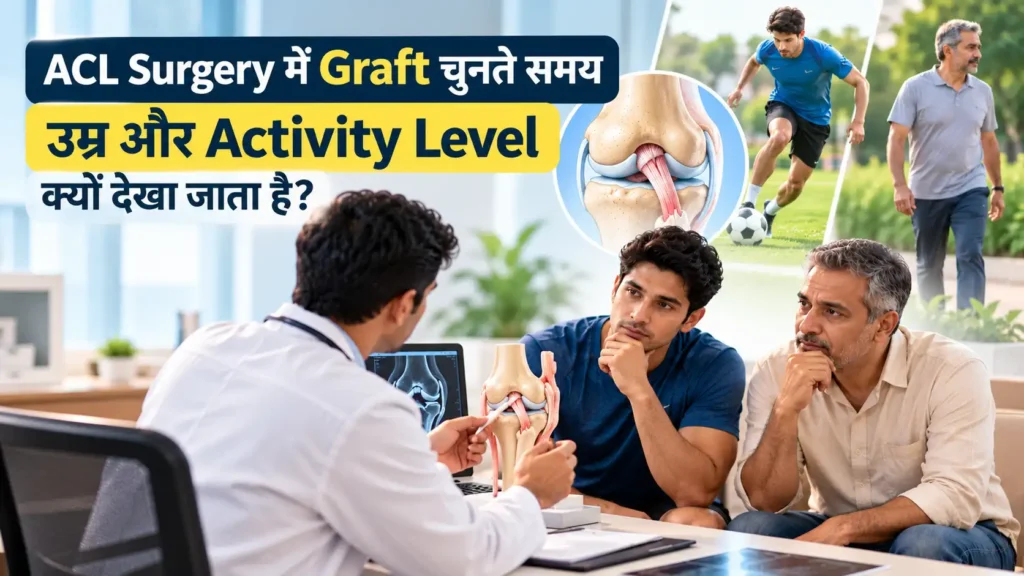
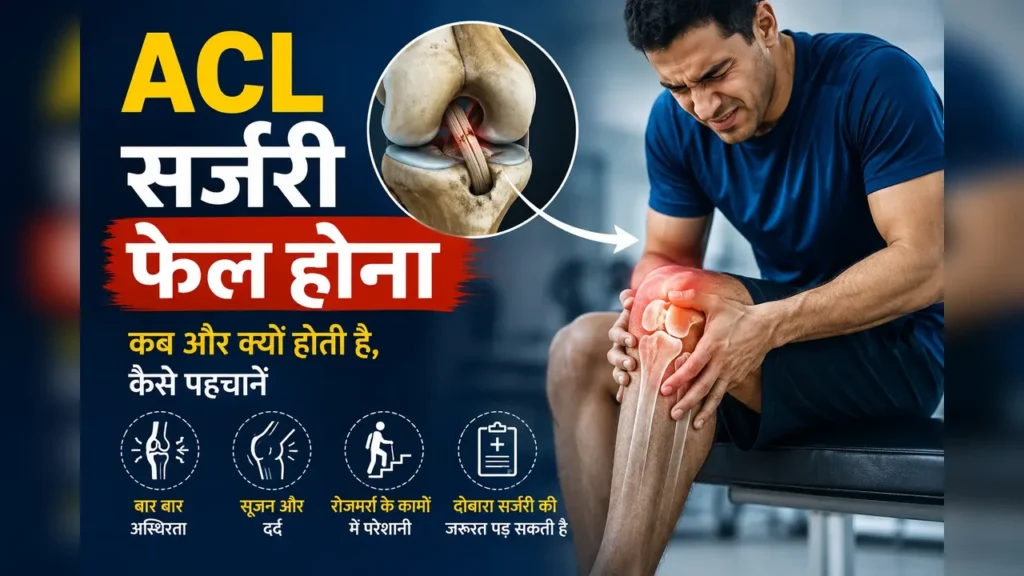
ACL reconstruction is the correct treatment for young, active patients who want to return to cutting and pivoting sports. It is not necessarily the correct treatment for a 55-year-old with a complete ACL tear who plays no competitive sports and has a stable knee on examination. The AAOS ACL treatment guidelines clearly state that non-surgical management is appropriate for older, less active individuals. A second opinion will explore whether rehabilitation alone can give you the stability and function you need.
What a Second Opinion Consultation at Dr. Prince Orthopaedic and Joint Care Clinic Looks Like
A second opinion consultation at Dr. Prince Orthopaedic and Joint Care Clinic, Nipania, Indore is structured specifically to give patients a complete, independent clinical assessment without any pressure toward a particular outcome.
What to bring:
- All imaging: X-rays, MRI films or digital copies, CT scans if done
- MRI report and any radiology reports from previous investigations
- Reports from previous consultations and any treatment prescriptions you have received
- A written list of your symptoms: when they started, what makes them worse, what makes them better, and how they affect your daily activities
What happens in the consultation:
- Full clinical history: Dr. Prince takes a detailed history of the onset, progression, and nature of your symptoms. Your activity level, occupation, and expectations are factored into the assessment from the beginning.
- Physical examination: Every relevant orthopaedic clinical test for your joint is performed. The examination is not replaced by the MRI. It informs how the MRI findings are interpreted.
- Direct imaging review: Dr. Prince reviews your actual scans, not just the radiology report. He will show you the specific finding on the image, explain what it means clinically, and tell you whether it relates to your symptoms or is an incidental finding.
- Clear treatment pathway discussion: You receive a frank assessment of whether surgery is necessary, whether it is optional, or whether non-surgical treatment should be tried first. All options are explained with their realistic timelines, expected outcomes, and risks.
- No obligation: The second opinion consultation carries no expectation that you will proceed with surgery at this clinic. Many patients use the consultation to confirm their original surgeon’s recommendation and proceed there with greater confidence. That outcome is equally valid.
“A second opinion is not about proving anyone wrong. It is about making sure the right patient gets the right surgery at the right time, and that the patients who do not need surgery know that clearly before they commit to a procedure they cannot undo. I see this as one of the most important consultations we do.”
Dr. Prince Uchadiya, DNB Orthopaedics Gold Medalist, Dr. Prince Orthopaedic and Joint Care Clinic, Indore
What Happens When the Second Opinion Differs From the First
Patients often worry about what it means if two doctors give different recommendations. It is worth understanding why this happens and how to navigate it without panic.
Different recommendations most commonly occur for one of these reasons:
- The second examination reveals a clinical finding the first examination missed or under-weighted
- The imaging is being interpreted differently: one doctor sees a surgically significant finding, the other sees a degenerative change that does not require intervention
- The two doctors use different thresholds for when non-surgical treatment has been adequately tried
- The surgeons have different subspecialty training, and what one considers their routine procedure is not within the other’s frequent practice
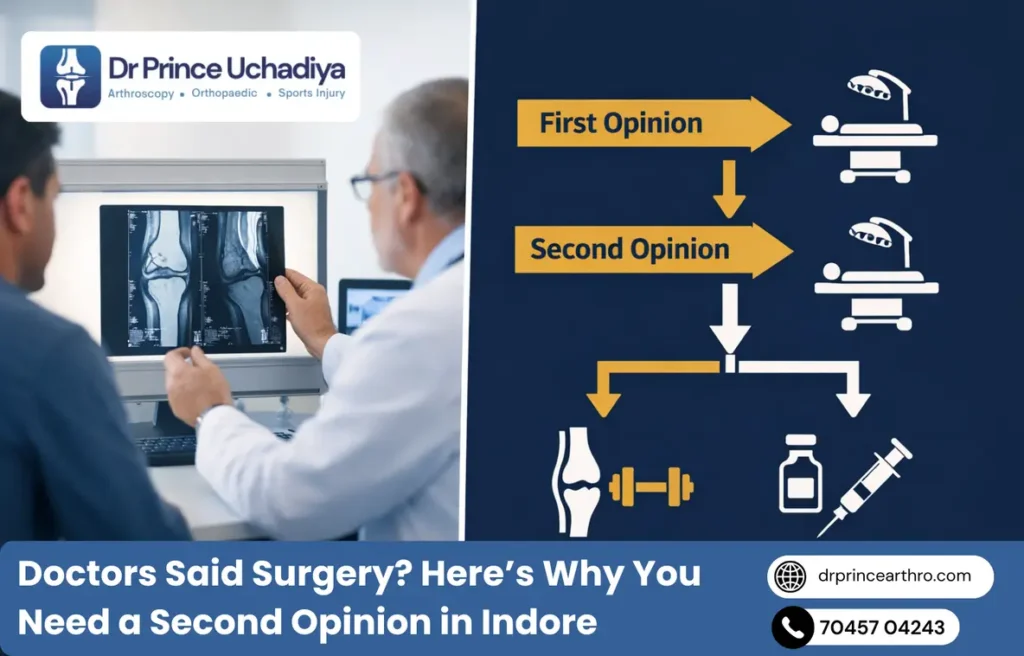
When two opinions differ significantly, there are three reasonable paths. First, ask both doctors to explain the specific basis for their recommendation, and listen for which explanation is more specific to your imaging, examination findings, and clinical history. Second, ask whether a third opinion would add value, particularly from a surgeon who subspecialises in exactly your condition. Third, start with the less invasive option: if one doctor says surgery and the other says physiotherapy, a supervised 8-week physiotherapy trial costs relatively little and gives you real clinical data about whether your condition responds to conservative treatment. Surgery remains available after physiotherapy fails. Non-surgical options may not remain equally effective after an unnecessary surgery.
Questions to Ask at Any Orthopedic Consultation, First or Second
Whether you are visiting a surgeon for the first time or seeking a second opinion, these seven questions will give you the information you need to make a confident, informed decision:
- What specifically in my imaging and examination findings leads you to recommend surgery? A good answer is specific: it names the structure, the finding, and explains how it correlates with your symptoms. A vague answer like “your MRI shows a problem” is insufficient.
- What is the realistic best-case outcome of this surgery for someone with my age, activity level, and condition? The answer should be realistic, not optimistic. Ask specifically: what percentage of your patients with this procedure achieve full return to their previous activity level?
- What happens if I choose not to have surgery and try physiotherapy instead? A surgeon who cannot articulate a clear non-surgical management pathway is not giving you informed consent.
- How many times have you personally performed this specific procedure in the last 12 months? Volume matters in surgery. Arthroscopy, in particular, is a procedure where hands and eyes develop over hundreds of repetitions.
- What are the realistic risks of this surgery for someone with my specific health profile? Every surgical procedure carries risk. You are entitled to a clear discussion of complication rates, infection risk, and failure rates for your specific procedure.
- Is there any reason to delay the surgery by 8 to 12 weeks to try structured physiotherapy first? The answer tells you a great deal about whether the surgery is truly urgent or whether it is being scheduled because it is the path of least resistance.
- Will you be performing this surgery yourself, or will a colleague or trainee assist? This is your right to know.
Why Patients from Across Madhya Pradesh Come to Indore for Second Opinions
Patients seek orthopedic second opinions at Dr. Prince Orthopaedic and Joint Care Clinic from Bhopal, Ujjain, Ratlam, Dewas, Jabalpur, and from districts across western and central Madhya Pradesh. The combination of a Gold Medal fellowship-trained arthroscopy and joint surgery specialist, a clinic equipped with HD arthroscopy systems and advanced imaging review capability, and a genuinely patient-first consultation approach that explicitly does not push toward surgery when conservative treatment is appropriate makes Indore a practical destination for this specific consultation type.
Dr. Prince Uchadiya holds a DNB in Orthopaedics with a Gold Medal from KEM Hospital, Mumbai, and a fellowship in arthroscopy and sports medicine. He has performed over 2,500 orthopaedic procedures. His subspecialty training in arthroscopy means he is equally equipped to identify when arthroscopy is genuinely needed and when it is not, which is a distinction that matters enormously in a second opinion setting.
Learn more: about Dr. Prince Uchadiya and about Dr. Prince Orthopaedic and Joint Care Clinic.
The Cost of Getting It Wrong Is Much Higher Than the Cost of a Second Opinion
An orthopedic consultation in Indore costs between Rs.500 and Rs.1,500. A knee arthroscopy costs Rs.70,000 to Rs.1.5 lakh. A total knee replacement costs Rs.1.5 lakh to Rs.3 lakh. A revision surgery to correct a poorly performed or unnecessary primary procedure costs significantly more than the original surgery, takes longer to recover from, and carries higher complication rates.
The investment of time and Rs.500 to Rs.1,500 for a second consultation before a major orthopaedic procedure is among the most rational financial and medical decisions any patient can make. The cost of proceeding with an unnecessary surgery is measured not just in money but in weeks of recovery, weeks off work, disruption to family life, and the psychological burden of a difficult rehabilitation from a procedure that may not have been needed.
Related Treatment Pages at Dr. Prince Orthopaedic and Joint Care Clinic
If your second opinion reveals that surgery is genuinely necessary, or if you come to us as your first consultation, these pages explain the specific procedures Dr. Prince performs:
- Arthroscopy surgery in Indore
- ACL surgery in Indore
- Meniscus tear treatment
- Rotator cuff injury treatment
- Frozen shoulder treatment
- Knee replacement surgery in Indore
- PCL ligament tear treatment
- Minimally invasive surgery options
- Post-injury rehabilitation
To book a second opinion consultation: contact Dr. Prince Orthopaedic and Joint Care Clinic, Nipania, Indore.
Frequently Asked Questions: Orthopedic Second Opinion in Indore
1. Is it normal or acceptable to seek a second opinion before orthopedic surgery?
Not only is it normal, it is actively encouraged by major orthopaedic bodies including the AAOS. Any surgeon who discourages you from seeking a second opinion before a major elective procedure is not following standard medical ethics. A confident, well-trained surgeon welcomes second opinions because they almost always confirm the diagnosis and give the patient the confidence to proceed with better understanding.
2. Will my original doctor be offended if I seek a second opinion?
Ethical orthopaedic surgeons are not offended by second opinions and many actively encourage them for complex cases. If your doctor reacts negatively to your request for an independent assessment, that reaction itself is significant clinical information about how that doctor operates.
3. What documents should I bring for an orthopedic second opinion consultation in Indore?
Bring all MRI films or CD/digital copies, X-rays, any CT scans, the radiology report, reports from previous consultations, any prescriptions you have received, and a written note of your symptoms including when they started, what makes them worse, and how they affect your daily activities. The more information the second doctor has, the more useful the review will be.
4. How long does a second opinion consultation take?
A thorough second opinion consultation should take 20 to 40 minutes. It includes a full physical examination, review of your imaging, and a detailed discussion of all treatment options. A consultation that takes under 10 minutes and consists primarily of reading from your report is not an adequate second opinion.
5. What if the second opinion says the same thing as the first?
This is a very common outcome. When two independent specialists with full access to your imaging and examination findings reach the same conclusion, you have strong reason to proceed with confidence. Many patients find that confirming the original recommendation is the most valuable outcome of a second opinion: the surgery was right all along, and now you know it with certainty.
6. Can a second opinion show that I do NOT need surgery?
Yes, and this happens in a meaningful proportion of cases. The non-surgical path most often revealed by second opinions is a structured physiotherapy programme targeting the specific muscle groups that support the affected joint, combined with activity modification and in some cases therapeutic injections. These approaches take 6 to 12 weeks to show meaningful results. That timeline is the correct investment to make before committing to surgery.
7. Is it too late to get a second opinion if surgery is already scheduled?
No. Surgery can be rescheduled. It is far better to delay a scheduled procedure by 2 to 3 weeks to get a second opinion than to proceed with uncertainty and later wish you had sought one. The vast majority of orthopaedic surgeries, except genuine emergencies such as acute fracture fixation or cauda equina syndrome, are elective procedures with no medical reason they cannot wait for a proper independent review.
8. How is a second opinion different from just getting a second consultation for the same treatment?
A second opinion is a genuinely independent clinical assessment from a different specialist who reviews your case from scratch, forms their own diagnostic impression from your history, examination, and imaging, and gives you their honest assessment of whether the recommended treatment is appropriate. A second consultation at the same clinic or from someone in the same surgical network is not truly independent. For a meaningful second opinion, choose a different specialist, at a different facility, with no referral relationship to your first doctor.
9. Which orthopedic conditions most commonly benefit from a second opinion?
The conditions where second opinions most frequently modify the treatment plan are: degenerative meniscal tears in patients over 40, early-stage knee arthritis recommended for replacement, partial rotator cuff tears without completed physiotherapy, disc prolapse recommended for spinal surgery, and ACL tears in older or sedentary patients. For acute traumatic injuries with clear structural damage, the original recommendation is usually correct and a second opinion is less likely to change it.
10. How do I book a second opinion consultation with Dr. Prince in Indore?
Contact Dr. Prince Orthopaedic and Joint Care Clinic directly at the clinic contact page. Bring all your imaging and previous consultation reports. The consultation gives you a complete independent assessment of your diagnosis, your imaging, and your treatment options, with no obligation to proceed with any procedure at the clinic. The goal of the consultation is to give you clarity and confidence, whatever the outcome.