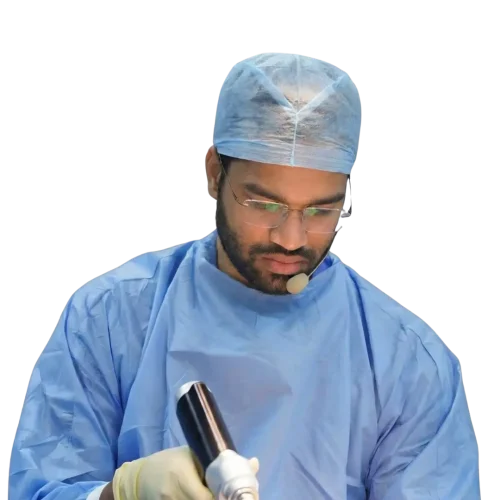
A 67-year-old man from a village near Indore had been living with a shoulder that would not lift above his waist for over two years. Every morning he woke up with pain that made dressing himself a struggle. His son had looked up the cost of shoulder replacement surgery at a private hospital and found it would cost between three and five lakh rupees. That was not a number the family could arrange. Then his son found out about Ayushman shoulder replacement in Indore and what the PMJAY scheme could cover. Within weeks, the patient had a consultation with Dr. Prince Uchadiya, his card was verified, pre-authorisation was obtained, and the surgery was performed at zero out-of-pocket cost. Today he lifts his arm, sleeps through the night, and manages his own daily activities without help. Stories like this are exactly why Ayushman shoulder replacement in Indore is one of the most important orthopaedic services that eligible patients in Madhya Pradesh should know about.
This article explains everything an eligible patient or their family needs to know: what shoulder replacement surgery is, which conditions require it, how the Ayushman Bharat PMJAY scheme covers it in Indore, who qualifies, what the process looks like from first consultation to recovery, and the answers to the fifteen most commonly asked questions about Ayushman shoulder replacement in Indore.
What Is Shoulder Replacement Surgery and Why Do Some Patients Need It?
Shoulder replacement surgery, known medically as shoulder arthroplasty, is a procedure in which the damaged parts of the shoulder joint are removed and replaced with precisely engineered artificial components. The shoulder is a ball-and-socket joint: the rounded head of the humerus (upper arm bone) sits within the glenoid socket of the scapula (shoulder blade). When this joint becomes severely damaged by arthritis, fracture, or chronic disease, the smooth cartilage surfaces that allow painless movement are destroyed. Bone rubs against bone, producing intense, constant pain and progressive loss of movement that cannot be adequately managed with medication or physiotherapy alone.
Shoulder replacement surgery removes the damaged joint surfaces and replaces them with prosthetic components, typically a metal ball attached to a stem implanted in the humerus, and a plastic socket component fixed to the scapula. In some patients, only the ball is replaced (hemiarthroplasty). In others, a reverse shoulder replacement is used, where the ball and socket positions are switched to allow the deltoid muscle to power shoulder movement when the rotator cuff is destroyed. The choice of implant type and surgical approach is determined by the specific pathology and the patient’s anatomy, and is discussed in detail during the pre-operative consultation.
The goal of shoulder replacement surgery is to eliminate or dramatically reduce pain, restore shoulder movement to a functional range, and allow patients to return to normal daily activities including personal care, reaching, lifting, and sleeping comfortably. Most patients experience the most significant relief within the first three months following surgery, with continued improvement over the following twelve months.
Shoulder Conditions That May Require Shoulder Replacement Surgery in Indore
Not every shoulder problem requires replacement surgery. The procedure is reserved for conditions where the joint itself is significantly damaged and less invasive treatments have failed to provide adequate relief. Dr. Prince Uchadiya evaluates each patient thoroughly before recommending shoulder replacement, ensuring it is the appropriate intervention for that specific condition.
- Severe osteoarthritis of the shoulder: Wear-and-tear arthritis that destroys the cartilage surfaces of the glenohumeral joint, causing progressive pain, grinding, and stiffness that does not respond to conservative management. This is the most common indication for shoulder replacement.
- Rheumatoid arthritis: An autoimmune condition that causes chronic joint inflammation, progressively destroying the cartilage and bone of the shoulder joint. When rheumatoid arthritis reaches an advanced stage in the shoulder, replacement surgery restores function and eliminates pain more effectively than medical management alone.
- Severe proximal humerus fractures: Certain complex fractures of the upper arm bone near the shoulder joint, particularly in older patients where the blood supply to the bone head is compromised, cannot be adequately fixed with plates and screws. Replacement surgery in these cases provides a more reliable path to pain-free function than attempting to repair the fragmented bone.
- Irreparable rotator cuff tears with arthritis: When a massive, long-standing rotator cuff tear is combined with secondary arthritis of the joint, reverse shoulder replacement restores function by rebalancing the forces around the joint to compensate for the absent rotator cuff muscles.
- Avascular necrosis of the humeral head: When the blood supply to the ball of the shoulder joint is disrupted, the bone dies and collapses, destroying the joint surface. Replacement surgery removes the collapsed bone and replaces it with a prosthetic component.
- Failed previous shoulder surgery: In select cases where a previous operation has not produced adequate results and the joint has subsequently deteriorated, revision shoulder replacement restores function.
What Is Ayushman Bharat PMJAY and How Does It Cover Shoulder Replacement?
The Pradhan Mantri Jan Arogya Yojana, widely known as Ayushman Bharat or PMJAY, is the Government of India’s flagship health insurance scheme, launched in September 2018. It provides cashless health coverage of up to Rs 5 lakh per family per year for secondary and tertiary care hospitalisation at empanelled public and private hospitals across India. The scheme covers over 1,500 medical procedures and treatment packages spanning 25 specialities, including orthopaedics.
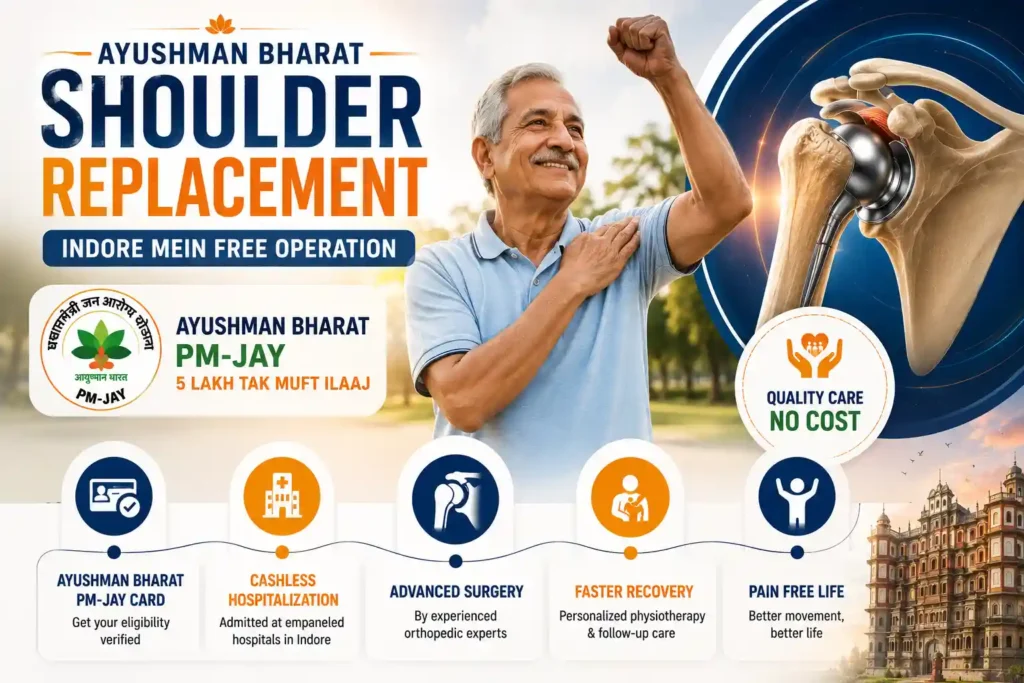
Joint replacement surgeries, including shoulder replacement surgery, fall within the orthopaedic procedures covered under Ayushman Bharat. For an eligible patient seeking Ayushman shoulder replacement in Indore at a PMJAY-empanelled hospital, the cost of the surgery, hospitalisation, pre-operative investigations, implant costs within the approved package, anaesthesia, post-operative care during the hospital stay, and three days of pre-hospitalisation and fifteen days of post-hospitalisation expenses are all covered under the scheme. The patient pays nothing out of pocket for these components of care.
An important expansion of the scheme took effect in October 2024: all Indian citizens aged 70 years and above are now automatically eligible for Ayushman Bharat coverage regardless of income or social category. They receive a separate top-up coverage of Rs 5 lakh under what is referred to as the Ayushman Vay Vandana component. This means elderly patients who previously may not have qualified based on economic criteria are now eligible for Ayushman shoulder replacement in Indore simply by virtue of their age.
For patients in Madhya Pradesh, the state government has converged its own health insurance infrastructure with PMJAY, meaning the scheme operates through a unified platform and patients can access care at empanelled hospitals across the state using their Ayushman card or e-card. More information about the specific government orthopaedic schemes available to MP residents is on the MP government orthopaedic schemes page at Dr. Prince Uchadiya’s clinic website.
Who Is Eligible for Ayushman Shoulder Replacement in Indore?
Understanding eligibility is the starting point for every patient or family considering Ayushman shoulder replacement in Indore. The scheme’s eligibility criteria are based on the Socio-Economic and Caste Census 2011 data and have since been expanded.
Patients who are eligible include those in families identified in the SECC 2011 deprivation categories, which covers most rural households below the poverty line and urban occupation-based workers such as street vendors, construction labourers, domestic workers, rag pickers, sanitation workers, home-based workers, and beggars. All Indian citizens aged 70 years and above are automatically eligible as of October 2024, regardless of their income or social category. Patients already holding an Ayushman card or Ayushman e-card, or whose families appear on the PMJAY beneficiary list, are eligible.
Eligibility can be verified within minutes. Patients can check their eligibility at the official PMJAY website at pmjay.gov.in by entering their mobile number and Aadhaar number. Alternatively, they can call the dedicated helpline on 14555. At Dr. Prince Uchadiya’s empanelled clinic in Indore, the insurance support team verifies eligibility during the initial consultation visit so patients know their status before any further steps are taken.
What Documents Are Required for Ayushman Shoulder Replacement in Indore?
The documentation process for Ayushman shoulder replacement in Indore is straightforward, and the hospital’s administrative team guides patients through it at each step. The standard documents required are an Aadhaar card (the primary identity and eligibility verification document), the Ayushman Bharat card or e-card if already issued, a ration card or other family identification, a treating doctor’s prescription or referral letter confirming the diagnosis and the surgical recommendation, and any previous investigation reports including X-rays, MRI scans, or relevant blood tests.
If a patient does not yet have a physical Ayushman card but appears on the PMJAY beneficiary list, the e-card generated from the pmjay.gov.in portal or the Aadhaar-linked verification is sufficient for treatment purposes. Patients who are uncertain about their card status should contact Dr. Prince Uchadiya’s clinic in Indore before their consultation; the team can advise on the verification process and what to bring.
The Step-by-Step Process for Getting Ayushman Shoulder Replacement in Indore
From first visit to completed surgery, the process for Ayushman shoulder replacement in Indore follows a structured pathway that is designed to be as straightforward as possible for the patient and their family.
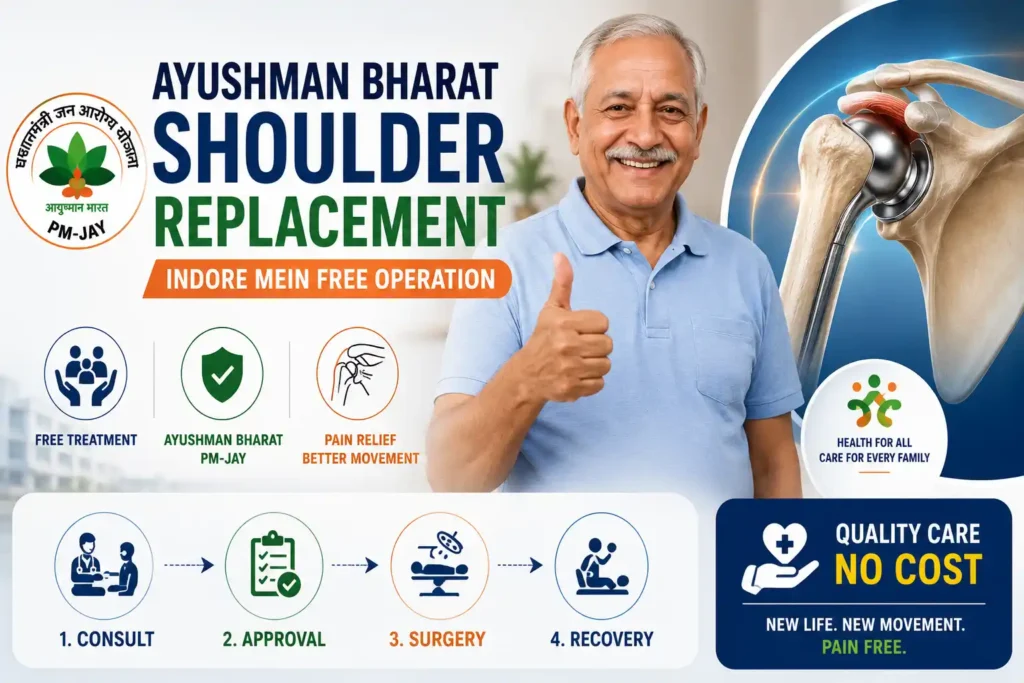
The journey begins with a consultation with Dr. Prince Uchadiya, during which the shoulder condition is assessed clinically and with imaging. If shoulder replacement surgery is clinically indicated, the nature of the procedure, the expected outcome, and the recovery process are explained in detail. During this same visit, the eligibility verification for PMJAY is completed using the patient’s Aadhaar number. If the patient is confirmed eligible, the pre-authorisation process begins.
Pre-authorisation is the step where the empanelled hospital submits the patient’s clinical details and the proposed procedure to the PMJAY system for approval. Once approved, the surgery can be scheduled. All pre-operative investigations required before the procedure, including blood tests, ECG, chest X-ray, and any specialist assessments needed for anaesthetic fitness, are covered within the PMJAY pre-hospitalisation benefit. On the day of surgery, the patient is admitted, the procedure is performed, and the post-operative stay, medications, dressings, and physiotherapy during the hospital stay are all managed under the scheme.
After discharge, the post-hospitalisation benefit covers relevant follow-up investigations and medications for fifteen days. Structured physiotherapy and rehabilitation, which are essential for achieving the best outcome after shoulder replacement, continue through the outpatient rehabilitation program. Patients undergoing Ayushman shoulder replacement in Indore at Dr. Prince Uchadiya’s clinic have access to the post-injury rehabilitation program to guide their recovery through every phase after surgery.
What Happens During Shoulder Replacement Surgery: A Patient-Centred Explanation
Knowing what happens during the surgery reduces anxiety and helps patients prepare mentally for the experience. Shoulder replacement surgery is performed under general anaesthesia, meaning the patient is completely asleep throughout the procedure. A nerve block is often administered as well, which reduces post-operative pain significantly in the first 12 to 24 hours after surgery.
The surgeon makes an incision over the front of the shoulder, carefully separating the muscles and tendons to access the joint. The damaged humeral head is removed and the humerus is prepared to receive the metal stem component. The glenoid socket, if being replaced, is resurfaced and the plastic socket component is fixed in place. The metal ball component is then assembled onto the stem and tested through the full range of motion to confirm appropriate sizing, positioning, and stability before the wound is closed. The entire procedure typically takes between one and two hours depending on the complexity of the case.
Detailed information about the shoulder replacement procedure performed by Dr. Prince Uchadiya in Indore, including the implant types used and the surgical approach, is available on the shoulder replacement surgery page.
Recovery After Ayushman Shoulder Replacement in Indore: What to Expect
Recovery after shoulder replacement surgery is a gradual process that unfolds over weeks and months. Setting realistic expectations from the beginning helps patients stay motivated and compliant with rehabilitation, which directly determines the final outcome.
The hospital stay after shoulder replacement is typically two to four days. During this time, the arm is kept in a sling, wound care is provided, pain is managed with intravenous and oral medications, and gentle passive movement of the shoulder is begun by the physiotherapy team. Most patients are able to walk and perform basic personal care before discharge, though reaching, lifting, and any overhead movement are restricted during the early recovery period.
For the first four to six weeks at home, the arm remains in a sling except during prescribed exercises. Pain and swelling progressively reduce during this period, and patients typically notice that sleep becomes more comfortable as the weeks pass. Gentle pendulum exercises and progressive range-of-motion work are introduced under physiotherapy guidance. By six to twelve weeks, the sling is discontinued and strengthening exercises begin in earnest. Most patients reach a functional range of motion that allows comfortable self-care, light daily activities, and social participation by three months. Continued improvement in strength and motion continues for up to twelve months post-surgery.
The Cost Difference: Ayushman Bharat Versus Private Shoulder Replacement in Indore
For patients who are not covered under Ayushman Bharat or whose coverage is insufficient, understanding the private cost of shoulder replacement surgery in Indore is important for financial planning. The cost of shoulder replacement surgery in India at a private hospital varies depending on the type of prosthesis, the complexity of the surgery, the hospital’s facilities, and post-operative care requirements.
A standard shoulder replacement at a private hospital in India typically costs between Rs 1.5 lakh and Rs 5 lakh, with the implant component accounting for a significant proportion of the total. Reverse shoulder replacement procedures, used in complex cases involving large rotator cuff tears or post-fracture reconstruction, involve more complex implant systems and correspondingly higher costs. When combined with hospital stay, investigations, anaesthesia, and rehabilitation, the total out-of-pocket expenditure for a privately funded shoulder replacement in Indore can reach Rs 3 to 5 lakh or more.
For eligible patients accessing Ayushman shoulder replacement in Indore under PMJAY, this entire financial burden is covered by the scheme up to the Rs 5 lakh annual family coverage limit. This makes the surgery genuinely accessible to families that would otherwise have to forego treatment, spend years in pain, or incur debt to fund the procedure privately. The scheme covers similar benefits for other major orthopaedic procedures as well; patients interested in understanding broader coverage options can review the Ayushman Bharat knee replacement surgery page to understand how the scheme operates across different procedures.
Why Choosing the Right Specialist Matters for Ayushman Shoulder Replacement in Indore
The Ayushman Bharat scheme covers the financial cost of surgery, but the surgical outcome depends entirely on the expertise of the treating surgeon. Shoulder replacement is a technically demanding procedure that requires a specialist with specific training in shoulder arthroplasty, experience with different implant systems, and the ability to manage the full spectrum of shoulder pathology including complex fracture cases, revision surgeries, and cases with anatomical variations.
Dr. Prince Uchadiya is a specialist orthopaedic surgeon in Indore with specific training and experience in upper and lower limb surgery, including shoulder replacement. Patients seeking Ayushman shoulder replacement in Indore benefit from a specialist-level assessment, an individualised surgical plan, and structured post-operative rehabilitation, all within the PMJAY framework at an empanelled facility.
Frequently Asked Questions About Ayushman Shoulder Replacement in Indore
1. What is shoulder replacement surgery and when is it needed?
Shoulder replacement surgery is a procedure in which the damaged surfaces of the shoulder joint are removed and replaced with prosthetic components made of metal and medical-grade plastic. It is recommended when severe arthritis, a complex fracture, an irreparable rotator cuff tear combined with arthritis, or avascular necrosis has destroyed the joint cartilage to the point where pain is constant, function is significantly limited, and conservative treatments including medications, physiotherapy, and injections have failed to provide adequate relief. The decision to recommend shoulder replacement is made after a thorough clinical examination, imaging, and a discussion of the patient’s functional goals and medical fitness for surgery.
2. Can shoulder replacement surgery be done free under Ayushman Bharat in Indore?
Yes. Shoulder replacement surgery is covered under the Ayushman Bharat PMJAY scheme for eligible patients. Ayushman shoulder replacement in Indore at a PMJAY-empanelled hospital covers the surgery itself, the implant cost within the approved package, hospitalisation, anaesthesia, pre-operative investigations, post-operative care during the hospital stay, and three days of pre-hospitalisation and fifteen days of post-hospitalisation expenses, all without any out-of-pocket payment from the patient. Dr. Prince Uchadiya’s clinic in Indore operates as an empanelled facility under the scheme, allowing eligible patients to access this procedure with full PMJAY coverage.
3. Who is eligible for Ayushman Bharat shoulder replacement treatment?
Eligibility is based on SECC 2011 identification, which covers most rural below-poverty-line households and urban occupation-based workers such as construction labourers, domestic helpers, street vendors, and sanitation workers. From October 2024, all Indian citizens aged 70 years and above are automatically eligible regardless of income or social status under the Ayushman Vay Vandana expansion. Patients can verify their eligibility instantly at pmjay.gov.in or by calling 14555. The verification team at Dr. Prince Uchadiya’s clinic in Indore also checks eligibility during the first consultation visit as a routine step.
4. How much does shoulder replacement surgery cost without Ayushman Bharat coverage?
The cost of shoulder replacement surgery at a private hospital in India typically ranges from Rs 1.5 lakh to Rs 5 lakh, depending on the type of prosthesis used, the complexity of the procedure, the hospital’s infrastructure, and the length of the post-operative stay. Reverse shoulder replacement for complex cases involving rotator cuff-deficient arthritis or post-fracture reconstruction uses more complex implant systems and may cost toward the higher end of this range. When pre-operative investigations, anaesthesia, physiotherapy, and follow-up care are included, total expenditure for a privately funded shoulder replacement can reach Rs 3 to 5 lakh. This is the financial burden that Ayushman shoulder replacement in Indore eliminates entirely for eligible patients.
5. Which shoulder conditions may require shoulder replacement surgery?
The most common conditions that lead to shoulder replacement surgery are severe glenohumeral osteoarthritis, advanced rheumatoid arthritis affecting the shoulder joint, complex proximal humerus fractures in older patients where fixation is not feasible, massive irreparable rotator cuff tears combined with secondary arthritis (a condition called cuff tear arthropathy), and avascular necrosis of the humeral head. In each case, the joint surface has deteriorated beyond the point where it can be managed by less invasive measures, and replacement surgery offers the best available pathway to restoring pain-free function.
6. Can chronic shoulder dislocation be treated without surgery?
Chronic or recurrent shoulder dislocation is a separate condition from shoulder arthritis and is typically managed with arthroscopic stabilisation procedures rather than replacement surgery. If recurrent dislocations are left untreated for years and result in progressive damage to the joint cartilage and bone, the joint can eventually deteriorate to the point where replacement surgery becomes necessary. For most patients with chronic dislocation without advanced arthritis, surgical stabilisation using arthroscopic or open techniques is the appropriate intervention. Dr. Prince Uchadiya performs these procedures and can assess at consultation which type of surgery is appropriate for the specific anatomy and damage pattern present.
7. How many days does recovery take after shoulder replacement surgery?
The hospital stay after shoulder replacement is typically two to four days. Most patients can manage basic self-care and walk independently before discharge. The arm is kept in a sling for the first four to six weeks, with progressively increasing physiotherapy during this period. By three months, most patients have a functional range of motion adequate for daily activities including personal care, reaching, and light domestic tasks. Continued improvement in strength and motion continues for up to twelve months after surgery. Patients who follow their rehabilitation program consistently and attend their physiotherapy appointments reach functional milestones faster and more completely than those who are inconsistent with rehabilitation.
8. When can patients return to gym or bodybuilding after shoulder replacement surgery?
Heavy resistance training, overhead pressing, and any exercise that places significant load through the shoulder joint is typically restricted for a minimum of six months after shoulder replacement surgery. Light gym activity, walking, and lower-body exercises can usually be resumed much sooner. The prosthetic implant needs time for the bone to integrate securely around the stem components, and the surrounding soft tissue envelope, tendons, and capsule need to heal and strengthen before high-load activities are safe. The specific timeline for returning to gym activity is discussed individually based on the type of replacement performed and the patient’s progress through rehabilitation. A gradual, supervised return under physiotherapy guidance is always recommended rather than an arbitrary time-based clearance.
9. What is the best sleeping position after shoulder replacement surgery?
The most comfortable and safest sleeping position after shoulder replacement surgery is on your back with the operated arm supported on a pillow placed alongside the body. This keeps the shoulder in a neutral, non-stressed position and reduces overnight discomfort. Sleeping in a slightly reclined position, such as in a recliner chair or with a wedge pillow elevating the upper body, is often more comfortable than lying completely flat in the early post-operative period, as this reduces swelling in the arm and decreases overnight aching. Sleeping directly on the operated shoulder is not permitted for several weeks, and sleeping on the opposite side requires the operated arm to be supported in front of the body with a pillow to prevent it from dropping into a position that stresses the repair. These guidelines are reviewed at each follow-up visit as recovery progresses.
10. How painful is shoulder replacement surgery recovery?
Pain after shoulder replacement surgery is well-controlled with the combination of regional nerve block administered at the time of surgery and oral pain medications prescribed for the first few weeks at home. Most patients describe the pain in the early post-operative period as a deep aching discomfort rather than sharp surgical pain. The nerve block typically provides excellent pain control for the first twelve to twenty-four hours. Oral anti-inflammatory and analgesic medications manage discomfort effectively after this. Many patients find that the pain they experience after surgery is significantly less than the chronic grinding, constant pain they were living with before the procedure, which makes the recovery period more tolerable than they expected. Pain progressively reduces over the first six to twelve weeks, and most patients report being largely pain-free at three months.
11. Can shoulder movement improve completely after shoulder replacement surgery?
Most patients achieve a substantial and clinically meaningful improvement in shoulder movement after replacement surgery. For anatomic total shoulder replacement in patients with osteoarthritis, the majority regain comfortable overhead reach and full function for daily activities. For reverse shoulder replacement, which is used when the rotator cuff is absent, the range of motion achieved is typically functional for daily activities though may not match the full motion of a normal shoulder. Complete restoration of range to that of a never-injured shoulder is not always achievable, particularly in patients with very long-standing stiffness before surgery. Realistic goals are discussed with each patient at consultation so that expectations are accurate and recovery progress can be assessed against appropriate benchmarks.
12. What tests are needed before shoulder replacement surgery in Indore?
Before shoulder replacement surgery, Dr. Prince Uchadiya orders a set of pre-operative investigations to confirm the diagnosis, plan the surgical approach, and ensure the patient is medically fit for anaesthesia and the procedure. These typically include plain X-rays of the shoulder in multiple views to assess the extent of joint destruction and bone quality, an MRI scan to evaluate the rotator cuff status and soft tissue anatomy, standard blood tests including full blood count, kidney and liver function, blood sugar, and clotting parameters, an ECG and chest X-ray to assess cardiac and respiratory fitness, and a pre-anaesthetic assessment by the anaesthesiologist. Patients with diabetes, heart disease, or other systemic conditions may require additional specialist clearance before surgery is scheduled. Under Ayushman Bharat, the costs of these pre-operative investigations are covered within the scheme’s pre-hospitalisation benefit.
13. How long does hospital stay usually last after shoulder replacement surgery?
The typical hospital stay after shoulder replacement surgery is two to four days. This period covers the day of surgery and the initial post-operative recovery. During the hospital stay, wound care, pain management, first physiotherapy assessment and gentle exercises, monitoring for early post-operative complications, and education about home care and sling use are all provided. Patients who are older, have significant medical comorbidities, or live alone may stay one or two additional days until they are confident and safe to manage at home. Under Ayushman Bharat, all hospitalisation costs during this stay are covered under the scheme for eligible patients.
14. Does Ayushman Bharat cover shoulder surgery expenses completely?
Ayushman Bharat covers the costs of shoulder replacement surgery up to the value of the PMJAY surgical package for that procedure, within the Rs 5 lakh per family per year coverage limit. This covers the surgery, implant within the approved package, anaesthesia, hospitalisation, post-operative care during the hospital stay, pre-operative investigations within three days before admission, and post-discharge medications and follow-up for fifteen days. If the implant chosen exceeds the PMJAY package rate, there may be a top-up cost; this is discussed transparently with the patient at the time of pre-authorisation. For the standard shoulder replacement procedures covered under the scheme, the vast majority of eligible patients receive treatment without any significant out-of-pocket expenditure.
15. How can patients apply for free shoulder replacement surgery under Ayushman Bharat in Indore?
The process for accessing Ayushman shoulder replacement in Indore begins with a consultation with Dr. Prince Uchadiya. During the consultation, the clinical assessment confirms whether shoulder replacement is indicated and an eligibility check confirms whether the patient qualifies under PMJAY. If both conditions are met, the hospital’s insurance team initiates the pre-authorisation request to the PMJAY system. Once pre-authorisation is granted, the surgery is scheduled. Patients can verify their own eligibility before their consultation by visiting pmjay.gov.in, entering their mobile number and Aadhaar number, or by calling the Ayushman Bharat helpline at 14555. Bringing an Aadhaar card, existing Ayushman card or e-card if available, and any previous shoulder investigation reports to the first consultation allows the process to move forward without delays.
If you or a family member has been living with shoulder pain that has not responded to medications or physiotherapy, and you want to know whether you are eligible for Ayushman shoulder replacement in Indore at zero cost, book a consultation with Dr. Prince Uchadiya today. The path from pain to recovery begins with a single visit, and for eligible PMJAY patients in Indore, financial concern does not have to be the reason that recovery is delayed.