
Home > Treatments > Meniscus Tear
Meniscus Tear treatment
Precise, Orthopedic and Joint Care by Dr. Prince Uchadiya
01/ About
Meniscus Tear Treatment in Indore -Heal Your Knee Naturally with Dr. Prince Uchadiya
Dr. Prince Uchadiya, a Gold Medalist Orthopedic & Arthroscopic Surgeon, specializes in meniscus tear treatment using advanced arthroscopic techniques. His goal is not just to repair your knee — but to help you walk, climb, and live freely again.
What Is Meniscus Tear?
When Every Step Feels Like a Strain
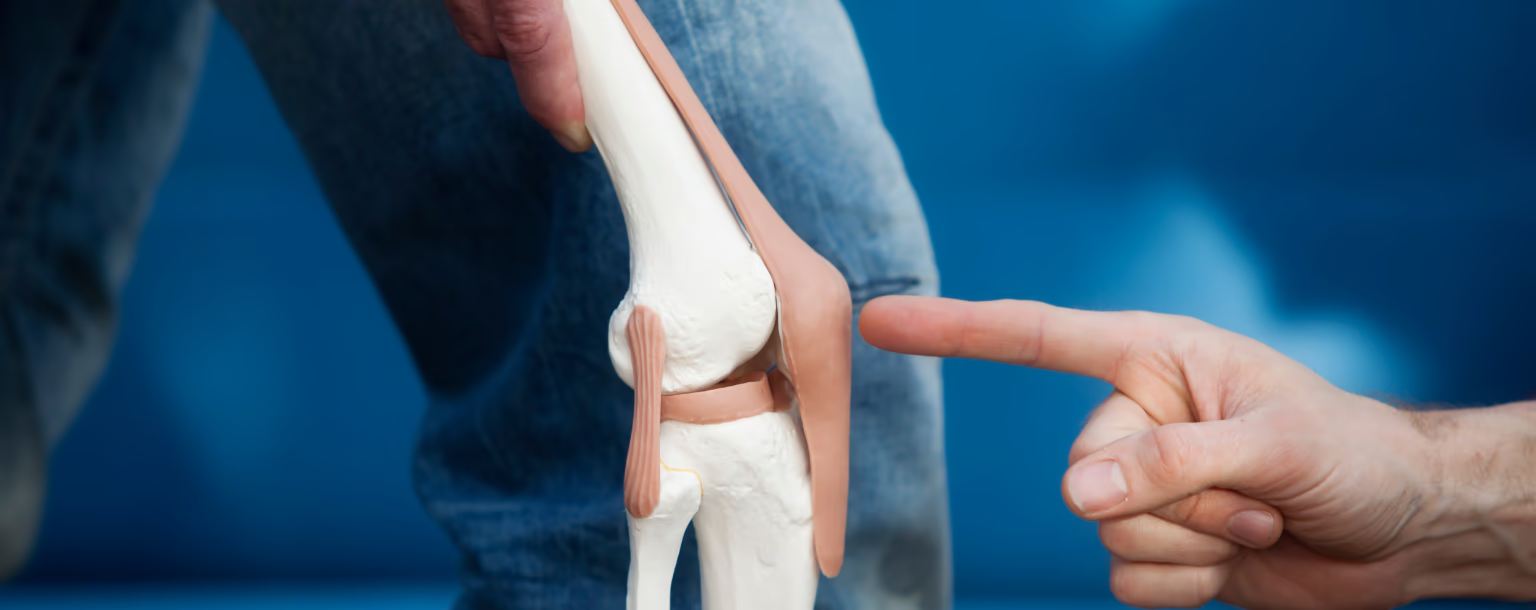
Your knee has two C-shaped pieces of cartilage called menisci, which act like cushions between your thigh bone and shin bone. They absorb shock, provide stability, and help your knee move smoothly.
When one of these menisci gets torn — due to twisting, sports injuries, or even a sudden squat — it can cause sharp pain, swelling, or a “catching” sensation in the knee.
A meniscus tear occurs when the cartilage inside your knee is damaged or torn.
It’s a common injury among athletes, older adults, and anyone who twists their knee suddenly.
Meniscus tears can vary in type:
Radial Tear: Across the meniscus (most common)
Bucket Handle Tear: Large piece flips inside the joint
Horizontal Tear: Along the curve of the meniscus
Complex Tear: Combination of multiple patterns
➡️ Learn more about meniscus tears from the American Academy of Orthopaedic Surgeons (AAOS)
Common Causes of Meniscus Tears
Sudden twisting or pivoting movement
Deep squatting or heavy lifting
Sports injuries (football, basketball, running)
Degenerative wear and tear with age
Even simple daily movements can cause a tear in middle-aged or older adults due to cartilage thinning.
How Meniscus Tear Is Diagnosed at Dr. Prince Uchadiya Orthopaedic Joint Care Clinic
In Indore, diagnosis is precise and patient-friendly.
Dr. Prince performs:
Physical examination (McMurray test, Thessaly test)
MRI scan to visualize the tear pattern and severity
X-rays to rule out associated bone or joint damage
This ensures a complete understanding of the injury before deciding whether non-surgical or arthroscopic repair is the best solution.
Signs & Symptoms You Shouldn’t Ignore
Knee pain and tenderness along the joint line
Swelling or stiffness
Clicking or locking sensation in the knee
Inability to fully straighten the leg
Knee “giving way” while walking
If left untreated, a meniscus tear can lead to chronic knee instability and early arthritis.
“The meniscus is like the shock absorber of your knee — once it fails, every step becomes harder. But with the right treatment, you can restore it fully.”
— Dr. Prince Uchadiya
💡 Treatment Options for Meniscus Tear
At Dr. Prince Uchadiya Orthopaedic Joint Care Clinic, Meniscus Tear Treatment in Indore is customized to the patient’s age, lifestyle, and severity of the tear.
Non-Surgical (Conservative) Treatment
Small or partial tears can often heal without surgery, especially if located in the outer (vascular) zone where blood supply is rich.
Conservative management includes:
Rest and Ice (RICE therapy)
Compression bandage and elevation
Anti-inflammatory medication
Physiotherapy for strengthening and stability
Most mild cases recover within 4–6 weeks under Dr. Prince’s guided rehabilitation plan.
Arthroscopic Meniscus Surgery (Keyhole Repair)
For complex or severe tears, arthroscopic meniscus repair or partial meniscectomy is recommended.
How it works:
Two tiny incisions (less than 1 cm each)
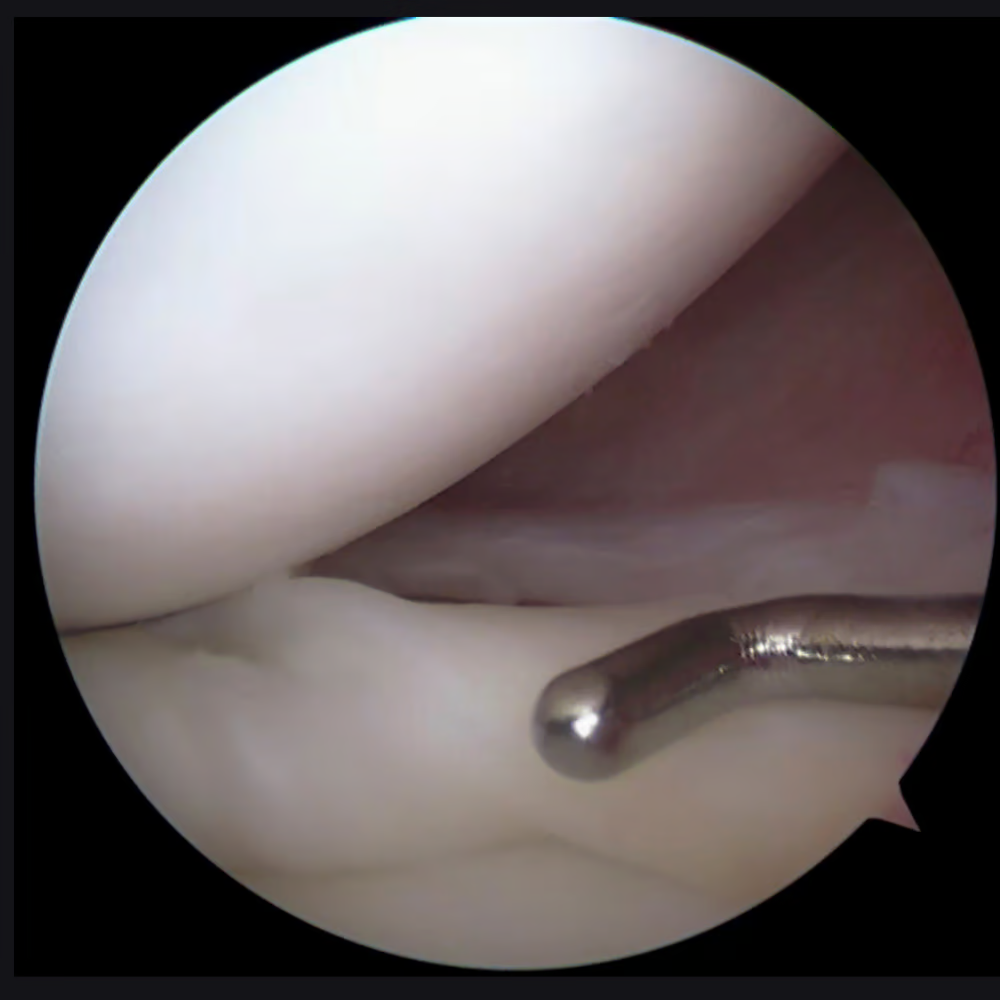
Arthroscope (camera) visualizes the joint
Torn segment is either repaired or trimmed
No open surgery, minimal pain, and faster recovery
➡️ Mayo Clinic confirms that arthroscopic meniscus surgery is safe, effective, and leads to faster return to activity compared to traditional methods.
Benefits of Meniscus Tear Treatment in Indore
| Advantage | Description |
|---|---|
| Smaller Incisions | Keyhole approach reduces tissue trauma and scarring. |
| Faster Healing | Minimal disruption to healthy tissue speeds up recovery. |
| Less Pain & Swelling | Controlled precision and minimal inflammation. |
| Day-Care Procedure | Most patients return home within 24 hours. |
| Better Joint Preservation | Repair helps prevent long-term arthritis. |
| Quicker Return to Activity | Patients resume walking within days, not weeks. |
Real Patient Story – A Teacher Who Walked Without Pain Again
Case Study: “Freedom from Knee Pain After Meniscus Repair”
Meena, a 38-year-old teacher from Indore, suffered from constant knee pain after twisting her leg while climbing stairs. MRI confirmed a complex medial meniscus tear.Dr. Prince performed arthroscopic meniscus repair, and within three weeks, she was walking comfortably. By the sixth week, she returned to teaching without pain.
“The surgery was simple, but what made the difference was the care and confidence I got at Dr. Prince Uchadiya Orthopaedic Joint Care Clinic,” Meena shared.
Recovery Timeline After Meniscus Tear Treatment
Recovery time depends on the joint treated but generally follows this path:
| Phase | Duration | Focus |
|---|---|---|
| Phase 1 | 0–2 weeks | Rest, reduce swelling, light movement • Protect the repair and control pain |
| Phase 2 | 2–6 weeks | Begin physiotherapy and muscle activation • Regain mobility and strength |
| Phase 3 | 6–12 weeks | Balance, gait training, and flexibility • Functional movement restoration |
| Phase 4 | 3–6 months | Gradual return to sports/work • Full stability and endurance |
Rehabilitation is supervised by expert physiotherapists at Dr. Prince Uchadiya Orthopaedic Joint Care Clinic’s in-house rehab center.
“Surgery may fix the joint, but rehab brings it back to life.” — Dr. Prince Uchadiya
❌ Common Myths About Meniscus Tear Treatment
| Myth | Fact |
|---|---|
| “Meniscus tears always need surgery.” | Small tears can heal naturally with physiotherapy. |
| “You can’t bend your knee after surgery.” | Modern arthroscopy restores full motion safely. |
| “Meniscus tears happen only to athletes.” | Age-related degeneration causes tears too. |
| “Surgery means months of bed rest.” | Most patients walk within 1–2 days post-surgery. |
Scientific Facts & Research Insights
Meniscus tears affect over 500,000 people globally each year (AAOS).
Arthroscopic meniscus repair shows a 90% success rate for long-term recovery (NIH Study).
Early repair prevents the onset of osteoarthritis by up to 50% (PubMed).
Recovery time is reduced by 30–40% with minimally invasive arthroscopy (Mayo Clinic).
Ready to move pain-free again?
Consult Dr. Prince Uchadiya in Indore and live pain free again.




Trusted by 1k+ Patients
Why Us
Why Choose Dr. Prince Uchadiya Orthopaedic Joint Care Clinic for Meniscus Tear Treatment in Indore
Dr. Prince’s approach to healing blends medical expertise with human understanding, ensuring every patient feels heard, cared for, and truly supported.
Led by Gold Medalist Orthopedic Surgeon — Dr. Prince Uchadiya
A highly qualified orthopedic and arthroscopic surgeon with national recognition for clinical excellence and patient success.
Trained at KEM Hospital, Mumbai – India’s Premier Orthopedic Institute
Bringing world-class training and modern surgical techniques from one of India’s most prestigious medical centers.at KEM Hospital, Mumbai
Specialized in Knee, Shoulder & Sports Injury Treatments
Comprehensive care for ligament tears, cartilage injuries, and complex joint conditions using advanced arthroscopy.
150+ Successful Orthopedic Procedures Across Madhya Pradesh
Proven track record of consistent results in arthroscopy, ligament reconstruction, and joint replacement surgeries.
FAQ
FAQs -Meniscus Tear Treatment
Can a meniscus tear heal without surgery?
Small tears at the outer edge often heal with rest and therapy, but complex tears may need arthroscopic repair.
How long does it take to recover after meniscus surgery?
Most patients recover within 6–12 weeks, with full activity by 3–6 months.
Is meniscus surgery safe?
Yes, when performed arthroscopically by an experienced surgeon, it’s extremely safe and effective.
Will I be able to walk after surgery?
Yes, most patients can walk with support within 1–2 days.
Does meniscus surgery prevent arthritis?
Yes, timely repair helps maintain knee stability and prevent future joint degeneration.