That dull ache in your knee after climbing the stairs. The shoulder that clicks every time you reach overhead. The ankle that twisted three weeks ago and still has not fully settled. Most people in Indore ignore these signs, telling themselves it is fatigue, age, or something that will go away on its own. Sometimes it does. But often, what starts as a minor issue quietly becomes a long-term problem that a good orthopedic doctor in Indore could have resolved in one visit.
This guide is not a list of names you can find on any directory. This is a complete, honest walkthrough of what orthopedic care actually means – what conditions it covers, when you genuinely need a specialist, what the difference between surgical and non-surgical treatment looks like, and what questions to ask before trusting any doctor with your bones and joints. By the end, you will have a clear framework to make that decision with confidence.
What an Orthopedic Doctor in Indore Actually Treats
Orthopedics is the branch of medicine that covers your entire musculoskeletal system – bones, joints, cartilage, ligaments, tendons, and muscles. That is a wide net. It covers everything from a broken finger to a full knee replacement. An orthopedic doctor in Indore trained in this field can handle the full spectrum, though most develop sharper expertise in specific areas over time.
Here is a practical breakdown of what falls under orthopedic care:
1. Bone Injuries and Fractures
Fractures are the most commonly understood reason to visit a bone specialist in Indore. A fall, a road accident, a sports collision – these are obvious triggers. But what surprises many patients is that stress fractures (hairline cracks from repetitive activity) and pathological fractures related to conditions like osteoporosis also require specialist care. A general physician can refer you for pain relief, but only a fracture specialist can plan the right fixation approach and ensure the bone heals in correct alignment.
2. Joint Problems – Knee, Hip, Shoulder, Ankle
Joint pain is where the majority of patients in Indore first connect with an orthopedic clinic. Arthritis, cartilage wear, labral damage, bursitis – all of these are joint-level problems that cause pain, stiffness, and progressively limited movement. The knee is the most commonly treated joint, followed by the hip and shoulder. Persistent knee pain treatment in Indore is one of the highest-volume reasons patients seek an orthopedic consult – and rightly so, because early intervention prevents cartilage from deteriorating to the point where replacement becomes unavoidable.
3. Ligament and Tendon Injuries
Ligament surgery in Indore has grown significantly as awareness around sports injuries has improved. ACL tears, PCL tears, rotator cuff damage, and Achilles tendon injuries fall in this category. These are not just sports injuries reserved for athletes – a wrong step off a curb can tear an ACL just as effectively as a tackle on a football field. Ligament injuries rarely heal completely without proper medical intervention. Leaving them untreated causes joint instability and accelerates cartilage wear and arthritis over time. Both ACL surgery and PCL ligament tear treatment require a specialist who understands knee biomechanics – not a generalist who treats all joint conditions equally.
5. Spine and Back Problems
Disc herniation, spondylosis, sciatica, and spinal stenosis fall under the orthopedic umbrella. An ortho doctor in Indore will typically manage back pain that has a musculoskeletal cause – posture problems, disc wear, or spinal alignment issues. If neurological involvement is found, a spine surgeon is brought in. The critical point is that most back pain in working-age adults in Indore has a postural or disc-related cause that responds well to structured physiotherapy and does not require surgery at all.
6. Sports Injuries
A sports injury doctor in Indore combines orthopedic knowledge with an understanding of athletic movement, load tolerance, and return-to-sport timelines. Whether you are a professional cricketer, a kabaddi player, or someone who plays badminton on weekends, sports injuries need a specialist who understands how to restore full function for an active lifestyle – not just suppress pain for a few weeks.
Pediatric and Congenital Bone Conditions
Flat feet, bow legs, club foot, growth plate injuries in children, and bone dysplasias also fall under orthopedic care. Children’s bones behave differently from adult bones, and early orthopedic evaluation changes long-term outcomes significantly for many of these conditions.
7 Warning Signs That Tell You to See an Orthopedic Doctor in Indore Now
Many patients delay visiting a bone and joint specialist in Indore because they are unsure if the pain is serious enough. Here are seven signs where waiting works against you:
- Joint or bone pain lasting more than three weeks without improvement. Pain from a minor strain typically resolves in 7-10 days with rest. If three weeks have passed and you are still hurting, something structural may need evaluation.
- Swelling around a joint that appeared without a clear injury. Unexplained swelling – especially in the knee – can indicate fluid buildup, infection, or early arthritis. It needs to be assessed, not waited out.
- A change in how you walk, stand, or use your arm. Your body compensates for pain by shifting load to other joints. If you find yourself limping, favoring one side, or unconsciously avoiding certain movements, that compensation is quietly creating new problems.
- Sharp pain during or after climbing stairs, squatting, or lifting. These are load-bearing activities. Pain during them often points to cartilage wear, patellofemoral syndrome, or early joint degeneration that is better caught early.
- Pain that wakes you at night or morning stiffness lasting more than 30 minutes. Night pain and prolonged morning stiffness are classic features of inflammatory joint disease and warrant an orthopedic consultation rather than continued self-medication.
- A snap, pop, or locking sensation in a joint after an injury. A pop at the time of injury followed by swelling or instability often indicates a ligament tear or meniscus injury. This does not resolve on its own in most cases and needs proper imaging and specialist evaluation.
- Any suspected fracture after a fall or impact. If you took a hard hit and the area is swollen, tender, and painful to move – do not wait. Get a digital X-ray done at an orthopedic clinic in Indore on the same day. Old-school blurry X-rays miss hairline fractures. Ask specifically for digital imaging.
Orthopedic Surgeon vs General Physician – When Does the Distinction Actually Matter?
A common question is whether to start with a family doctor or go directly to an orthopedic doctor in Indore. For any musculoskeletal complaint that has lasted more than two weeks – or involved a clear injury – going directly to a specialist saves time and avoids the common trap of treating pain without identifying its structural cause.
General physicians are trained broadly. They can manage mild pain, prescribe anti-inflammatories, and advise rest. But differentiating a meniscus tear from a herniated disc, identifying the grade of a ligament sprain, or deciding between physiotherapy and arthroscopy requires subspecialty training that only an orthopedic doctor carries.
“Most patients who come to me have already spent 2-3 months on painkillers from a general physician. The pain was masked during that time, and by the time we got an MRI, the injury had progressed. Early orthopedic evaluation saves both time and money.” – Dr. Prince Uchadiya, Orthopedic Surgeon, Indore
The one exception worth noting: if your joint pain clearly connects to a systemic condition like rheumatoid arthritis or gout – both diagnosed through blood work – a rheumatologist may be the more appropriate first stop. An experienced orthopedic surgeon in Indore will recognize this distinction and coordinate care accordingly instead of trying to manage everything surgically.
How to Choose the Best Orthopedic Doctor in Indore – A Checklist That Actually Works
Searching for “best orthopedic doctor in Indore” returns dozens of results. A directory ranking or a list of awards is not the same as medical competence. Here is a practical checklist to apply before booking your first appointment:
Step 1 – Verify the Qualification Path
The base qualification for any orthopedic surgeon in India is MBBS + MS (Orthopaedics) or MBBS + DNB (Orthopaedics). Beyond that, fellowship training in a subspecialty matters – ACL reconstruction, joint replacement, arthroscopy, or spine. A Gold Medalist orthopedic surgeon who trained at a high-volume institution like KEM Hospital Mumbai has been exposed to a complexity and volume of cases that most Central India hospitals simply cannot match. That training directly shapes surgical judgment and outcomes.
Step 2 – Match the Specialist to Your Condition
Orthopedics is not one specialty – it is a cluster. If you have a knee ligament injury, look for an arthroscopy doctor in Indore with specific ligament reconstruction experience. If you have advanced knee arthritis, look for a knee replacement surgeon in Indore with enough primary replacements behind them to handle complications. Choosing a spine surgeon for a knee problem, or a general orthopedic for a complex shoulder reconstruction, produces inferior results – and patients rarely realize this until outcomes disappoint.
Step 3 – Ask About the Treatment Decision Process
A trustworthy orthopedic doctor in Indore will not recommend surgery before exhausting non-surgical options. Ask directly: “Is there any conservative treatment we should try before considering an operation?” If the doctor dismisses this or moves straight to surgical planning without a proper clinical and imaging evaluation, that is a warning sign. Evidence-based orthopedic practice, as outlined by the Cleveland Clinic Department of Orthopaedic Surgery, prioritizes conservative management as the first line in most musculoskeletal conditions.
Step 4 – Look for Transparent Communication
Before any procedure, you should receive a clear explanation of the diagnosis, why a specific treatment is recommended, what the alternatives are, what recovery involves, and what the risks are. Patients who walk out of a consultation confused about what was recommended and why are not receiving good care – they are being processed.
Step 5 – Evaluate the Facility and Technology
For arthroscopy and joint replacement, the quality of the operating environment directly affects outcomes. HD arthroscopy towers, digital imaging, bio-absorbable fixation systems, and dedicated physiotherapy support are not luxury add-ons – they change how well the procedure goes and how fast you recover. Ask whether the clinic has its own modular operation theatre, what imaging is available in-house, and whether post-surgical rehabilitation is integrated into care.
Step 6 – Confirm Patient Continuity
The surgeon who plans your treatment should be the same person who operates and follows you through recovery. This matters most for complex ligament reconstructions and joint replacements where intra-operative judgment – not just preoperative planning – determines long-term function.
Non-Surgical vs Surgical Orthopedic Treatment – What the Decision Actually Looks Like
One of the biggest anxieties patients carry into an orthopedic consultation is the fear of being pushed into unnecessary surgery. That concern is legitimate. But there is an equal and opposite risk: avoiding necessary surgical treatment for too long, allowing a condition to progress beyond the point where good outcomes are achievable. The right answer lies in accurate diagnosis – not in a blanket preference for or against surgery.
When Non-Surgical Treatment Is the Right First Step
- Mild to moderate osteoarthritis – Physiotherapy, weight management, anti-inflammatory medication, and intra-articular injections (PRP, hyaluronic acid, or corticosteroids) can control symptoms significantly for years before joint replacement becomes necessary.
- Partial ligament tears (Grade 1 and Grade 2) – Where the ligament is stretched or partially torn but structurally intact, bracing, physiotherapy, and activity modification often restore stability and function.
- Early-stage tendinitis – Rotator cuff tendinitis, patellar tendinitis, and Achilles tendinitis respond well to eccentric strengthening exercises, ultrasound therapy, and load management.
- Simple, well-aligned fractures – Clean fractures where bone ends are properly aligned heal reliably with casting or splinting without any surgical fixation.
- Back pain without neurological signs – The majority of acute and subacute back pain in working-age adults resolves with physiotherapy, core strengthening, and posture correction. Surgery is rarely the first answer.
When Surgery Is the Correct Decision
- Complete ACL or PCL tear with joint instability – As outlined in NHS guidelines on ACL injury management, surgical reconstruction is recommended for active individuals where conservative care cannot restore sufficient joint stability for daily life or return to sport. Delaying this in young, active patients accelerates cartilage damage and meniscus wear.
- End-stage knee or hip arthritis – When cartilage is fully worn and bone-on-bone contact creates constant, movement-limiting pain that medication and physiotherapy cannot adequately control, knee replacement surgery or hip replacement surgery provides reliable, long-lasting relief.
- Displaced or unstable fractures – If bone fragments have shifted out of position, surgical fixation using plates, screws, or rods is necessary to restore alignment and prevent malunion.
- Full-thickness rotator cuff tears in active patients – Complete tendon tears, especially in patients under 65 who are still active, require arthroscopic repair to restore shoulder function. The longer the repair is delayed, the more the tendon retracts and the more difficult surgical repair becomes.
- Meniscus tears causing locking or recurrent swelling – Tears where the torn fragment causes mechanical symptoms (catching, locking, or giving way in the joint) are not suitable for conservative management. Meniscus tear treatment in these cases involves arthroscopic surgery to remove or repair the torn portion and restore smooth joint mechanics.
The Sequence Every Good Orthopedic Doctor in Indore Follows
Proper diagnosis through clinical examination and appropriate imaging. Trial of conservative care where relevant. Reassessment at 6-12 weeks. Surgical discussion only when conservative management has failed or the condition is definitively surgical from the outset. This sequence protects patients from both under-treatment and over-treatment – and any honest bone and joint specialist in Indore will follow it without exception.
Comparison Table – What Separates a Good Orthopedic Doctor in Indore from a Generic One
| Criteria | What a Strong Orthopedic Doctor Offers | Red Flags to Watch For |
|---|---|---|
| Qualification | MS or DNB Ortho + fellowship in relevant subspecialty | Vague credentials, no fellowship in the relevant area |
| Training Institution | Tier-1 institution (KEM Mumbai, AIIMS, JIPMER) | No clear information about postgraduate training source |
| Communication | Explains diagnosis clearly, presents all treatment options | Rushes to surgery recommendation without conservative discussion |
| Imaging Protocol | Orders MRI or CT specific to the suspected diagnosis | Bases ligament or cartilage diagnosis on X-ray alone |
| Surgical Continuity | Same surgeon who consults is the one who operates | Senior consults, junior operates without informing the patient |
| Post-Op Rehab | Structured physiotherapy protocol from day one post-surgery | Discharge with a prescription and no rehabilitation plan |
| Technology | HD arthroscopy, digital imaging, minimally invasive tools | Outdated equipment, no in-house arthroscopy capability |
| Patient Reviews | Specific functional outcomes described – back to sport, walking again | Reviews mention good bedside manner but no outcome specifics |
Common Procedures Performed by a Bone and Joint Specialist in Indore
Understanding the procedures an orthopedic doctor may recommend helps you walk into your consultation with better questions and make decisions from a place of clarity, not anxiety.
1. Arthroscopy – Keyhole Joint Surgery
Arthroscopy is a minimally invasive procedure where a small camera – the arthroscope – is inserted through a tiny 5-10mm incision to visualize and treat joint problems from inside, without opening the joint. It is used for knee, shoulder, and hip conditions. Recovery is dramatically faster than open surgery – most patients walk on the operated leg the same day or the following morning. Scarring is minimal. Infection risk is lower. The technique has transformed care for ACL tears, meniscus injuries, and cartilage damage in patients across Indore and Central India. Dr. Prince Uchadiya, a leading arthroscopy doctor in Indore, performs these procedures using HD arthroscopy towers in a dedicated modular operation theatre, with physiotherapy integrated from day one of recovery.
2. ACL and PCL Ligament Reconstruction
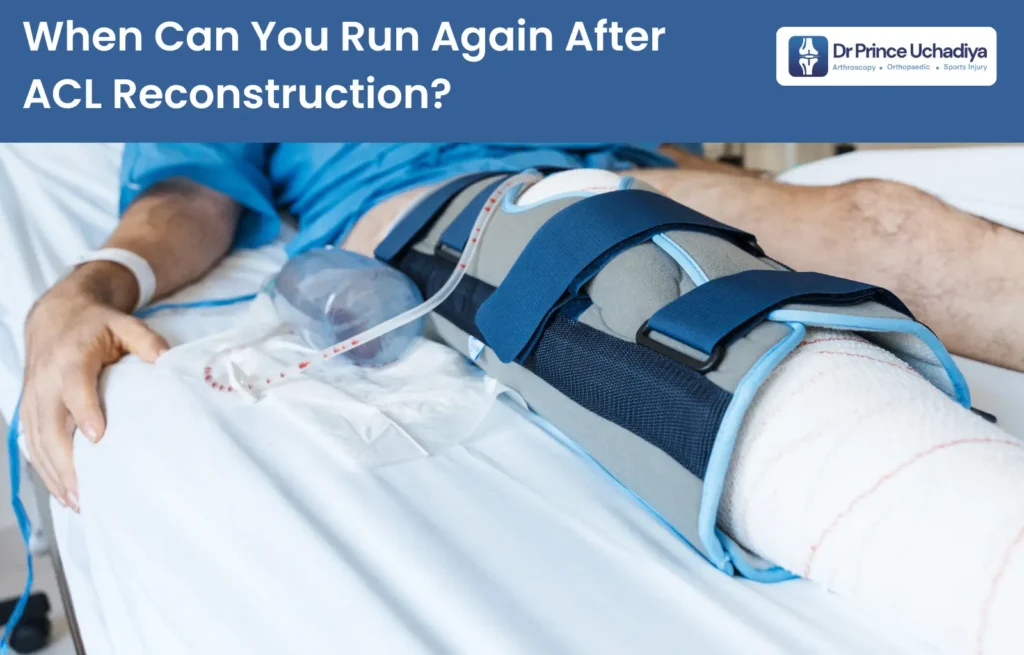
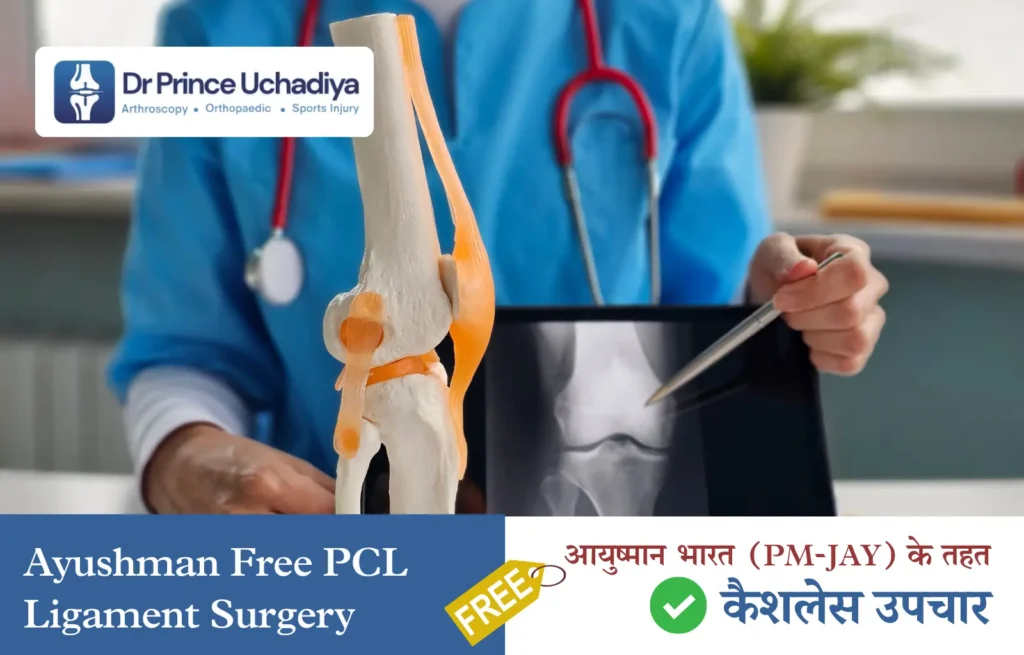
When the ACL or PCL of the knee is completely torn, reconstruction is performed using a graft – typically taken from the patient’s own hamstring or patellar tendon – to rebuild the ligament from inside the joint, arthroscopically. The procedure is done through keyhole incisions. Full recovery including return to sport takes 6-9 months with structured physiotherapy. For patients who are active – whether in sports, physical work, or just daily life requiring confident knee use – ACL surgery in Indore is the most reliable path back to stable movement. PCL injuries are less common but equally significant – PCL ligament tear treatment follows a similar reconstructive approach adapted for posterior knee stability.
3. Knee Replacement Surgery
Total or partial knee replacement is indicated when knee cartilage has degraded to the point where daily activities – walking, climbing stairs, standing for more than a few minutes – are consistently painful and movement is severely restricted. The damaged joint surfaces are replaced with metal and plastic components that replicate natural knee function. Modern implants last 15-20 years in most patients. Knee replacement surgery at a well-equipped clinic in Indore now offers outcomes comparable to what was only available in metro hospitals a decade ago.
4. Hip Replacement Surgery
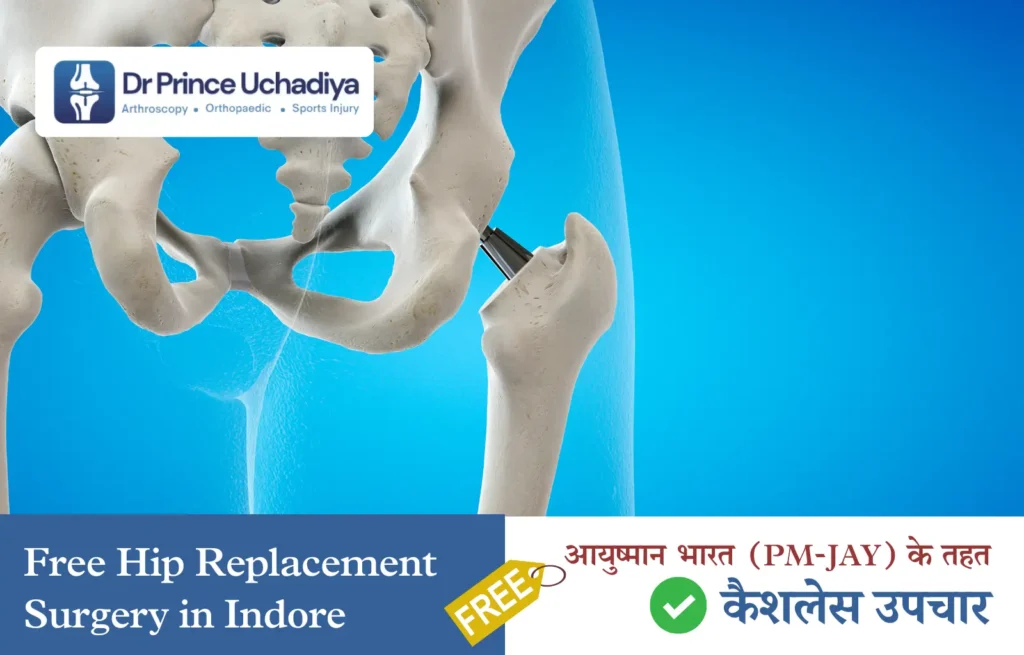
Hip replacement addresses severe arthritis, avascular necrosis (AVN) of the femoral head, or femoral neck fractures that cannot be managed conservatively. The damaged ball-and-socket joint is replaced with prosthetic components. Most patients are walking with support within 24-48 hours of surgery. Hip replacement surgery in Indore – when performed by a surgeon with specific joint replacement training – allows return to full independent function within 6-8 weeks for the majority of patients.
5. Fracture Treatment and Management
Fracture care ranges from casting and splinting for stable injuries to surgical fixation using plates, screws, or intramedullary rods for displaced or complex fractures. The goal is always anatomical restoration of bone alignment and getting the patient functional as quickly and safely as possible. Fracture treatment in Indore at a specialist clinic with digital imaging – rather than older conventional X-rays – ensures that hairline fractures are not missed on first evaluation, which is one of the most common causes of ongoing pain after an apparently healed injury.
6. Meniscus Tear Treatment
The meniscus is a C-shaped shock absorber sitting inside the knee joint. When it tears – from a twisting injury, a sports impact, or gradual degeneration in older adults – it causes pain, swelling, locking, and instability. Meniscus tear treatment depends on the type and location of the tear. Peripheral tears in younger patients with good blood supply can be repaired. Degenerative tears in the inner zone are typically managed by trimming the torn tissue (partial meniscectomy), both done arthroscopically.
7. Shoulder Arthroscopy and Rotator Cuff Repair
Shoulder conditions – rotator cuff tears, labral injuries, frozen shoulder, and recurrent dislocations – require a surgeon with specific training in shoulder anatomy and arthroscopic technique. The shoulder is the most mobile joint in the body, which makes it both complex and highly susceptible to soft tissue injury. A rotator cuff specialist in Indore who performs these procedures regularly will produce significantly better outcomes than a general orthopedic who handles shoulder problems as an occasional case.
What to Expect on Your First Visit to an Orthopedic Doctor in Indore
Many patients delay orthopedic consultations simply because they do not know what will happen. Here is a clear walkthrough so nothing catches you off guard:
- History-taking. The doctor will ask when the pain started, what makes it worse, what relieves it, whether there was a specific injury, and what your activity level is. Answer specifically – “knee pain for two months, worse after stairs, started after twisting it during a cricket match” gives the doctor something to work with. “My knee hurts” does not.
- Physical examination. The doctor will check range of motion, tenderness on palpation, swelling, and joint stability through specific clinical tests. For example, a Lachman test for ACL integrity or McMurray’s test for meniscus. This clinical examination is often more diagnostically powerful than imaging alone in experienced hands.
- Imaging. Based on examination findings, X-rays, MRI, CT scan, or ultrasound may be ordered. X-rays show bone structure and alignment. MRI shows soft tissue – cartilage, ligaments, tendons, bursae. Do not skip imaging when recommended. It provides information that no clinical examination can reliably replace.
- Diagnosis and treatment planning. Once the picture is complete, you should receive a plain-language explanation of what is wrong, why a particular treatment is recommended, what the realistic outcomes are, and what the alternatives look like. A good orthopedic doctor in Indore leaves you informed, not overwhelmed.
- Plan initiation. Whether that means starting physiotherapy, getting a brace fitted, beginning medication, scheduling an injection, or planning surgery – you leave with a specific, clear next step. No vague “come back in a month and see.” A clear plan.
Why KEM Hospital Training Makes a Meaningful Difference in Orthopedic Care
Where a surgeon trained is a legitimate indicator of the quality and complexity of their surgical exposure. KEM Hospital in Mumbai is one of India’s highest-volume public teaching hospitals – a place where orthopedic residents manage polytrauma, complex joint reconstruction, and sports injuries at a scale that hospitals in Tier-2 cities cannot come close to replicating. The volume, variety, and acuity of cases at KEM builds a surgical instinct and decision-making depth that carries into every case a surgeon handles after training.
Dr. Prince Uchadiya, a DNB Orthopaedics Gold Medalist trained at KEM Hospital Mumbai, brings that institutional foundation directly to his practice in Indore. His subspecialty focus on arthroscopy, ligament reconstruction, and joint replacement means patients across Indore and Madhya Pradesh can access surgical expertise that would otherwise require traveling to Mumbai, Delhi, or Pune.
Orthopedic Care Under Ayushman Bharat PMJAY in Indore
Patients with Ayushman Bharat PMJAY health cards can access covered orthopedic procedures – including hip replacement, knee replacement, fracture surgery, and ligament reconstruction – through empaneled facilities in Indore. If you are a beneficiary, confirm empanelment status with the orthopedic clinic before your first visit. For eligible families in Madhya Pradesh, this scheme significantly reduces or eliminates the financial burden of surgical care that would otherwise require significant private spending.
What Good Orthopedic Recovery Actually Looks Like
Surgery is only half the story. What happens in the 6-12 weeks after the procedure – the physiotherapy, the exercise progression, the follow-up imaging, the pain management – determines whether the surgical correction translates into real, functional recovery. The best orthopedic doctor in Indore does not consider the job done when the stitches come out. A structured post-operative protocol tailored to the specific procedure and the patient’s lifestyle is non-negotiable.
Research summarized by the Cleveland Clinic on joint replacement recovery confirms that patients who follow structured physiotherapy protocols after joint replacement achieve meaningfully better range of motion, faster pain resolution, and higher long-term satisfaction than patients who do not. Choosing an orthopedic clinic in Indore that integrates rehabilitation as part of the care pathway – not an afterthought or a separate referral – is as important as choosing the right surgeon.