You know the moment exactly.
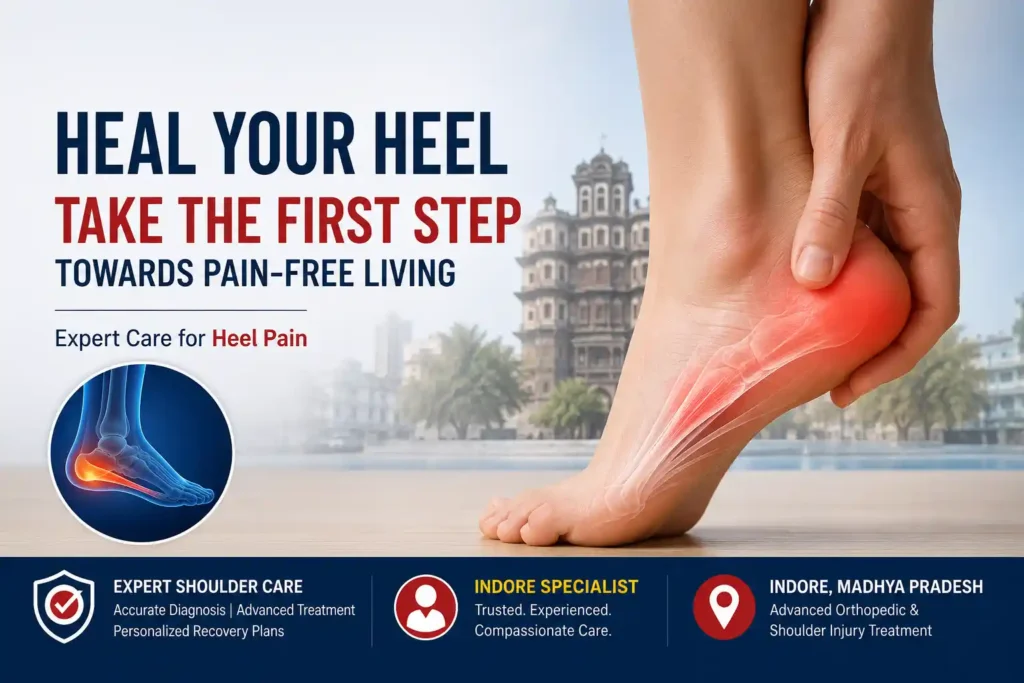
You wake up in the morning, swing your legs off the bed, plant your feet on the floor, and take that first step. And then it hits.
A sharp, stabbing pain shoots through your heel, so intense that you catch the wall or the bedpost to steady yourself. You stand still for a minute, taking shallow breaths. Then, as you walk to the bathroom, the pain begins, slowly, to ease. By the time you have been moving for ten minutes, it is manageable. By afternoon, you have almost forgotten it was there at all. Until tomorrow morning, when it happens again.
This pattern, morning heel pain that is worst with the very first steps and improves with movement but returns after prolonged activity, is the hallmark presentation of plantar fasciitis. It is one of the most common musculoskeletal complaints seen in orthopaedic clinics in Indore, affecting people across every demographic: office workers who sit all day and then stand suddenly, teachers who spend five or six hours on their feet, runners who increased their mileage too quickly, and women in their 40s and 50s for whom it appears seemingly without reason.
The encouraging reality, and this is the most important thing to understand before reading further, is that plantar fasciitis treatment in Indore does not require surgery for the vast majority of patients. Published clinical research from the American Family Physician confirms that with proper treatment, 80 percent of patients with plantar fasciitis improve within 12 months. The key phrase is “proper treatment.” Not painkillers. Not rest alone. Not simply changing shoes. A structured, consistent approach that addresses the actual biological and biomechanical causes of the condition.
What Is Plantar Fasciitis and Why Does It Cause That Specific Heel Pain?
The plantar fascia is a thick band of connective tissue that runs along the underside of the foot, connecting the heel bone (calcaneus) to the base of the toes. Its primary function is to support the foot’s arch and act as a shock absorber with every step. When you stand, walk, or run, the plantar fascia is tensioned and then released with each step in a cyclic loading pattern it is designed to tolerate.
Problems begin when this cyclic load exceeds the tissue’s capacity for repair. Repetitive micro-tearing at the point where the fascia attaches to the heel bone accumulates faster than the body can heal it. Over time, this creates a zone of degenerative change at the fascial insertion point, which is why the condition is now more accurately described as plantar fasciopathy (a degenerative condition) rather than fasciitis (an inflammatory one). Despite the name, there is an absence of true inflammatory cells in the tissue, which is why pure anti-inflammatory medications have limited long-term effect.
The reason the pain is worst with the first steps of the morning is well understood. During sleep, the foot rests in a slightly plantarflexed position (toes pointing down), which allows the plantar fascia to contract and partially shorten overnight. The micro-tears that accumulated during the previous day’s activity receive no tensile loading, and the tissue stiffens in this shortened position. When you take the first step in the morning, the fascia is suddenly stretched from its contracted, stiffened state, producing a sharp pain signal at the already irritated insertion point. After several minutes of walking, the fascia warms up, circulation improves, and the tissue becomes more extensible, which is why the pain gradually reduces with continued movement.
Who Gets Plantar Fasciitis? Risk Factors Seen in Indore Patients
Plantar fasciitis affects approximately one in ten people during their lifetime. Published prevalence data indicates it accounts for 11 to 15 percent of all foot symptoms requiring professional care and 10 percent of all runner-related injuries. Understanding the risk factors helps patients in Indore identify what may be contributing to their condition, because addressing risk factors alongside treating the symptoms is what produces lasting recovery rather than temporary relief.
The most significant risk factors are limited ankle dorsiflexion (restricted ability to bring the foot up toward the shin), which increases the mechanical load on the plantar fascia during every step; elevated body mass index, where published data shows that individuals with a BMI over 30 are five times more likely to develop plantar fasciitis than those with a BMI below 25; prolonged standing or walking occupations, which accumulate loading on the fascial insertion point over hours each day; sudden increases in weight-bearing activity such as beginning a running program or significantly increasing daily step count; foot structure abnormalities including flat feet (pes planus) and high arches (pes cavus); and wearing footwear with inadequate arch support, particularly flat slippers, worn-out shoes, or walking barefoot on hard floors consistently.
In Indore’s patient population, a specific pattern is frequently seen: middle-aged women who wear soft chappals or flat household footwear for most of their waking hours, combined with prolonged standing during cooking and household activities. The complete absence of arch support in typical Indian household footwear places the plantar fascia under sustained mechanical stress throughout the day, and this pattern is a major contributing factor to plantar fasciitis treatment in Indore presentations in this demographic.
The 5 Most Effective First-Line Treatments for Plantar Fasciitis in Indore
1. Calf and Plantar Fascia Stretching
Stretching is the single most evidence-based conservative treatment for plantar fasciitis. The calf muscles (gastrocnemius and soleus) and the Achilles tendon attach to the heel bone and directly influence the tension in the plantar fascia. Tight calf muscles increase the load on the plantar fascial insertion with every step. Releasing this tightness through consistent stretching reduces the mechanical stress at the heel and is often the most immediate modifier of morning pain.
The most effective stretches are the standing calf stretch (pushing the heel down against a step with the knee straight to stretch the gastrocnemius, and with the knee slightly bent to stretch the soleus), and the seated plantar fascia stretch, performed before taking the first step in the morning. For the latter, sit on the edge of the bed, cross the affected foot over the opposite knee, and use your hand to pull the toes back toward the shin until a strong stretch is felt along the arch. Hold for 30 seconds and repeat three times before standing. Performing this stretch before that first step in the morning is one of the most consistently effective self-management techniques for immediate morning pain reduction.
Published clinical practice guidelines from the Journal of Orthopaedic and Sports Physical Therapy recommend a one to three month program of stretching as a primary intervention for plantar fasciitis, with night splints that hold the foot in a dorsiflexed position during sleep added for patients whose morning pain is severe and consistent.

2. Supportive Footwear and Orthotic Insoles
The immediate elimination of flat, unsupportive footwear and its replacement with shoes that provide adequate arch support and heel cushioning is one of the fastest changes patients seeking plantar fasciitis treatment in Indore can make. The goal is to reduce the tension on the plantar fascia during weight-bearing by supporting the arch and distributing load more evenly across the foot.
Custom or prefabricated orthotic insoles that provide specific medial arch support are beneficial for patients with flat feet or significant arch collapse. Shoes with a slight heel drop (where the heel sits higher than the forefoot) reduce plantar fascial tension by decreasing the demand for ankle dorsiflexion during walking. Walking completely barefoot on hard floors should be avoided during the recovery period, as it removes all shock absorption and places the fascia under direct mechanical stress. This is particularly important for patients in Indore who habitually walk barefoot within their homes.
3. Ice Therapy for Pain Relief
Applying ice to the heel for fifteen to twenty minutes, two to three times per day, particularly after activity and at the end of the day when the fascia has accumulated its daily loading stress, reduces the local vascular response and provides meaningful pain relief. Rolling the foot over a frozen water bottle combines a gentle stretching of the plantar fascia with ice therapy and is a practical daily technique for patients managing the condition at home.
Ice is most effective in the first three to four months of the condition when the tissue response is most active. It does not address the underlying degenerative change but is a valuable component of pain management alongside other treatments.
4. Activity Modification and Load Management
Continuing the exact activity patterns that caused or aggravate the plantar fasciitis without modification will reliably prevent recovery regardless of whatever else is done. Patients who have dramatically increased their step count, started a running program, or changed their occupation to involve more standing need to reduce the provocative load while maintaining other forms of exercise. Swimming and cycling both provide cardiovascular conditioning with minimal plantar fascial loading and are excellent substitutes during the recovery period.
The common instinct to rest completely is counterproductive for a different reason: the degenerative tissue in the plantar fascia needs appropriate mechanical stimulus to trigger the remodelling process that leads to healing. Complete rest removes this stimulus. The goal is not zero load but appropriate, progressive load that stays within the tissue’s current capacity.
5. Physiotherapy for Intrinsic Foot Muscle Strengthening
Strengthening the intrinsic muscles of the foot, the small muscles within the foot that support the arch and control foot mechanics, reduces the demand placed on the plantar fascia during weight-bearing. Exercises such as towel curls (gripping a towel with the toes), short foot exercises (doming the arch without curling the toes), and single-leg calf raises on a step progressively build the muscular support that offloads the plantar fascia. A structured physiotherapy program that addresses both calf flexibility and intrinsic foot strength is significantly more effective than stretching alone for patients with persistent plantar fasciitis seeking treatment in Indore.
When Self-Care Is Not Enough: Specialist Plantar Fasciitis Treatment in Indore
Most patients with plantar fasciitis who pursue the self-care measures described above consistently for six to eight weeks see meaningful improvement. For the significant minority whose pain persists beyond this period despite appropriate self-care, specialist plantar fasciitis treatment in Indore provides the next level of evidence-based intervention.
Corticosteroid injections into the plantar fascial insertion, administered under ultrasound guidance to ensure accurate placement, provide rapid and significant short-term pain relief. They are most effective as a bridge treatment that reduces pain sufficiently to allow more active physiotherapy participation rather than as a standalone solution. The pain-relieving effect typically lasts four to eight weeks, during which the physiotherapy program should be maximised.
Extracorporeal Shockwave Therapy (ESWT) delivers mechanical energy pulses to the degenerated fascial tissue and stimulates the biological repair processes that the tissue has failed to complete spontaneously. Multiple randomised controlled trials support its efficacy for chronic plantar fasciitis that has not responded to conservative management for three to six months. The treatment is non-invasive, performed in clinic sessions, and does not require anaesthesia or recovery time. It is one of the most effective interventions available for plantar fasciitis treatment in Indore for patients with persistent symptoms.
Platelet-Rich Plasma (PRP) injections, where concentrated growth factors derived from the patient’s own blood are injected into the plantar fascial insertion, provide a regenerative stimulus for tissue healing. Published randomised controlled trial evidence comparing PRP to corticosteroid injection shows that while corticosteroids provide faster initial relief, PRP injections produce superior long-term outcomes at six and twelve months. For patients with chronic plantar fasciitis lasting more than six months, PRP injection is an appropriate specialist-level intervention. Information about PRP and other biological treatment approaches available in Indore is on the PRP versus stem cell treatment page.
Surgery for plantar fasciitis, involving partial release of the plantar fascia from its calcaneal attachment, is reserved for a very small percentage of patients who have genuinely failed all conservative and minimally invasive treatments over twelve to eighteen months. This is a last resort, not a routine intervention. The vast majority of patients seeking plantar fasciitis treatment in Indore achieve satisfactory recovery without surgical intervention. Patients curious about the full range of orthopaedic treatments available can explore the services page.

Why Some Patients Take Longer to Recover Than Others
Plantar fasciitis that persists beyond six to twelve months is a frustrating reality for a subset of patients, and understanding why helps set realistic expectations and guides more targeted treatment decisions. Several factors reliably predict a longer recovery course. High BMI maintains elevated mechanical load on the fascia with every step regardless of how well other treatment measures are implemented, and weight reduction is therefore a clinically meaningful part of recovery for overweight patients. Diabetes impairs the biological repair process of connective tissue and is associated with more persistent and treatment-resistant plantar fasciitis. Bilateral plantar fasciitis (affecting both heels simultaneously) tends to have a longer recovery because the patient cannot reduce load by protecting one foot while bearing more on the other. Failure to modify the provocative footwear and activity patterns is the most common modifiable reason for extended recovery.
Patients who experience a temporary worsening of their plantar fasciitis pain early in treatment, particularly in the first two to four weeks of a stretching and physiotherapy program, should not interpret this as a sign that the treatment is wrong. This transient increase in pain reflects the tissue’s response to new mechanical stimulus that it has not encountered in the degenerated state, and it typically settles within one to two weeks as the tissue begins to adapt. The pattern of “worse before better” is a recognised and documented feature of plantar fasciitis recovery that patients need to be warned about in advance.
Frequently Asked Questions About Plantar Fasciitis Treatment Indore
1. Why is heel pain worse during the first steps in the morning?
During sleep, the foot rests in a plantarflexed position with the toes pointing down, which allows the plantar fascia to contract and shorten overnight. The micro-tears at the fascial insertion point that accumulated during the previous day receive no loading during sleep, and the tissue stiffens in its shortened state. When you take your first step in the morning, the shortened, stiffened fascia is suddenly stretched to its full functional length, creating an intense stretch pain at the already sensitised heel insertion. As walking continues, the fascia warms up, circulation improves, and the tissue becomes more extensible, which is why the pain reduces with movement. This classic pattern is called first-step pain and is one of the most diagnostically reliable features of plantar fasciitis.
2. What is plantar fasciitis and why does it cause heel pain?
Plantar fasciitis is a condition of degenerative change at the insertion point of the plantar fascia on the heel bone, caused by repetitive micro-tearing that accumulates faster than the tissue can repair. The plantar fascia is a thick band of connective tissue running along the underside of the foot from the heel to the toes, supporting the arch and absorbing shock. When this tissue’s load capacity is exceeded by prolonged standing, sudden increase in activity, or biomechanical risk factors such as flat feet or tight calf muscles, micro-tears develop at the calcaneal insertion. These micro-tears produce the localised heel pain that is the hallmark of the condition. Despite its name, the condition is not truly inflammatory; it is degenerative, which is why anti-inflammatory treatment alone is insufficient for lasting recovery.
3. Can simple exercises help reduce plantar fasciitis pain?
Yes, and exercises are the most evidence-based first-line treatment for plantar fasciitis. The two most important exercises are calf stretching, which reduces the mechanical tension that tight calf muscles place on the plantar fascia, and the seated plantar fascia stretch performed before the first step each morning, which gradually elongates the shortened tissue before it is abruptly loaded. Intrinsic foot muscle strengthening exercises, including towel curls and short foot exercises, progressively build the muscular support that reduces reliance on the passive plantar fascia for arch stability. A consistent daily stretching and strengthening program pursued over six to eight weeks produces meaningful reduction in morning pain for most patients with plantar fasciitis.
4. How long does plantar fasciitis usually take to improve?
With proper, consistent treatment, published research confirms that 80 percent of patients with plantar fasciitis improve within 12 months. For patients who begin an appropriate stretching and footwear modification program early, meaningful improvement is often noticed within four to eight weeks. However, plantar fasciitis is a tissue degenerative process, not a simple inflammatory injury, and it does not resolve as quickly as a muscle strain. Patients who pursue treatment inconsistently or who fail to modify the footwear and activity patterns that contributed to the condition take considerably longer to recover. Patients with chronic plantar fasciitis lasting beyond six months typically require specialist-level intervention such as physiotherapy, shockwave therapy, or PRP injection in addition to home measures.
5. Why does heel pain sometimes become worse before getting better?
A temporary increase in plantar fasciitis pain during the early weeks of treatment is a recognised and expected pattern that reflects the tissue’s response to new mechanical stimuli. When stretching and strengthening exercises are introduced to a chronically degenerated plantar fascia, the tissue, which has been in a state of incomplete healing for weeks or months, is suddenly being asked to respond to loading patterns it has not experienced in that state before. This initial provocation produces a transient pain increase, typically lasting one to two weeks, before the adaptation response begins and symptoms improve. Patients who experience this worsening and interpret it as a sign that treatment is making things worse are at risk of stopping the very treatment that will eventually resolve the condition.
6. Can footwear choices affect plantar fasciitis symptoms?
Footwear is one of the most significant modifiable contributors to plantar fasciitis, and changing footwear is often one of the most immediately impactful interventions. Flat, unsupportive footwear including thin-soled chappals, worn-out shoes with collapsed arch support, and high heels that chronically shorten the calf and Achilles all contribute to increased plantar fascial loading. Shoes with appropriate medial arch support, adequate heel cushioning, and a slight positive heel drop reduce the tension on the plantar fascia during walking. Orthotic insoles customised to support the individual’s arch structure can further reduce fascial loading. The single most important footwear instruction for plantar fasciitis treatment in Indore is to stop walking barefoot on hard floor surfaces at home and replace household footwear with supportive slip-ons that maintain arch support throughout the day.
7. Are soft slippers or supportive footwear helpful for heel pain relief?
Supportive footwear is beneficial; soft unsupported slippers are not. The intuitive assumption that soft, cushioned household slippers will relieve heel pain is clinically incorrect. A slipper that collapses under foot pressure provides no meaningful arch support and may actually increase plantar fascial tension as the arch flattens into the soft material. What the plantar fascia needs is a firm, supportive platform that maintains the arch in a supported position during weight-bearing. Shoes with a firm midsole, adequate arch support, and a slight positive heel elevation are the appropriate footwear modification for plantar fasciitis. The clinically effective footwear change is one that is worn consistently throughout the day, including for all household activities, not just during outdoor walks.
8. Does ice therapy help reduce plantar fasciitis pain?
Ice therapy provides meaningful short-term pain relief and is a useful component of managing plantar fasciitis alongside stretching and footwear changes. Applying ice or a cold pack wrapped in a cloth to the heel for fifteen to twenty minutes, two to three times daily and particularly after activity, reduces the vascular response at the fascial insertion and temporarily decreases pain signalling. Rolling the foot over a frozen water bottle for ten to fifteen minutes simultaneously provides a gentle stretching of the plantar fascia alongside the ice therapy. Ice is most helpful in the first few months of symptoms and during periods of increased activity-related flare-ups. It does not address the underlying degenerative change in the tissue but meaningfully improves day-to-day comfort while other treatments address the structural cause.
9. Can plantar fasciitis happen after pregnancy or postpartum changes?
Yes, and this is a specific and underrecognised presentation in Indore’s clinical practice. During pregnancy, weight gain significantly increases the mechanical load on the plantar fascia with every step. The hormone relaxin increases ligamentous laxity throughout the body, allowing the foot arch to flatten under load more than normal, which increases plantar fascial tension. After delivery, the combination of continued elevated body weight, reduced exercise conditioning, and the physical demands of infant care including prolonged standing, bending, and carrying creates conditions where plantar fasciitis commonly develops or worsens. New mothers who develop heel pain in the first weeks to months after delivery should not dismiss it as general postpartum aching and should have it properly assessed, because early treatment prevents the condition from becoming chronic.
10. Why do some people experience heel pain for months or even years?
Chronic plantar fasciitis lasting beyond six to twelve months occurs when the underlying risk factors that caused the condition are not adequately addressed, when treatment has been inconsistent or misdirected, or when specific patient factors impair the biological repair process. High BMI maintains constant mechanical overload on the fascia regardless of other treatment measures. Diabetes impairs connective tissue repair at the cellular level. Continued wearing of inappropriate footwear throughout treatment perpetuates the mechanical cause. Inconsistent stretching and exercise allows the tissue to revert to its stiffened, insufficiently loaded state between sessions. Patients who have had plantar fasciitis for more than six months without adequate improvement require a reassessment that identifies which of these factors is maintaining the condition, rather than simply adding more of the same treatments that have already been tried.
11. Can massage help relieve plantar fasciitis symptoms?
Massage of the plantar fascia and calf muscles provides meaningful short-term pain relief and is a useful adjunct to the primary treatments of stretching and strengthening. Self-massage of the plantar fascia by rolling the foot over a firm ball or frozen water bottle, applying firm pressure along the arch from heel to toe, improves local circulation, reduces myofascial tightness, and provides a gentle mechanical stimulus to the tissue. Professional massage and myofascial release of the gastrocnemius and soleus muscles reduces the calf tightness that is a major contributing factor to plantar fascial overload. Massage alone without addressing footwear, calf flexibility, and activity load will not resolve plantar fasciitis, but as a component of a comprehensive approach, it meaningfully supports recovery.
12. When should I see an orthopedic doctor in Indore for heel pain?
You should seek specialist plantar fasciitis treatment in Indore if heel pain has been present for more than four to six weeks without meaningful improvement despite self-care measures, if the pain is severe enough to significantly limit daily walking or work activities, if both heels are affected simultaneously, if there is associated ankle swelling, redness, or warmth, if heel pain developed after a fall or direct trauma rather than insidiously, or if you have diabetes, as diabetic patients with plantar fasciitis require more careful management. Most cases of plantar fasciitis respond to conservative management, but proper diagnosis is essential to exclude other causes of heel pain including calcaneal stress fractures, nerve entrapment, and systemic inflammatory conditions before committing to a plantar fasciitis treatment plan. Stress fracture treatment information is available on the stress fracture treatment page.
13. Can plantar fasciitis heal without surgery?
Yes. The vast majority of plantar fasciitis cases resolve without surgery. Published evidence consistently shows that 80 percent or more of patients achieve satisfactory recovery with conservative treatment alone within 12 months. Surgery, specifically partial plantar fascial release, is reserved for the small minority of patients who have genuinely failed all conservative and minimally invasive treatments over twelve to eighteen months. This represents a very small percentage of those who seek plantar fasciitis treatment in Indore. The key is that “conservative treatment” must be appropriately comprehensive and consistently pursued, not simply a few days of rest and an insole. Stretching, footwear modification, physiotherapy, and appropriate specialist interventions when needed collectively resolve this condition in the overwhelming majority of patients without any surgical intervention.
14. What daily habits can worsen plantar fasciitis pain?
Several common daily habits reliably aggravate plantar fasciitis and slow recovery. Walking barefoot on hard floor surfaces at home is one of the most significant, as it removes all shock absorption and arch support for hours each day. Wearing flat, unsupportive household footwear throughout the day has the same effect. Sitting for extended periods and then standing suddenly, as happens repeatedly throughout a working day, repeatedly provokes the first-step pain at the fascial insertion. Taking the first steps of the morning without performing the seated plantar fascia stretch beforehand misses the single most impactful moment to reduce morning pain. High-impact activities such as running, jumping, and prolonged standing on hard surfaces without adequate footwear during the recovery period prevent tissue healing by maintaining the mechanical overload that caused the condition. Addressing these daily habit patterns consistently is as important as any clinical treatment.
15. What treatment options are available for plantar fasciitis in Indore?
Plantar fasciitis treatment in Indore at Dr. Prince Uchadiya’s clinic covers the full evidence-based spectrum. First-line treatment includes patient education about the condition, a structured daily stretching program for the plantar fascia and calf muscles, footwear assessment and modification guidance, orthotic insole recommendations, intrinsic foot muscle strengthening through physiotherapy, and activity load modification. For patients who do not achieve adequate improvement with these measures, second-line treatment includes ultrasound-guided corticosteroid injection for rapid pain control, a structured physiotherapy programme with specific eccentric loading protocols, and night splints for patients with severe morning pain. For chronic cases not responding to conservative management, extracorporeal shockwave therapy and platelet-rich plasma injection provide regenerative interventions with strong clinical evidence. Surgery is available as a last resort for the rare patient who does not respond to any of the above over twelve to eighteen months. Every treatment plan begins with a thorough assessment to confirm the diagnosis and identify all contributing factors.
If you have been limping through your mornings and managing heel pain through your day for longer than a few weeks, plantar fasciitis treatment in Indore at Dr. Prince Uchadiya’s clinic can give you a clear diagnosis, a realistic treatment plan, and the evidence-based interventions that consistently resolve this condition. Book your consultation today and take the first step, without the pain.