Key Takeaways
- Ligament injuries , ACL, PCL, MCL, LCL , are not all the same. Each requires a specialist who understands that specific anatomy, not a general orthopaedic referral.
- In Indore, Dr. Prince Uchadiya (DNB Orthopaedics, Gold Medalist, KEM Hospital Mumbai trained) is among the most qualified ligament surgeons available, with 2,500+ successful surgeries and arthroscopic clinical experience across knee and shoulder ligament conditions.
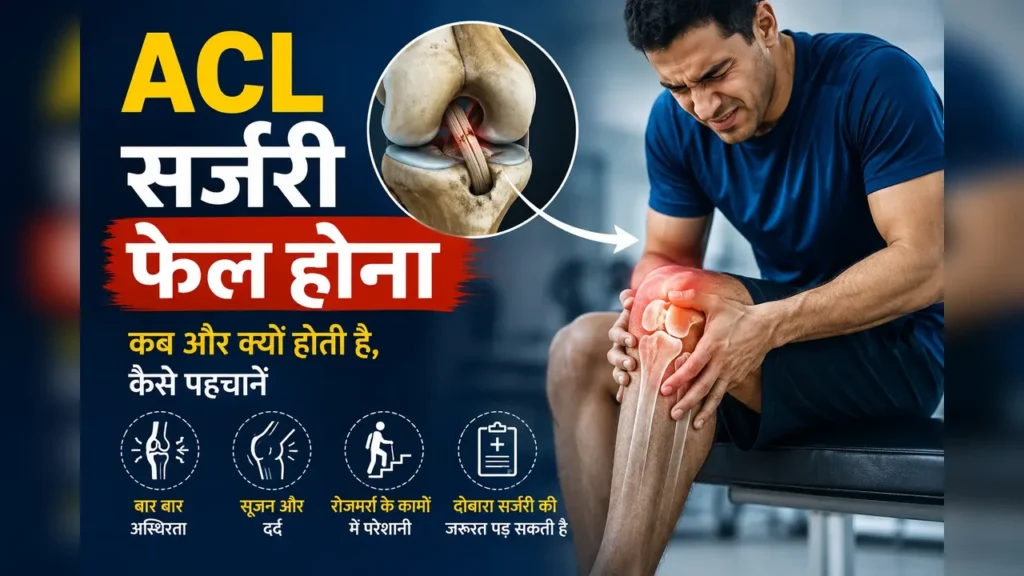
- A torn ACL left untreated leads to meniscal damage and early arthritis in 50 to 70% of patients within a decade. Timing your treatment correctly is as important as the treatment itself.
- Arthroscopic ligament reconstruction at Dr. Prince Uchadiya Orthopaedic And Joint Care Clinic allows patients to walk with support within 2 to 3 weeks and return to sport in 6 to 9 months.
- Do not mistake a ligament sprain for a complete tear. Only a clinical examination with Lachman testing, pivot shift, and MRI correlation confirms the actual diagnosis and the right treatment path.
- Dr. Prince sees patients at Nipania, Indore. If you need a second opinion on a ligament diagnosis before committing to surgery, a consultation with an experienced orthopaedic surgeon in Indore could change your entire treatment decision.
A young football player from Vijay Nagar came to our clinic eight months after twisting his knee during a match. He had been managing with a brace, painkillers, and hope. His MRI report, which he had received on the day of injury, showed a complete ACL tear. But no one had sat with him and explained what that actually meant for his knee, his sport, and the next ten years of his life.
Eight months of instability had already torn a portion of his medial meniscus. A problem that would have been straightforward at month one had become significantly more complex. The surgery was still successful, but his recovery took three months longer than it would have with timely intervention.
If you are searching for the best ligament injury doctor in Indore right now, you are probably in that same early window. And that window matters more than most patients realise.
Why Choosing the Best Ligament Injury Doctor in Indore Is a Decision That Shapes Years, Not Just Weeks
Ligament injuries are deceptive. In the first few days after a knee injury, many patients can walk, reduce swelling with ice, and even feel somewhat functional. That temporary improvement does not mean the injury is mild. It means the secondary stabilisers, specifically the muscles surrounding the knee, are compensating for a ligament that is no longer doing its job.
Every time that knee gives way, every time the tibia rotates abnormally under load, something else pays the price. The meniscus gets pinched. The articular cartilage absorbs forces it was never designed to handle. Slowly, damage accumulates that cannot be reversed by surgery later, only managed.
This is why orthopaedic literature is consistent: patients with untreated ACL tears who remain physically active have a significantly higher rate of meniscal tears and osteoarthritis compared to those treated early. According to a long-term study reviewed by Cleveland Clinic, patients who forgo ACL reconstruction are six times more likely to develop cartilage degeneration in the shinbone within 10 years.
Choosing the best ligament injury doctor in Indore is not just about finding someone with good reviews. It is about finding someone who will give you an accurate diagnosis, a complete picture of your options, and a treatment plan that protects your joint for the long term , not just gets you through the next few months.
What Qualifies Someone as the Best Ligament Injury Specialist in Indore
Patients in Indore often ask how to evaluate a ligament specialist without a medical background. Finding the best ligament injury doctor in Indore starts with knowing what to look for. There are specific things worth looking for.
The first is formal subspecialty training in arthroscopy. Ligament reconstruction is not a general orthopaedic procedure. It requires hands-on training in arthroscopic technique at a high-volume centre, precision in graft harvest and placement, and experience in managing the inevitable intraoperative variations that arise. A surgeon who trained at a tertiary referral centre with dedicated sports medicine and arthroscopy programmes will have exposure that most general orthopaedic training does not provide.
Dr. Prince Uchadiya completed his orthopaedic training at KEM Hospital, Mumbai, one of India’s most demanding clinical training environments. He holds a DNB Orthopaedics qualification with a Gold Medal, reflecting both academic depth and clinical competence. His arthroscopic experience spans 500+ arthroscopic procedures including ACL reconstruction, PCL repair, meniscal surgery, and shoulder ligament stabilisation.
The second marker is diagnostic rigour. The best ligament injury doctor in Indore will not send you for an MRI before doing a proper clinical examination. The Lachman test, anterior drawer test, and pivot shift test together give an experienced examiner far more clinical information than a report alone. MRI confirms and adds detail; it does not replace examination skill.
The third marker is honest communication. A surgeon who explains the full spectrum of options , including when surgery is not necessary , is a surgeon you can trust. Not every ligament injury requires reconstruction. Grade 1 sprains, partial tears in low-demand patients, and isolated MCL injuries often heal with structured physiotherapy. A good specialist knows when to operate and, equally, when not to.
The 4 Knee Ligaments Patients Confuse , and How Each One Is Treated Differently
One of the most common errors patients make is assuming that all ligament injuries are the same. They are not. The knee has four primary ligaments, and each has a distinct anatomy, injury pattern, and treatment approach.
ACL , Anterior Cruciate Ligament
The ACL is the most commonly injured ligament in the knee and the one most likely to require surgery in active patients. It controls forward movement of the tibia relative to the femur and provides rotational stability. A classic ACL injury happens during a sudden direction change, a pivot, or an awkward landing , often without any contact with another player. The characteristic signs are a sharp pop, rapid swelling within two hours, and a feeling that the knee has given way.
Partial ACL tears can sometimes be managed without surgery in low-demand patients. Complete tears in young, active individuals almost always require arthroscopic reconstruction to prevent progressive joint damage. If you are looking for the best ligament injury doctor in Indore for an ACL problem, learn more about the full ACL surgery process in Indore and what to expect from reconstruction.
PCL , Posterior Cruciate Ligament
The PCL is stronger than the ACL and less commonly torn. Injuries typically happen from a direct blow to the front of the tibia, such as a dashboard injury in a road accident or a fall on a bent knee. PCL injuries are often missed because they cause posterior knee pain and can present with subtler instability than ACL tears. Isolated PCL injuries are frequently treated non-surgically with rehabilitation. Combined PCL injuries involving the posterolateral corner are more complex and may require reconstruction.
MCL , Medial Collateral Ligament
The MCL runs along the inner side of the knee and provides medial stability. MCL injuries typically happen from a lateral force applied to the knee, such as a tackle in football that pushes the knee inward. These injuries are graded from Grade 1 (sprain) to Grade 3 (complete tear). Isolated MCL injuries , even complete tears , often heal remarkably well with physiotherapy and bracing. Surgery is reserved for combined injuries or cases where the MCL fails to heal despite proper rehabilitation.
LCL , Lateral Collateral Ligament
The LCL runs along the outer side of the knee. Isolated LCL injuries are less common than MCL injuries but can occur from a varus force applied to a bent knee. LCL tears, particularly when combined with posterolateral corner injuries, often require surgical reconstruction. They are among the more technically demanding ligament reconstructions in knee surgery.
Understanding which ligament is injured , and what grade of injury you are dealing with , requires clinical examination and imaging interpreted by someone who has seen a high volume of each pattern. This specificity is what separates a truly expert ligament injury doctor from a generalist.
How Dr. Prince Uchadiya Diagnoses Ligament Injuries at His Clinic in Indore
The diagnostic process at Dr. Prince Uchadiya Orthopaedic And Joint Care Clinic in Nipania, Indore follows a structured clinical pathway. Understanding this process helps patients know what to expect and prepares them to participate meaningfully in the consultation.
- Detailed injury history: The mechanism of injury, the exact moment of onset, whether there was a pop or giving way, the timeline of swelling, and current functional limitations all help narrow the diagnosis before any physical examination begins.
- Clinical examination of both knees: Both knees are always examined and compared. The Lachman test, anterior drawer test, pivot shift test, varus and valgus stress tests, and posterior sag sign are all performed as indicated. Each test interrogates a different ligament and a different plane of instability.
- X-ray evaluation: Plain X-rays are taken to rule out avulsion fractures (where the ligament pulls off a bone fragment rather than tearing mid-substance) and to assess the overall joint alignment.
- MRI correlation: MRI is used to confirm the clinical diagnosis, classify the tear, assess associated meniscal and cartilage pathology, and plan the surgical approach. The MRI report is reviewed alongside the clinical findings , never in isolation.
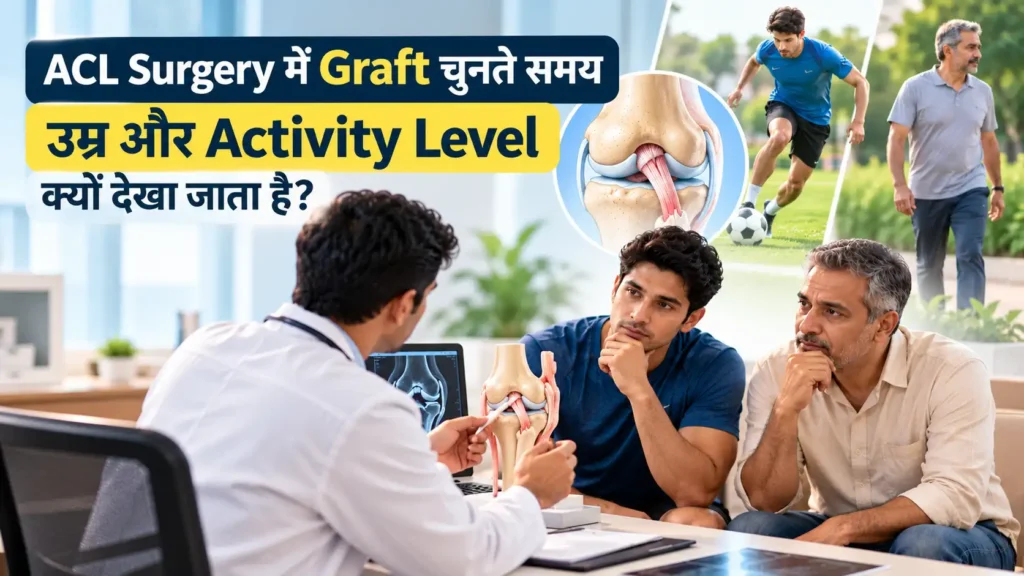
- Patient-specific treatment planning: No two patients receive the same plan. Age, activity level, occupational demands, timeline since injury, and personal goals all influence whether rehabilitation alone, reconstruction, or a staged approach is recommended.
Understanding the full arthroscopic process helps patients feel confident before proceeding. It also helps them verify whether the surgeon they are considering is genuinely qualified, which is the core question for anyone seeking the best ligament injury doctor in Indore. You can read a complete overview on the arthroscopy explained page at drprincearthro.com.
Arthroscopic Ligament Surgery in Indore: What the Procedure Actually Involves
Many patients in Indore arrive at the clinic anxious about surgery based on descriptions from friends or family who had open ligament surgery a decade ago. Arthroscopic ligament reconstruction is a fundamentally different experience.
In arthroscopic ACL reconstruction, the procedure is performed through two or three tiny incisions, each roughly 4 to 5 mm, around the knee. A small camera (arthroscope) transmits a live, magnified view of the joint interior to a monitor. The surgeon works through these incisions with miniature instruments, harvesting the replacement graft (most commonly from the hamstring or patellar tendon) and securing it in anatomically precise bone tunnels that replicate the native ACL’s orientation.
The entire procedure typically takes 60 to 90 minutes. Hospital stay is one to two days. Most patients in Indore are walking with crutches within 24 to 48 hours.
The advantage of arthroscopic technique over open surgery is not just cosmetic. Smaller incisions mean less disruption to surrounding tissue, significantly less postoperative pain, lower risk of infection, faster recovery of knee range of motion, and earlier rehabilitation. As a trusted arthroscopy surgeon in Indore, Dr. Prince Uchadiya performs all ligament reconstructions through this keyhole approach.
Ligament Surgery Recovery Timeline: What to Expect Month by Month in Indore
Recovery after ligament reconstruction follows a predictable biological timeline. The graft does not immediately become a functioning ligament , it goes through a process called ligamentisation, where the body gradually revascularises and remodels the graft tissue into a true ligament. This process takes months, not weeks, which is why the recovery timeline is what it is regardless of how quickly the incisions heal on the surface.
The general progression after ACL reconstruction at Dr. Prince Uchadiya Orthopaedic And Joint Care Clinic:
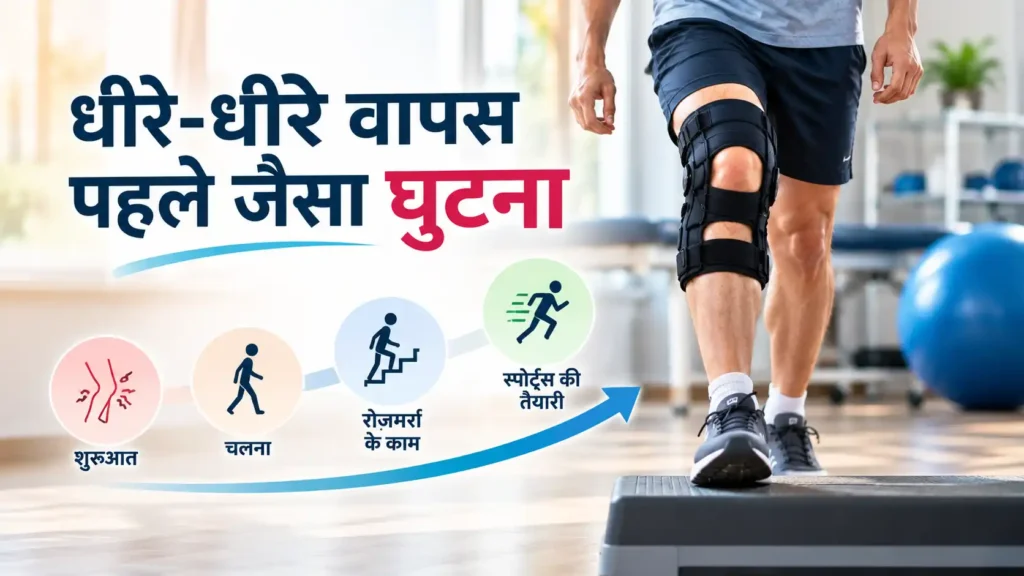
- Days 1 to 14: Focus is on swelling control, pain management, maintaining full knee extension, and beginning gentle quadriceps activation. Crutches are used. Most patients regain comfortable ambulation within 2 to 3 weeks.
- Weeks 3 to 6: Physiotherapy begins progressively. Stationary cycling, closed-chain strengthening exercises, and gradual weight-bearing without crutches are the focus of this phase.
- Months 2 to 4: Strengthening of the quadriceps, hamstrings, and hip stabilisers. Balance and proprioception training begins. Light jogging is typically introduced around months 3 to 4 when strength symmetry benchmarks are met.
- Months 4 to 6: Running mechanics, agility drills, and sport-specific movement training. The knee’s functional capacity is tested systematically before advancing to more demanding activities.
- Months 6 to 9: Return to contact sport is considered when the injured limb demonstrates at least 90% strength symmetry with the uninjured limb. Research from the American Academy of Orthopaedic Surgeons shows that 90% of patients return to pre-injury sport levels with a correctly timed and properly guided rehabilitation programme.
Patients who want a detailed look at the running-specific rehabilitation milestones can read the dedicated guide on returning to running after ACL surgery in Indore at drprincearthro.com.
When Non-Surgical Treatment Is the Right Answer for Ligament Injuries in Indore
Honest orthopaedic care means recommending surgery only when it genuinely produces better outcomes than rehabilitation alone. At Dr. Prince Uchadiya Orthopaedic And Joint Care Clinic, the following clinical scenarios lead to a non-surgical recommendation:
- Grade 1 and Grade 2 ACL injuries: Partial tears with intact fibres and no functional instability can respond well to structured physiotherapy, especially in patients over 45 who are not returning to cutting and pivoting sports.
- Isolated MCL tears (all grades): The MCL has excellent healing capacity because it sits outside the joint and has a good blood supply. Even complete MCL tears often heal within 6 to 12 weeks with bracing and targeted physiotherapy.
- Isolated PCL tears without posterolateral instability: Grade 1 and Grade 2 PCL injuries in non-athletic patients frequently achieve good functional outcomes without reconstruction.
- Older sedentary patients with ACL tears: A 58-year-old with a complete ACL tear who plays no competitive sport, has no functional instability, and leads a low-demand lifestyle is not the same candidate as a 24-year-old football player. The AAOS guidelines explicitly support non-surgical management in this population.
If you have received a surgery recommendation from another provider and want an independent evaluation of whether it is truly necessary, a structured second opinion consultation is available. Read more about what an orthopaedic second opinion in Indore involves and when it makes sense.
How Much Does Ligament Surgery Cost in Indore and What Factors Affect It
Cost is a legitimate concern for patients and their families in Indore, and it deserves a straightforward answer rather than vague ranges. Knowing what to expect financially helps you choose the best ligament injury doctor in Indore without guesswork.
The cost of arthroscopic ACL reconstruction in Indore typically ranges from Rs. 80,000 to Rs. 1,80,000 depending on several factors:
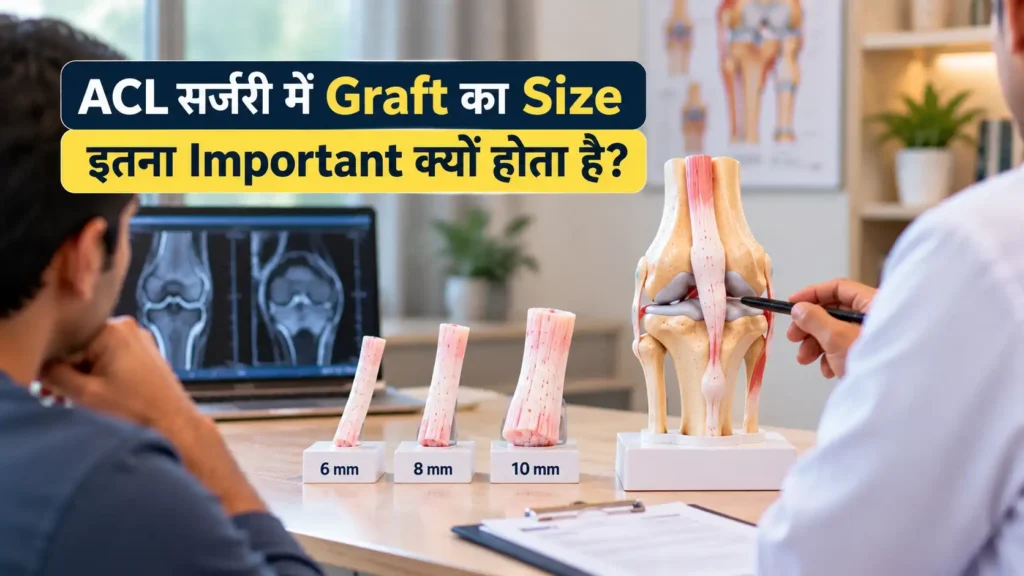
- Graft choice: Hamstring autograft (from the patient’s own body) is the most commonly used graft and is associated with lower total cost than patellar tendon or allograft options.
- Fixation devices: Bio-absorbable and titanium fixation systems vary in cost. Implant quality directly affects long-term graft integration.
- Associated procedures: If a meniscal tear or cartilage lesion is identified at arthroscopy and requires simultaneous repair, this adds to the complexity and cost of the procedure.
- Hospital facility charges: Modular operation theatres with HD arthroscopy towers and digital imaging systems carry higher facility costs than basic setups. These costs are offset by better surgical precision and lower complication rates.
- Rehabilitation: Post-surgical physiotherapy spanning 6 to 9 months is an essential part of the total cost of recovery and should be factored into planning.
Patients covered under Ayushman Bharat PM-JAY may be eligible for coverage of ACL reconstruction and associated orthopaedic procedures. Eligibility depends on valid documentation and the specific procedure code. A consultation will confirm what is covered under your scheme before any financial commitment.
Why Indore Patients Specifically Trust Dr. Prince Uchadiya for Ligament Injuries
Several factors distinguish Dr. Prince Uchadiya when patients in Indore are evaluating their options for ligament care. For anyone seeking the best ligament injury doctor in Indore, these specifics matter.
His training at KEM Hospital Mumbai, one of India’s highest-volume tertiary orthopaedic centres, provided exposure to complex multi-ligament reconstructions, combined ACL-meniscal surgeries, and revision cases that most orthopaedic training environments rarely see. This depth of exposure matters in clinical decision-making even for straightforward primary ACL reconstructions.
His DNB Gold Medal is not a promotional claim. It is a formally awarded academic distinction reflecting performance across written, clinical, and oral evaluations in orthopaedic surgery at the national level.
His approach to patient communication is consistent in reviews. Multiple patients specifically note that Dr. Prince explained their diagnosis in plain language, showed them their MRI images, and gave them a realistic picture of what recovery would require. That quality of pre-operative counselling directly affects post-operative compliance with rehabilitation, which directly affects outcomes.
The clinic at Nipania, Indore, has modular operation theatres equipped with HD arthroscopy towers, digital imaging systems, and bio-absorbable fixation systems. In-house physiotherapy is supervised by trained physiotherapists who coordinate with Dr. Prince throughout the recovery phase rather than managing rehabilitation independently after discharge.
“Surgery gives the structure. Rehab gives the strength. Both go hand in hand.” , Dr. Prince Uchadiya, Orthopaedic and Arthroscopic Surgeon, Nipania, Indore
If you have been looking for the best ligament injury doctor in Indore, the evidence in a consultation is more reliable than any list or review. The quality of the clinical examination, the clarity of the explanation, and the specificity of the treatment plan will tell you more than any title.
10 Most Asked Questions About Ligament Injuries in Indore
1. How do I know if I have torn a ligament or just sprained it?
A sprain means the ligament fibres have been stretched but not completely torn. A tear means some or all fibres are disrupted. Clinically, the distinction matters enormously. A sprain causes pain and some swelling but the knee remains stable. A complete tear causes instability , the knee gives way during movement or under load. Only a clinical examination by a qualified ligament specialist in Indore combined with MRI can accurately distinguish between a sprain and a tear. Do not rely on the degree of pain alone; some complete ACL tears hurt less in the first 24 hours than a severe sprain.
2. Can a torn knee ligament heal on its own without surgery?
It depends on which ligament and how severely it is torn. The MCL has excellent intrinsic healing capacity and Grade 1 to Grade 3 MCL tears frequently heal without surgery. The ACL, however, is inside the joint, bathed in synovial fluid that actively inhibits natural healing. Complete ACL tears essentially never heal on their own in a way that restores functional stability. If you have been told your torn ACL will heal with rest, seek a second opinion from a specialist before accepting that guidance.
3. How long after a ligament injury should I wait before seeing a doctor in Indore?
See a doctor within 48 to 72 hours of any significant knee injury. Contrary to common advice to wait for swelling to reduce, early clinical examination by an experienced orthopaedic surgeon in Indore is more reliable than a delayed one because muscle guarding has not yet set in. An acute examination combined with imaging gives the most accurate diagnostic picture. Waiting weeks delays the diagnosis and, in cases requiring surgery, allows secondary damage to accumulate.
4. Is arthroscopic ligament surgery safe? What are the risks?
Arthroscopic ACL reconstruction is one of the most studied and consistently successful procedures in orthopaedic surgery globally. The overall complication rate in experienced hands is below 5%, and serious complications such as infection, graft failure, or deep vein thrombosis are uncommon. The risk of graft failure (re-rupture) in patients who return to high-demand sport is approximately 5 to 10%, which is why a full rehabilitation programme before return-to-sport clearance is non-negotiable rather than optional.
5. What is the difference between ACL surgery and PCL surgery in Indore?
ACL and PCL reconstruction are technically distinct procedures despite both involving ligament replacement. ACL surgery is performed far more frequently and has a longer evidence base. PCL reconstruction involves different tunnel placement, different graft tensioning principles, and often a more complex rehabilitation protocol because the PCL resists posterior tibial translation rather than anterior. Choosing the best ligament injury doctor in Indore for a PCL problem means finding someone who has specific experience with PCL anatomy, not just ligament surgery in general.
6. Will I be able to play cricket or football again after ligament surgery in Indore?
Yes, for the vast majority of young, active patients. Studies consistently show that 85 to 90% of patients who complete a full rehabilitation programme after ACL reconstruction return to their pre-injury sport and activity level. The variable that most influences this outcome is not the surgery itself but the quality of rehabilitation, the timing of return-to-sport clearance, and the patient’s compliance with the full 6 to 9 month recovery protocol. Returning to cricket or football at 4 months because the knee “feels fine” significantly increases re-injury risk.
7. Can I do physiotherapy instead of surgery for my ACL tear?
In specific clinical situations, yes. A young, active patient with a complete ACL tear who insists on avoiding surgery can trial physiotherapy with a clear understanding of the trade-offs: the knee may remain functional for many daily activities, but the risk of meniscal injury and cartilage damage accumulates with every instability episode. “Coper” patients , those who adapt well to ACL deficiency through muscular compensation , exist, but they are less common than assumed. A specialist examination is required to determine whether you are a realistic candidate for non-surgical management.
8. How much does ACL surgery cost in Indore, and is it covered by insurance?
Arthroscopic ACL reconstruction in Indore typically ranges from Rs. 80,000 to Rs. 1,80,000 depending on graft type, implant quality, and whether concurrent procedures such as meniscal repair are needed. Most private health insurance policies in India cover ACL reconstruction as a planned surgical procedure subject to waiting periods and policy limits. Government schemes including Ayushman Bharat PM-JAY cover eligible patients for specific orthopaedic procedures. Confirm coverage details with your insurer and with the clinic before scheduling surgery.
9. What questions should I ask a ligament specialist before agreeing to surgery in Indore?
Ask specifically: How many ACL reconstructions do you perform per year? What graft do you recommend for my case and why? What is your re-rupture rate? Do you have in-house physiotherapy or will I be referred out for rehabilitation? What happens if the graft fails? What are the realistic expectations for my specific sport and timeline? A surgeon who answers these questions clearly, with specifics rather than generalities, is a surgeon who has the clinical confidence that comes from genuine experience.
10. When is a second opinion worth getting for a ligament injury in Indore?
Get a second opinion whenever surgery is recommended and you have not yet felt that the diagnosis was fully explained, whenever you were told surgery is not needed but your knee continues to give way, or whenever the recommended approach (graft type, timing, or rehabilitation plan) seems inconsistent with what you have read from credible sources. A structured second opinion from an experienced orthopaedic surgeon is not disloyalty to your current doctor , it is informed decision-making. Read about how a formal orthopaedic second opinion in Indore is structured at Dr. Prince Uchadiya’s clinic.