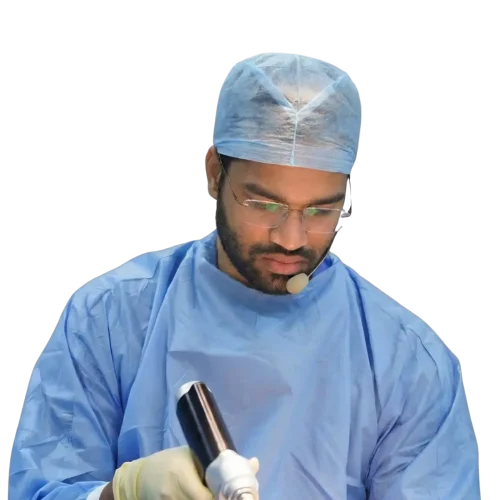
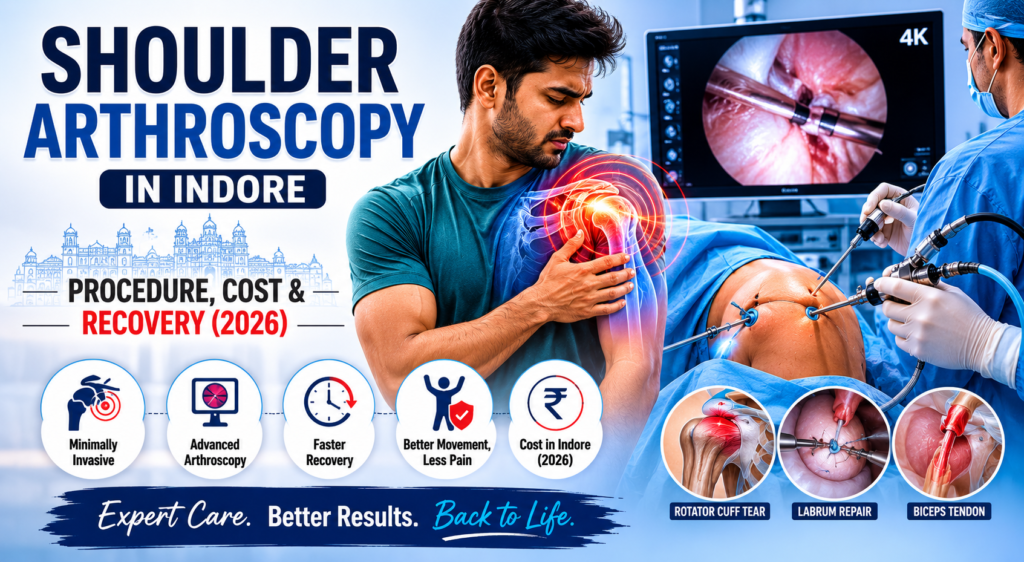
A 32-year-old cricket fast bowler visited Dr. Prince Uchadiya’s clinic in Indore with a rotator cuff partial tear that had not responded to three months of physiotherapy and anti-inflammatory medications. His MRI showed a significant partial-thickness tear of the supraspinatus tendon, and his shoulder continued to hurt with every bowling delivery. The options were clear: continue managing conservatively and watch the tear potentially expand, or address it definitively with shoulder arthroscopy in Indore. He chose surgery. Five months later, he was bowling at full pace again in competitive matches. His story is not unusual. Shoulder arthroscopy in Indore, when performed by a specialist on the right candidate with an accurate diagnosis, consistently produces outcomes that conservative management cannot match for structural shoulder pathology. This guide covers everything patients in Indore need to know about shoulder arthroscopy in 2026: the procedure itself, which conditions it treats, what it costs, what the recovery looks like, and the honest answers to the fifteen questions most frequently asked by patients before deciding whether surgery is the right path.
What Is Shoulder Arthroscopy and How Is It Different From Open Surgery?
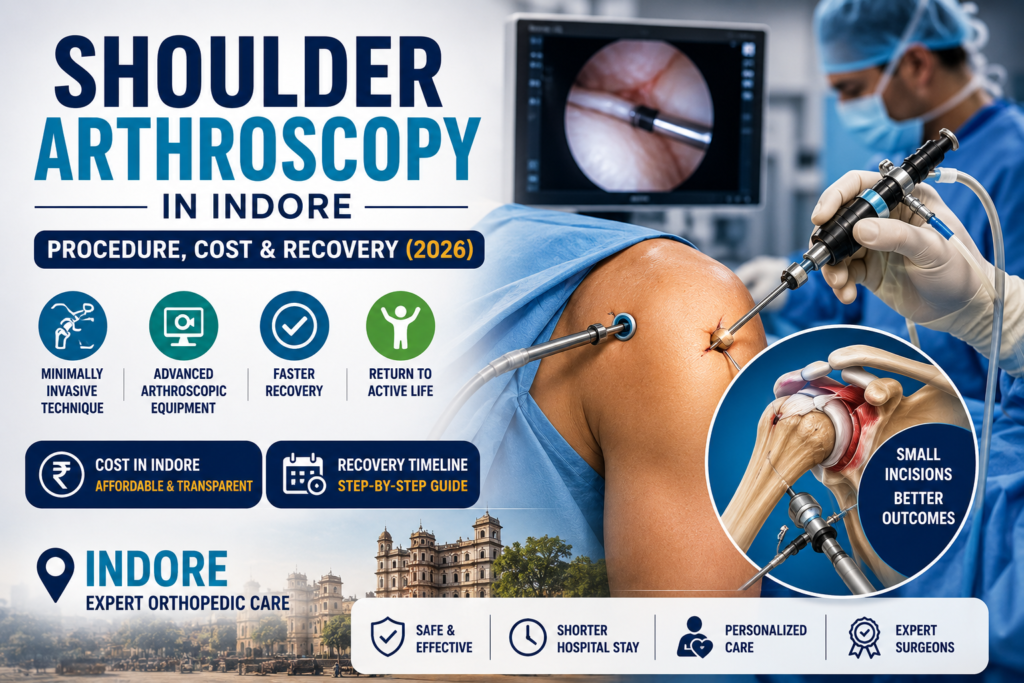
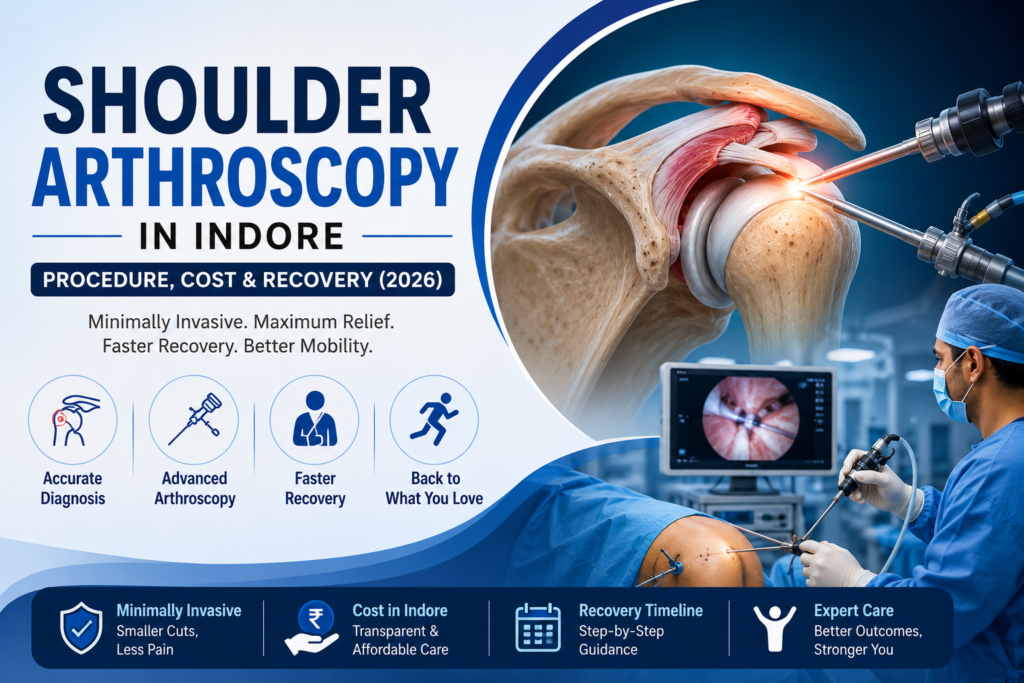
Shoulder arthroscopy is a minimally invasive surgical technique in which the surgeon uses a tiny camera called an arthroscope, roughly the width of a pencil, along with purpose-built precision instruments, to examine and treat the interior of the shoulder joint through two to four small incisions in the skin, each typically less than a centimetre in size. The word arthroscopy comes from the Greek words for joint and to look, and that is precisely what the technique enables: a direct, magnified, real-time view of every structure inside the shoulder including the rotator cuff tendons, the glenoid labrum, the joint cartilage, the biceps tendon, the acromioclavicular joint, and the bursa, displayed on a high-definition monitor in the operating theatre.
The difference between shoulder arthroscopy in Indore and traditional open shoulder surgery is significant for the patient’s experience. Open surgery requires a large incision through the skin and the underlying muscles to access the shoulder joint. This produces more tissue disruption, more post-operative pain, a longer hospital stay, a longer recovery period, and higher infection risk. Shoulder arthroscopy achieves the same surgical goals through multiple small portals, preserving surrounding muscle and soft tissue, and allowing the patient to return home the same day in most cases. The visual quality provided by the arthroscope is in many ways superior to what an open incision allows, because the magnified camera can examine the interior of the joint from multiple angles without requiring the surgeon to retract and disturb surrounding structures.
Which Shoulder Conditions Can Be Treated With Shoulder Arthroscopy in Indore?
Shoulder arthroscopy in Indore is not a single procedure but a platform of techniques that can address a wide range of shoulder pathologies. The appropriate treatment within the arthroscopic framework depends entirely on the diagnosis, which is established through clinical examination and MRI imaging before surgery is planned. The main conditions managed through shoulder arthroscopy include the following.
- Rotator cuff tears: The four rotator cuff tendons surrounding the shoulder joint can be partially or fully torn from overuse, trauma, or degeneration. Arthroscopic rotator cuff repair uses suture anchors inserted into the bone to reattach the torn tendon edges back to the humerus. This is one of the most commonly performed shoulder arthroscopy procedures globally and has well-established evidence for excellent outcomes. The full information about rotator cuff tear management in Indore is available on the rotator cuff tear page.
- Shoulder instability and Bankart lesion repair: When the shoulder dislocates anteriorly, the anterior labrum, the cartilage rim that deepens the socket, is torn away from the glenoid. This creates a Bankart lesion that makes the shoulder chronically unstable. Arthroscopic Bankart repair reattaches the torn labrum back to the socket edge using suture anchors, restoring the structural mechanism that keeps the shoulder in place during activity.
- Subacromial impingement and bursitis: When the rotator cuff tendons are repeatedly pinched under the acromion bone during shoulder movement, bursitis and tendon irritation develop. Arthroscopic subacromial decompression removes the inflamed bursal tissue and smooths or reshapes the undersurface of the acromion to create more space for the tendons.
- Frozen shoulder release: In patients with severe adhesive capsulitis who have not responded to conservative management, arthroscopic capsular release divides the thickened, contracted joint capsule under direct vision, immediately restoring range of motion without the risks of manipulation under anaesthesia. Patients seeking specialist care for this condition can also read the frozen shoulder treatment page.
- SLAP lesion repair: The superior labrum from anterior to posterior, abbreviated SLAP, is the upper portion of the labral ring that also anchors the long head of the biceps tendon. SLAP tears cause deep shoulder pain and a clicking sensation, particularly in overhead athletes. Arthroscopic repair reattaches the torn labrum or addresses the biceps tendon depending on the tear pattern.
- Acromioclavicular joint pathology: Arthroscopic distal clavicle excision removes a small portion of the clavicle end to eliminate painful bone-on-bone contact in the acromioclavicular joint when it has been damaged by injury or arthritis.
- Calcific tendinitis: Calcium deposits that form within the rotator cuff tendons can cause intense, acute shoulder pain. Arthroscopic needling, lavage, and removal of the calcium deposits provides reliable and lasting relief when non-surgical treatments have failed.
How Shoulder Arthroscopy in Indore Is Performed: What Patients Need to Know
Understanding what happens during shoulder arthroscopy in Indore reduces pre-operative anxiety and helps patients prepare appropriately for the experience. The procedure is performed under general anaesthesia with the addition of a regional nerve block, most commonly an interscalene block, which provides excellent post-operative pain control for the first twelve to twenty-four hours after surgery.
The patient is positioned in either the beach chair position, seated with the arm hanging freely, or the lateral decubitus position, lying on the unaffected side, depending on surgeon preference and the specific procedure planned. The shoulder and arm are prepared and draped, and the skin portals are marked with a pen before the incisions are made. Sterile fluid is pumped into the shoulder joint to distend it and create space for the instruments to move without damaging the cartilage surfaces.
The arthroscope is inserted through the first portal and the entire shoulder joint is systematically inspected. Every structure including the rotator cuff from its undersurface, the biceps tendon, the labrum, the articular cartilage, the anterior and posterior capsule, and the bursae is examined. This diagnostic survey is completed before any intervention begins, because the intra-operative findings sometimes reveal additional pathology that was not visible on the preoperative MRI and influences the surgical plan.
Once the diagnostic survey is complete, the treatment portals are created and the appropriate procedure is performed under continuous arthroscopic vision. The entire procedure from incision to closure typically takes between 45 minutes and two and a half hours depending on the complexity and number of structures being addressed. The portals are closed with sutures or small adhesive strips and a dressing is applied.
Shoulder Arthroscopy Cost in Indore in 2026: What Patients Should Know
One of the most common questions patients raise before shoulder arthroscopy in Indore is about the cost, and understanding the factors that influence the final price helps patients plan appropriately and compare options with accurate information.
The cost of shoulder arthroscopy in Indore in 2026 depends primarily on the type and complexity of the procedure being performed. A diagnostic arthroscopy, where the joint is inspected but no significant structural repair is required, sits at the lower end of the cost range. Procedures involving rotator cuff repair with suture anchors, Bankart repair, or capsular release involve more surgical time, specialised implants, and technical complexity, which is reflected in a higher procedure cost.
Based on published cost data across India in 2026, shoulder arthroscopy costs in India generally range from Rs 70,000 to Rs 2,50,000 for the procedure itself, with the final total varying based on the type of repair performed, the implants used, the hospital’s infrastructure and accreditation level, the anaesthetist’s fees, and the duration of the hospital stay. Shoulder arthroscopy in Indore at Dr. Prince Uchadiya’s specialist orthopaedic clinic is priced competitively within the Madhya Pradesh healthcare market and is transparent from the first consultation. Patients receive a detailed cost estimate before any decision is made.
Health insurance policies that cover orthopaedic surgical procedures generally include arthroscopic shoulder surgery when it is medically indicated and supported by appropriate clinical documentation. Patients covered under Ayushman Bharat PMJAY and other government health schemes should enquire at consultation whether the specific procedure planned falls within the scheme’s covered package list. More information about government orthopaedic schemes in Madhya Pradesh is on the MP government orthopaedic schemes page.
Recovery After Shoulder Arthroscopy in Indore: A Realistic Timeline
Recovery from shoulder arthroscopy in Indore is faster and less painful than recovery from open shoulder surgery, but it is not instantaneous. The timeline varies significantly depending on which procedure was performed. A subacromial decompression or diagnostic procedure has a much shorter recovery than a rotator cuff repair or Bankart repair, because the latter require time for the repaired tissue to heal and regain its mechanical strength before progressive loading begins.
Most patients undergoing shoulder arthroscopy in Indore are discharged on the same day or after one night in the hospital. The arm is placed in a sling immediately after surgery, and the regional nerve block provides excellent pain control for the first day. Once the block wears off, oral pain medications manage discomfort effectively for most patients, and the vast majority find that the post-operative pain is significantly less than the chronic pain they had been living with before the procedure.
In the first one to three weeks, the arm remains in a sling with only gentle passive movements permitted as directed by the physiotherapy team. Ice application for twenty minutes several times daily reduces swelling and discomfort effectively during this phase. From weeks three to six, the sling is progressively weaned as range of motion exercises increase in both frequency and arc. Active physiotherapy focusing on restoring shoulder mobility begins in earnest at four to six weeks, with strengthening exercises introduced from around eight to twelve weeks post-surgery. Most patients achieve a functional range of motion adequate for daily activities including reaching, personal care, and light domestic tasks by three months. Return to sport and full-capacity overhead or impact activities typically occurs between four and six months for most shoulder arthroscopy procedures, with rotator cuff repairs requiring the longer end of this timeline due to the biology of tendon healing.
The post-surgical rehabilitation program is as important as the surgery itself. Patients who complete their structured physiotherapy program and perform their home exercises consistently reach functional milestones faster and more completely than those who treat rehabilitation as optional. The post-injury rehabilitation program at Dr. Prince Uchadiya’s clinic in Indore provides a structured, progressed recovery plan designed to take shoulder arthroscopy patients through every phase of healing safely.
Shoulder Arthroscopy in Indore for Athletes: Return to Sport Outcomes
For athletes in Indore, from competitive cricketers and kabaddi players to recreational badminton players and gym enthusiasts, shoulder arthroscopy outcomes are supported by a growing body of published clinical evidence. A systematic review published in PubMed analysing 20 studies covering arthroscopic rotator cuff repair in overhead athletes found that 75.4 percent of patients returned to sport within an average of 6.4 months after surgery. All measured functional outcome scores improved significantly at follow-up across the studies reviewed.
For recreational athletes, return-to-sport rates after arthroscopic rotator cuff repair are higher, reaching over 90 percent in some studies. The rates are somewhat lower for competitive overhead athletes in sports like cricket, tennis, and baseball, where the demands of the repaired tendon are greater. This is why the rehabilitation program for overhead athletes after shoulder arthroscopy in Indore is specifically designed to include progressive overhead loading and sport-specific movement retraining, not just general shoulder strengthening, before any return to competitive activity is cleared.
The principle that guides return-to-sport clearance after shoulder arthroscopy in Indore is the same as for any orthopaedic procedure: readiness is based on objective criteria including strength symmetry, pain-free range through the full functional arc, and sport-specific movement quality, not simply on time elapsed since surgery.
Why Choosing a Specialist for Shoulder Arthroscopy in Indore Matters
The outcomes of shoulder arthroscopy are directly influenced by the experience and training of the surgeon performing it. Shoulder arthroscopy is a technically demanding procedure that requires specialised training beyond general orthopaedic surgery. The ability to navigate the joint accurately, identify all pathology during the diagnostic survey, choose the correct repair technique for the specific tear pattern, place suture anchors in the optimal positions, and manage intra-operative findings that were not apparent on preoperative imaging all require a surgeon who performs shoulder arthroscopy regularly and with appropriate specialised training.
Dr. Prince Uchadiya is a specialist orthopaedic surgeon in Indore with specific training and experience in arthroscopic surgery of the shoulder and other joints. Patients seeking shoulder arthroscopy in Indore receive a thorough pre-operative assessment, a clearly explained surgical plan, and access to the complete spectrum of arthroscopic shoulder procedures, with post-operative follow-up and structured rehabilitation support. Further details about the arthroscopic surgery approach used in Indore are on the arthroscopy surgery page.
Frequently Asked Questions About Shoulder Arthroscopy in Indore
1. What is shoulder arthroscopy and when is it recommended?
Shoulder arthroscopy is a minimally invasive surgical procedure in which a small camera and precision instruments are inserted into the shoulder joint through tiny incisions to diagnose and treat internal shoulder pathology. It is recommended when a structural problem within the shoulder, such as a rotator cuff tear, Bankart labral lesion, subacromial impingement, or frozen shoulder capsular contracture, has been confirmed on imaging and has not responded adequately to conservative management including physiotherapy and medications over an appropriate period. It is also indicated as an urgent or early intervention in specific situations such as a large acute rotator cuff tear or a Bankart lesion in an active young patient where delaying surgery would allow progressive damage to occur.
2. Which shoulder problems can be treated with shoulder arthroscopy?
Shoulder arthroscopy in Indore can address rotator cuff tears of all grades, Bankart labral tears causing shoulder instability, subacromial impingement and bursitis, frozen shoulder through capsular release, SLAP tears of the superior labrum, calcific tendinitis through calcium removal, acromioclavicular joint arthritis through distal clavicle excision, and loose bodies within the joint. The specific procedure performed depends entirely on the preoperative diagnosis established through clinical examination and MRI imaging, and on the intra-operative findings once the joint is under direct arthroscopic vision. Some patients have a single pathology treated; others have two or more problems identified and addressed in a single surgical session.
3. Is shoulder arthroscopy better than open shoulder surgery?
For the majority of shoulder conditions that require surgical treatment, arthroscopic surgery produces equivalent or superior clinical outcomes compared to open surgery, with the additional benefits of less tissue disruption, smaller incisions, lower infection risk, less post-operative pain, shorter hospital stay, and faster early recovery. The specific advantage varies by condition: arthroscopic Bankart repair and rotator cuff repair are well-established as producing results comparable to open techniques in appropriately selected patients. There are still some situations, particularly in complex revision cases or those with severe bone loss, where an open or combined approach may be preferred. Dr. Prince Uchadiya evaluates each patient individually and discusses the most appropriate surgical approach based on the specific anatomy and pathology found.
4. What is the difference between arthroscopic shoulder surgery and open surgery?
The fundamental difference is the size of the incision and the degree of tissue disruption required to access the joint. Open shoulder surgery uses an incision of several centimetres that requires cutting through or splitting the deltoid muscle and the soft tissue envelope to access the shoulder joint directly. Arthroscopic surgery uses two to four incisions each less than a centimetre in size, through which a camera and instruments are inserted without cutting through the major shoulder muscles. The visual quality inside the joint is actually better with arthroscopy because of the magnified camera view. Patients undergoing arthroscopic shoulder surgery in Indore typically experience less pain in the immediate post-operative period, go home on the day of or the day after surgery, and begin moving the shoulder earlier than after open surgery.
5. How long does shoulder arthroscopy surgery take?
The duration of shoulder arthroscopy in Indore depends on which procedure or combination of procedures is being performed. A diagnostic arthroscopy with subacromial decompression takes approximately 45 to 60 minutes of operative time. A Bankart repair for shoulder instability takes approximately 60 to 90 minutes. A rotator cuff repair takes between 60 minutes and two and a half hours depending on the size and complexity of the tear and the number of tendons involved. The total time in the operating theatre is longer than the operative time itself because of the pre-operative preparation and the positioning of the patient. Patients are typically in the recovery room for one to two hours after the procedure before being transferred to their ward or day surgery area.
6. How much does shoulder arthroscopy cost in Indore in 2026?
The cost of shoulder arthroscopy in Indore in 2026 varies based on the type and complexity of the procedure, the implants used, the hospital’s facilities, and whether the patient is covered by health insurance or a government scheme. Based on current India-wide pricing data, shoulder arthroscopy in India ranges from approximately Rs 70,000 to Rs 2,50,000, with the procedure cost at the lower end for simpler decompression procedures and at the higher end for complex rotator cuff repairs or combined procedures requiring multiple suture anchors. At Dr. Prince Uchadiya’s clinic in Indore, patients receive a transparent, itemised cost estimate at consultation before any commitment is made. Patients with health insurance should check with their insurer regarding coverage for arthroscopic shoulder surgery as a medically indicated procedure.
7. How many days does recovery take after shoulder arthroscopy?
The hospital stay after shoulder arthroscopy in Indore is typically zero to one day. Most patients go home on the day of surgery. The total recovery timeline from the day of surgery to full functional recovery depends on the procedure performed. For subacromial decompression and bursectomy, most patients are functionally recovered within four to six weeks. For Bankart repair, return to full activity takes approximately four to six months. For rotator cuff repair, the timeline is four to six months for return to daily activities and sport, with the biological healing of the tendon-to-bone junction taking at least three months before significant strength loading is safe. Patients who are consistent with their physiotherapy program throughout recovery reach each milestone faster than those who attend sporadically.
8. When can patients return to gym, sports, or gymnastics after shoulder arthroscopy?
Light gym activities involving the lower body can begin as early as two to three weeks after surgery in most patients. Upper body exercise using the operated arm is restricted based on the procedure performed. For subacromial decompression without repair, light upper body exercise typically resumes at six to eight weeks. For rotator cuff repair or Bankart repair, resistance training involving the shoulder begins in a progressive, physiotherapy-guided fashion from around three months, with return to full gym lifting capacity at five to six months. Gymnastics, which places exceptional demands on shoulder stability and end-range mobility, typically has the longest return timeline, often six to nine months, and requires specific return-to-sport testing and clearance before resumption of vault, bar, or ring work.
9. Can athletes return to fast bowling or overhead sports after shoulder arthroscopy?
Yes, though the timeline for overhead sports athletes is longer and the rehabilitation program must specifically include progressive overhead loading before return. Published clinical evidence from a systematic review covering 692 overhead athletes who underwent arthroscopic rotator cuff repair found that 75.4 percent returned to sport within an average of 6.4 months, with all functional outcome measures improving significantly at follow-up. For fast bowlers in cricket, the bowling action subjects the shoulder to particularly demanding combination of rotation, distraction, and deceleration forces. Returning before the shoulder has regained adequate rotator cuff strength, scapular control, and proprioceptive function risks re-injury of the repaired tendon. Return-to-bowling clearance is based on objective strength testing and a phased progression from short-pitch bowling to full-pace deliveries under specialist supervision.
10. How long does shoulder pain last after arthroscopy surgery?
Immediate post-operative pain is well-controlled by the regional nerve block that most patients receive alongside general anaesthesia. Once the block wears off, typically twelve to twenty-four hours after surgery, oral pain medications manage discomfort effectively. Most patients find that the sharpest post-operative pain settles within the first one to two weeks as initial swelling reduces and the surgical portals heal. A background aching or soreness with movement is normal for four to six weeks in most procedures. The pain associated with physiotherapy exercises, where the shoulder is progressively loaded and stretched, is different from surgical pain and is expected as part of the recovery process. Overall, the majority of patients report that their post-operative pain journey is significantly better than what they had anticipated, and considerably less debilitating than the chronic shoulder pain that brought them to surgery in the first place.
11. Is stiffness or limited shoulder movement normal after shoulder arthroscopy?
Yes, some degree of stiffness and restricted range of motion immediately after shoulder arthroscopy is expected and normal. Swelling within the joint from the surgical procedure, guarding of the surrounding muscles, and the required immobilisation period in a sling all contribute to temporary reduced motion. What is important is that range of motion is actively and progressively restored through the physiotherapy program rather than being allowed to plateau. Patients who do not begin their range-of-motion exercises early after shoulder arthroscopy in Indore risk developing secondary stiffness from scar tissue formation within the joint. This is why physiotherapy is started within days of the procedure, not weeks, even when the shoulder is still sore. Stiffness that is worsening rather than improving, or that persists beyond three months without progress, should be discussed with Dr. Prince Uchadiya at a follow-up appointment.
12. What happens if shoulder pain continues months after arthroscopy?
Persistent shoulder pain several months after shoulder arthroscopy in Indore is not common but does occur and has identifiable causes that can be evaluated and addressed. Possible reasons include incomplete healing of the repaired tendon or labrum, a re-tear of the rotator cuff repair, adhesion formation causing secondary stiffness, a missed or secondary diagnosis not addressed during the initial surgery, inadequate rehabilitation that has not restored the muscular support and coordination needed for pain-free function, or in some cases the development of complex regional pain syndrome. Patients with persistent pain should return for a follow-up examination, which may include repeat MRI imaging to assess the integrity of the repair, and a review of the rehabilitation program to identify any gaps. The situation is rarely untreatable, but it does require proper re-evaluation rather than continued expectant management.
13. Can rotator cuff tears be treated with shoulder arthroscopy?
Yes. Arthroscopic rotator cuff repair is now the standard of care for most rotator cuff tears that require surgical treatment, having largely replaced open rotator cuff surgery in specialist orthopaedic practice. The arthroscopic approach allows the torn tendon to be visualised in detail from both the articular and bursal surfaces, the tear pattern to be precisely assessed, and suture anchors to be placed in optimal positions to achieve secure tendon reattachment. For partial-thickness tears, arthroscopic debridement or conversion to a full-thickness tear with repair is performed depending on the extent of tendon involvement. For full-thickness tears, single-row or double-row repair configurations are used based on the tear size and tissue quality. Massive rotator cuff tears with significant tissue retraction and poor tissue quality represent the most challenging cases and may require additional techniques including tendon transfer.
14. What precautions should patients follow after shoulder arthroscopy surgery?
After shoulder arthroscopy in Indore, patients should keep the surgical portal sites dry until the sutures are removed and the wounds are fully healed, typically seven to ten days. The sling must be worn consistently for the prescribed period, including during sleep in the early weeks, to protect the repaired structures from accidental loading. Heavy lifting with the operated arm, overhead reaching beyond the prescribed range, and any exercise not cleared by the physiotherapist should be avoided until the appropriate recovery milestone is reached. Driving is typically not safe while wearing the sling and is cleared only once adequate strength and reaction time in the operated arm are confirmed, which varies by procedure. The physiotherapy home exercise program must be performed daily as prescribed, not only on physiotherapy appointment days. Patients should attend all follow-up appointments with Dr. Prince Uchadiya to ensure that healing is progressing as expected and that the rehabilitation program is adjusted appropriately as recovery advances.
15. How successful is shoulder arthroscopy for long-term shoulder recovery?
Shoulder arthroscopy in Indore, when performed for the correct indication by a trained specialist, has an excellent long-term success profile. For subacromial decompression and impingement, patient satisfaction rates consistently exceed 80 to 90 percent at long-term follow-up. For arthroscopic Bankart repair in appropriately selected patients without significant bone loss, long-term stability rates exceed 90 percent with low recurrence rates. For rotator cuff repair, outcomes depend significantly on tear size, tissue quality, patient age, and adherence to rehabilitation; published data shows that 75 percent of overhead athletes return to sport within an average of 6.4 months, with recreational athletes achieving return rates exceeding 90 percent. For frozen shoulder release, the majority of patients achieve full or near-full range of motion that is maintained long-term. The key determinants of long-term success after shoulder arthroscopy are accurate diagnosis, appropriate surgical technique, and a complete, well-supervised rehabilitation program through to full recovery.
If you are living with shoulder pain, a diagnosed rotator cuff tear, recurrent shoulder dislocation, or persistent frozen shoulder that has not responded to conservative treatment, shoulder arthroscopy in Indore with Dr. Prince Uchadiya may be the definitive solution that restores your shoulder function and quality of life. Book a consultation today for a full diagnostic assessment and a clear, personalised treatment plan.