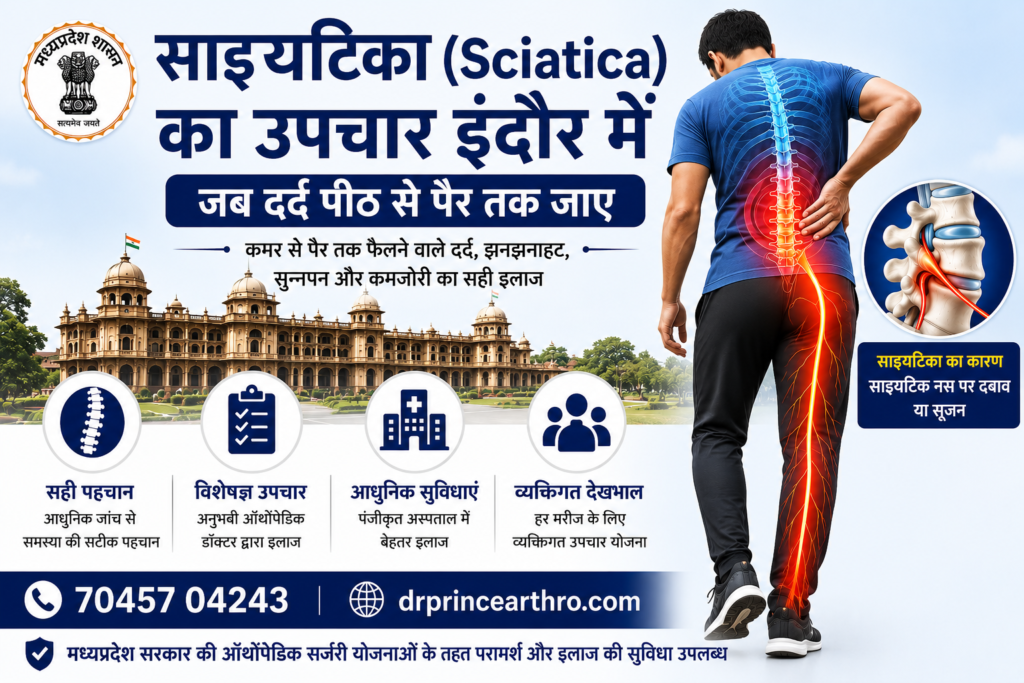
Every week, patients walk into Dr. Prince Uchadiya’s orthopaedic clinic in Indore describing the same experience: a sharp, burning pain that starts somewhere in the lower back, travels through the buttock, and shoots all the way down the back of one leg. Some describe it as an electric shock. Others say it feels like a hot wire running through their leg. What they are experiencing is sciatica, and it is far more than ordinary back pain. When the sciatic nerve, the longest nerve in the human body, gets compressed or irritated, it sends pain signals along its entire length. Getting the right sciatica treatment in Indore at the right time can mean the difference between weeks of recovery and months of worsening nerve damage.
What Is Sciatica and Why Does Pain Travel From Your Back Into Your Leg?
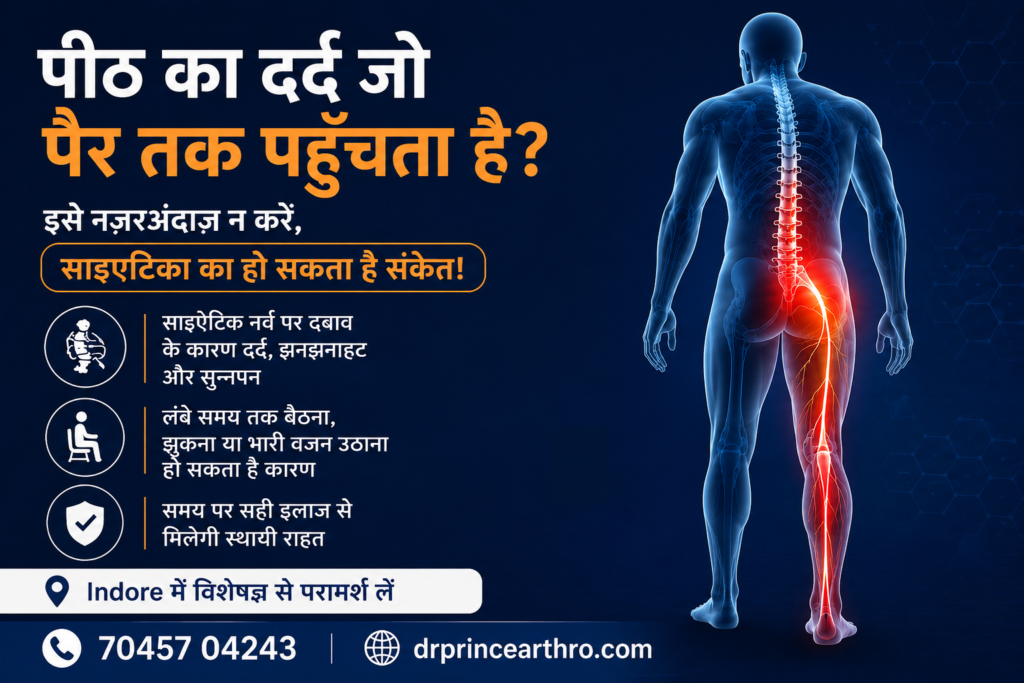
The sciatic nerve begins in your lower back, specifically at the lumbar vertebrae L3 through S3. From there, it passes through your pelvis, travels through the buttock, and runs down the back of your thigh, through the knee, into the calf and sometimes all the way to your foot and toes. It is the single largest nerve in the human body, roughly the width of a thumb where it exits the spine.
When something presses on this nerve, whether a herniated disc, a bone spur, or even a tight piriformis muscle in the buttock, the compression does not just produce pain at the point of pressure. The nerve transmits pain signals along its full path. This is why sciatica feels like it radiates from the back into the leg, because neurologically, that is exactly what is happening. The brain registers pain everywhere along the nerve’s route, not just at the site of compression.
According to the Cleveland Clinic, sciatica is one of the most common causes of leg pain seen in medical care, and many adults will experience it at some point in their lives. The condition is not a disease in itself but a symptom of an underlying spinal issue that requires proper diagnosis.
Common Causes of Sciatica Pain That Every Patient in Indore Should Know
Understanding what is compressing your sciatic nerve directly determines what treatment approach will work. Dr. Prince Uchadiya emphasizes that sciatica is never treated without first identifying the root cause, because the same shooting leg pain can stem from several entirely different structural problems in the spine.
Sciatica Symptoms in Indore Patients: More Than Just Back Pain
- Herniated or Slipped Disc: The soft inner material of a spinal disc pushes through its tough outer casing and presses directly on the nearby nerve root. This is the most common cause of sciatica, particularly in people between 30 and 50 years old. You can read more about this condition at the herniated disc treatment page on Dr. Prince’s website.
- Degenerative Disc Disease: Over years of wear and tear, the discs between vertebrae lose height and water content. This narrowing can cause the disc walls to bulge or crack, irritating the nerve roots. Learn more about degenerative disc disease treatment in Indore.
- Spinal Stenosis: The spinal canal gradually narrows, leaving less room for the nerves passing through it. This condition most commonly affects people over 50 and can cause sciatica that worsens with walking or standing.
- Spondylolisthesis: One vertebra slips forward over the one below it, creating misalignment that pinches the nerve roots exiting the spine.
- Piriformis Syndrome: The piriformis muscle, located deep in the buttock, can go into spasm or become hypertrophied and press directly on the sciatic nerve where it passes underneath or through the muscle.
- Spinal Injury or Trauma: Falls, road accidents, or sports injuries can cause disc herniation or vertebral fractures that lead to immediate sciatic nerve irritation.
Sciatica has a recognizable symptom pattern that distinguishes it from ordinary lower back pain or muscle strain. The hallmark is radiating pain that moves from the back into the leg, but the full picture is usually more complex.
- Sharp, shooting pain starting in the lower back or buttock and radiating down the back of one leg
- Burning or electric-shock sensation along the nerve path, often worsening suddenly with movement
- Numbness or reduced sensation in the leg, calf, or foot on the affected side
- Tingling or a pins-and-needles feeling in the thigh, lower leg, or toes
- Muscle weakness in the affected leg, making it difficult to lift the foot or stand on tiptoe
- Pain that worsens significantly when sitting for extended periods
- Pain that improves when lying down or when walking slowly, but flares with sudden movement like sneezing or coughing
An important clinical observation: sciatica almost always affects only one side of the body. If you are experiencing pain in both legs simultaneously, this requires urgent evaluation as it may suggest a more serious condition such as cauda equina syndrome.
When to See a Doctor for Sciatica Treatment in Indore Without Delay
Many patients in Indore make the mistake of waiting weeks, sometimes months, before seeking sciatica treatment, hoping the pain will pass on its own. While mild sciatica can sometimes resolve with rest and basic care, certain warning signs demand immediate medical attention.
Contact Dr. Prince Uchadiya or visit an orthopaedic specialist right away if you experience:
- Sudden and severe pain in the lower back combined with rapid leg weakness
- Loss of bladder or bowel control alongside back and leg pain. This is a medical emergency and may indicate cauda equina syndrome, a condition that can cause permanent paralysis if not treated within hours
- Numbness in the groin, inner thighs, or rectal area
- Progressive leg weakness, meaning the weakness is getting worse each day rather than staying stable
- Sciatica pain following a significant fall, road accident, or direct spinal trauma
- Sciatica pain that has not improved at all after four to six weeks of conservative care
As experts at the Mayo Clinic note, while the pain associated with sciatica can be severe, most cases resolve with conservative management. However, nerve compression that goes untreated can cause permanent damage, which is why the timing of treatment matters.
How Sciatica Is Diagnosed: The Process at Dr. Prince Uchadiya’s Clinic in Indore
Accurate diagnosis is the foundation of effective sciatica treatment in Indore. Pain radiating down the leg can come from several sources, and treating the wrong cause will not produce recovery. During your consultation, Dr. Prince Uchadiya conducts a structured evaluation that combines clinical examination with imaging to identify exactly where the nerve is being compressed.
The diagnostic process typically includes a detailed history of when pain started, what activities make it better or worse, and whether there is any associated numbness or weakness. A physical examination assesses reflexes in the knee and ankle, tests sensation in the legs and feet, evaluates muscle strength, and uses specific clinical tests such as the straight leg raise, which is highly reliable for confirming sciatic nerve involvement.
Imaging studies are ordered based on clinical findings. An MRI scan provides the clearest view of soft tissue structures including disc herniations, nerve root compression, and spinal canal narrowing. X-rays help assess bone alignment and detect spondylolisthesis or significant disc space narrowing. CT scans are used in specific situations where bony anatomy needs detailed evaluation.
Non-Surgical Sciatica Treatment in Indore: What Works for Most Patients
The encouraging reality is that the vast majority of sciatica cases, even those with significant nerve compression, respond well to non-surgical treatment. Surgery is a last resort, not a first response. Dr. Prince Uchadiya’s approach begins with the most effective conservative measures and progresses only if those measures fail to produce adequate improvement.
Physiotherapy and Targeted Exercise
Physiotherapy is the backbone of sciatica recovery. A structured rehabilitation program addresses the muscular imbalances, poor posture patterns, and movement dysfunctions that either caused the nerve compression or are prolonging it. Specific exercises decompress the lumbar spine, strengthen the deep core stabilizers, restore hip mobility, and reduce inflammation around the nerve root. Physiotherapy after identifying the cause produces far better long-term outcomes than pain medication alone. Patients in Indore can combine their orthopaedic consultation with physiotherapy through the post-injury rehabilitation program available at the clinic.
Medications for Pain and Inflammation
Anti-inflammatory medications such as ibuprofen or naproxen reduce the swelling around the irritated nerve root and provide meaningful pain relief. In cases with significant nerve pain, short-term use of muscle relaxants or nerve pain medications such as pregabalin or gabapentin may be prescribed. Oral steroids are occasionally used in acute severe cases to reduce inflammation rapidly. All medications are prescribed judiciously to avoid dependence while supporting the patient through the recovery period.
Epidural Steroid Injections
When pain is severe and is not responding adequately to oral medications and physiotherapy, an epidural steroid injection delivers a concentrated anti-inflammatory medication directly to the area of nerve compression. This reduces swelling around the nerve root, provides significant pain relief, and creates a window during which active physiotherapy can be more effectively pursued. The injection is a bridge to recovery, not a permanent solution.
Posture Correction and Ergonomic Guidance
For patients in Indore whose sciatica is linked to prolonged desk work, driving, or poor sleeping positions, detailed ergonomic guidance forms part of the treatment plan. Adjustments to seating height, screen position, lumbar support use, and daily movement habits can significantly reduce nerve loading and prevent recurrence.
When Sciatica Treatment in Indore Requires Surgery
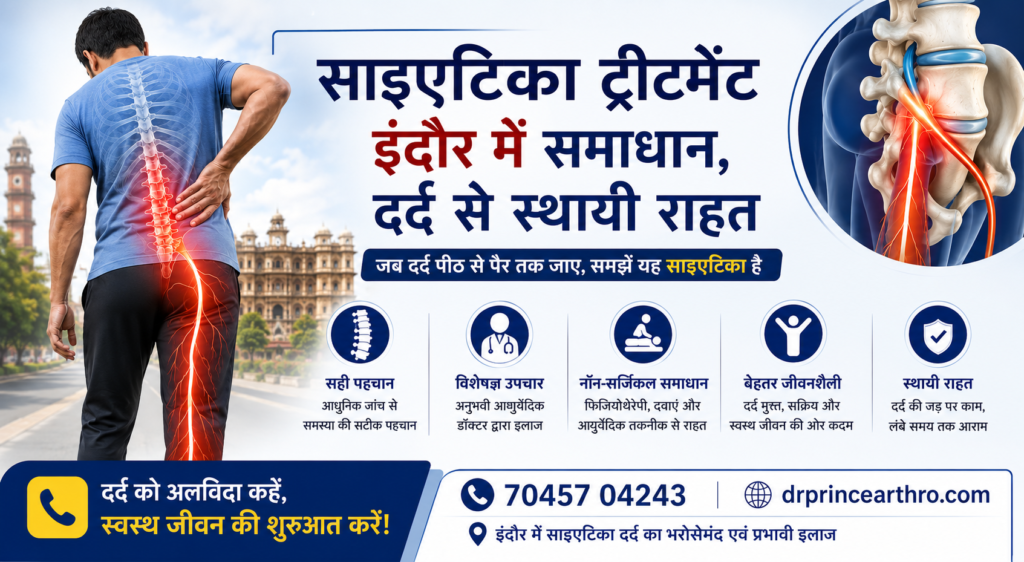
A minority of sciatica patients, typically those with large disc herniations causing severe nerve compression, significant progressive leg weakness, or failure of conservative treatment after three to six months, require surgical intervention. When surgery is the appropriate path, Dr. Prince Uchadiya uses minimally invasive techniques that preserve surrounding tissue and allow faster recovery.
The two most common surgical procedures for sciatica are microdiscectomy, which removes the herniated disc material pressing on the nerve, and laminectomy or decompression surgery, which creates more space in the spinal canal for the compressed nerve. These procedures are performed under general anaesthesia and typically involve a short hospital stay. Most patients notice significant relief of leg pain within days of surgery, with full recovery taking six to twelve weeks with guided physiotherapy.
It is important to understand that surgery addresses the structural cause of nerve compression. Without proper post-surgical rehabilitation, the risk of recurrence remains. The rehabilitation phase following any spine surgery is as important as the surgery itself.
Sciatica and Herniated Disc: Why These Two Conditions Are Closely Linked
In clinical practice, a herniated lumbar disc is the single most common cause of sciatica. The two conditions are so frequently found together that many patients use the terms interchangeably, though they are distinct. A herniated disc is the structural problem; sciatica is the symptom it produces when the disc material presses on a nerve root.
Understanding this relationship matters for treatment because it means that treating the sciatica pain alone, with pain killers or injections, without addressing the disc herniation is incomplete management. Comprehensive sciatica treatment in Indore always involves managing the underlying disc pathology, whether through physiotherapy that reduces disc bulge and improves spinal mechanics, or through surgical removal of herniated disc material when conservative care fails.
Lifestyle Changes That Support Sciatica Recovery in Indore
Recovery from sciatica is not purely a medical process. Daily habits significantly affect how quickly a patient heals and whether the condition returns. Patients under Dr. Prince Uchadiya’s care receive specific lifestyle guidance tailored to their occupation, daily activities, and severity of nerve involvement.
- Weight management: Excess body weight increases mechanical load on the lumbar discs and spine. Even moderate weight reduction can meaningfully reduce disc pressure and nerve compression.
- Controlled walking: Gentle walking improves circulation to the nerve, reduces spinal stiffness, and maintains muscle function. Short, regular walks are more beneficial than prolonged bed rest.
- Sleep position adjustment: Sleeping on your side with a pillow between the knees keeps the spine in neutral alignment and reduces sciatic nerve tension. Sleeping on the stomach increases lumbar lordosis and typically worsens sciatica.
- Breaking up prolonged sitting: Standing and taking a short walk every 30 to 40 minutes significantly reduces cumulative disc pressure and nerve loading for desk workers and drivers.
- Core strengthening: Long-term spinal stability depends on strong deep core muscles. Exercises like bridges, dead bugs, and bird-dogs, done correctly under physiotherapy guidance, protect the lumbar spine against future episodes.
Sciatica vs Other Types of Back and Leg Pain: How to Tell the Difference
Not every back pain that extends into the leg is sciatica. Conditions like sacroiliac joint dysfunction, hip pathology such as femoroacetabular impingement, trochanteric bursitis, and peripheral vascular disease can all produce leg pain that patients sometimes misidentify as sciatica. The distinction matters because each condition requires a different treatment approach entirely.
True sciatica almost always follows a specific pattern: pain or neurological symptoms (numbness, tingling, weakness) along a dermatomal distribution, meaning it follows the anatomical pathway of the sciatic nerve or its contributing nerve roots. Pain from hip joint pathology, in contrast, tends to be felt in the groin and lateral thigh without the burning or electric quality typical of nerve pain. Accurate diagnosis by an experienced orthopaedic surgeon is the only reliable way to distinguish these conditions.
Preventing Sciatica From Returning After Successful Treatment
Sciatica can recur, particularly if the lifestyle factors and movement patterns that contributed to the initial episode are not addressed. Prevention focuses on the same principles that support recovery, but applied consistently as long-term habits rather than temporary measures.
Regular core strengthening exercise, maintenance of a healthy body weight, ergonomic work practices, avoiding sudden heavy lifting with a flexed spine, and addressing any back stiffness early before it develops into disc injury are the most effective preventive strategies. Patients who complete their full physiotherapy program after sciatica treatment in Indore and maintain the exercise habits it establishes have significantly lower rates of recurrence than those who stop exercise once pain resolves.
Frequently Asked Questions About Sciatica Treatment in Indore
1. What is sciatica pain and why does it travel from the back to the leg?
Sciatica is pain caused by compression or irritation of the sciatic nerve, which originates in the lower lumbar spine and travels through the buttock and down the back of the leg to the foot. When something presses on this nerve, whether a herniated disc or spinal stenosis, the nerve transmits pain signals along its entire length. This is why you feel pain not just at the site of compression in the spine but all the way into the leg. The pain follows the nerve’s anatomical path, which is what makes sciatica distinctly different from simple muscle pain.
2. What are the early signs and symptoms of sciatica?
Early sciatica often begins as a dull ache or tightness in the lower back or buttock that is easy to dismiss as muscle fatigue. As the condition progresses, pain begins radiating down one leg, typically along the back of the thigh. Early neurological signs include mild tingling in the calf or foot and a sensation that the affected leg feels slightly weaker than the other. Many patients also notice that sitting for long periods, or sneezing and coughing, suddenly triggers a sharp shooting pain down the leg. These early signs warrant medical evaluation before the nerve compression worsens.
3. When should you see a doctor for sciatica treatment in Indore?
You should see a specialist without delay if your leg pain is accompanied by progressive weakness, if you are losing bladder or bowel control, or if the pain is severe enough to prevent normal daily activities. Even without these red flags, sciatica that has persisted for more than four weeks without improvement deserves medical evaluation. Early diagnosis and proper sciatica treatment in Indore prevents chronic nerve irritation and reduces the risk of permanent neurological damage.
4. Can sciatica pain return after treatment?
Yes, sciatica can recur, particularly if the underlying cause was not fully addressed or if the lifestyle habits that contributed to the first episode remain unchanged. However, patients who complete a full physiotherapy program, maintain core strength, and follow ergonomic recommendations have significantly lower recurrence rates. A recurrent episode should always be re-evaluated rather than assumed to have the same cause as the first.
5. What causes sciatica pain to become worse over time?
Sciatica worsens when the underlying nerve compression increases, either because a herniated disc is enlarging, spinal stenosis is progressing, or surrounding muscles are weakening and adding more load to the affected spinal level. Continued heavy lifting with poor technique, prolonged sitting without breaks, smoking (which accelerates disc degeneration), and excess body weight all contribute to worsening nerve compression over time. Ignoring mild sciatica symptoms and continuing activities that aggravate the spine will reliably make the condition progress.
6. Can exercise help reduce sciatica pain?
Yes, the right exercise, performed correctly, is one of the most effective treatments for sciatica. Core strengthening, lumbar mobilization, nerve gliding exercises, and hip stretches all reduce pressure on the sciatic nerve and improve the biomechanical environment of the spine. The key word is “right.” Exercises like heavy deadlifts or sit-ups with poor form can worsen nerve compression. All exercise for sciatica recovery should be guided by a qualified physiotherapist who has reviewed your diagnosis and imaging.
7. Is walking good or bad for sciatica pain?
Controlled walking at a comfortable pace is generally beneficial for sciatica. Walking encourages blood flow to the nerve, prevents stiffness, maintains muscle activation, and avoids the deconditioning that comes from bed rest. However, prolonged walking, particularly on hard surfaces or with a heavy load, can increase lumbar compression and worsen symptoms. Short, regular walks of 15 to 20 minutes, done several times a day with adequate rest in between, are the ideal approach during sciatica recovery.
8. Can sciatica heal without surgery?
The majority of sciatica cases, including many with confirmed disc herniations on MRI, resolve without surgery. With a combination of physiotherapy, anti-inflammatory medications, activity modification, and in some cases epidural steroid injections, most patients achieve significant pain relief within 6 to 12 weeks. Surgery is reserved for patients with severe neurological deficits, cauda equina syndrome, or those who have not improved after three to six months of consistent conservative treatment.
9. How long does sciatica treatment usually take?
Recovery timeline depends on the severity of nerve compression and the patient’s consistency with treatment. Mild to moderate sciatica typically improves meaningfully within four to eight weeks of physiotherapy and medical management. More significant herniations or chronic cases may require three to six months of structured treatment. Post-surgical sciatica recovery usually involves six to twelve weeks of physiotherapy before full activity is resumed. Patients who are consistent with their rehabilitation program consistently recover faster than those who are intermittent.
10. Can sitting for long hours make sciatica worse?
Prolonged sitting is one of the most significant aggravating factors for sciatica. When you sit, the lumbar discs are under significantly higher pressure than when you stand or walk. This increased disc pressure can push herniated material further against the nerve root, intensifying compression and pain. People who work at desks or spend long hours driving are particularly vulnerable. Breaking up sitting with standing or walking every 30 to 40 minutes, and using proper lumbar support, significantly reduces this aggravation.
11. What is the best sleeping position for sciatica pain relief?
Sleeping on your side with a pillow placed between your knees is the most commonly recommended position for sciatica relief. This position keeps your hips aligned and reduces the rotational stress on the lumbar spine and sciatic nerve. If you prefer sleeping on your back, placing a pillow under your knees takes some of the lumbar curve out of the lower back and reduces nerve tension. Sleeping on your stomach is generally the least favourable position for sciatica as it increases lumbar lordosis and hip rotation, both of which can compress the sciatic nerve.
12. Can sciatica affect both legs at the same time?
True sciatica almost always affects only one leg. The sciatic nerve exits the spine on each side separately, and compression typically involves only one nerve root at a time. Bilateral leg pain, meaning pain, numbness, or weakness in both legs simultaneously, is a red flag that suggests a more serious condition such as cauda equina syndrome, where multiple nerve roots in the lower spinal canal are compressed at once. Bilateral symptoms require urgent medical evaluation and should never be managed with home care alone.
13. What treatment options are available for sciatica treatment in Indore?
Dr. Prince Uchadiya offers a comprehensive range of sciatica treatment options in Indore based on the severity and underlying cause identified through clinical examination and imaging. Non-surgical options include structured physiotherapy, anti-inflammatory and nerve pain medications, epidural steroid injections, posture correction, and activity modification. For cases that require surgical intervention, minimally invasive microdiscectomy and decompression surgery are available. Every treatment plan is individualized after a thorough diagnostic evaluation rather than applied as a standard protocol.
14. Is leg numbness a warning sign in sciatica?
Yes, leg numbness is a neurological symptom that indicates the sciatic nerve is being compressed to the point where it is not conducting sensation normally. Mild intermittent numbness may not indicate an emergency, but progressive numbness that is worsening over days, numbness affecting the entire foot, or numbness extending into the groin and inner thighs are all serious warning signs. Numbness accompanied by leg weakness or bladder and bowel changes should be treated as a medical emergency and evaluated urgently.
15. How can you prevent sciatica pain from coming back?
Preventing sciatica recurrence involves addressing the same factors that caused the original episode. Maintain strong deep core muscles through regular exercise even after pain has resolved. Avoid lifting heavy objects by bending at the waist rather than using the legs. Set up your workstation ergonomically with proper lumbar support and monitor height. Maintain a healthy body weight to reduce disc loading. Avoid prolonged unbroken sitting. Address any recurring lower back stiffness early with stretching or physiotherapy before it develops into disc or nerve injury again. Patients who treat prevention as actively as they treated the original episode have the lowest recurrence rates.
If you are experiencing pain that travels from your back into your leg, burning or numbness in your lower limb, or any of the warning signs described in this article, do not wait for the condition to worsen on its own. Effective sciatica treatment in Indore is available. Contact Dr. Prince Uchadiya’s clinic to schedule a consultation and receive a proper diagnosis and individualized treatment plan that gives you the best chance of full recovery without surgery.