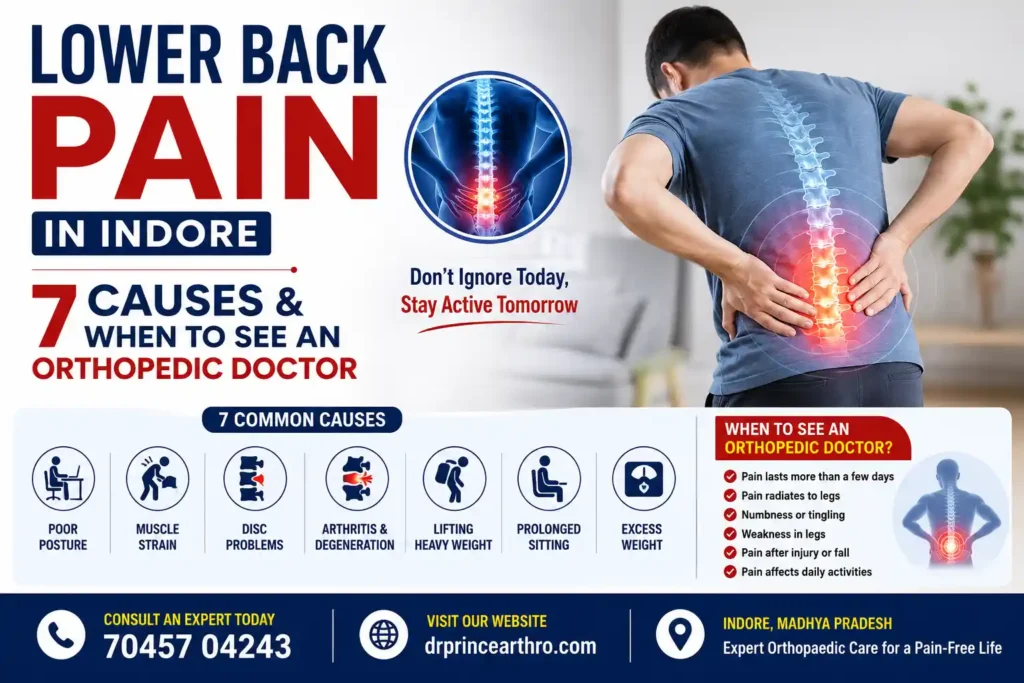
Two out of every three adults will experience
significant lower back pain at some point in their lives.
In India, that number translates to an estimated 87.5 million people living with back pain at any given time, and the problem is no longer confined to older adults or heavy labourers. Doctors in cities like Indore are seeing a sharp rise in lower back pain cases among people in their 20s and 30s, many of them IT professionals, students, and young workers who spend most of their waking hours seated.
Lower back pain in Indore is one of the most frequent reasons patients consult an orthopaedic specialist, and the spectrum of what causes it ranges from simple muscle strain that resolves in days to serious nerve compression that can cause permanent damage if ignored. Understanding the seven most common causes, recognising the warning signs that demand immediate medical attention, and knowing what treatment options are available in Indore are the three pieces of knowledge every patient needs before their back pain becomes a chronic, debilitating condition.
Why Lower Back Pain in Indore Is Becoming More Common at Every Age
The lumbar spine, the five vertebrae of the lower back between the ribcage and the pelvis, carries the majority of the body’s weight during every activity from standing and walking to sitting and lifting. It is a structure designed for movement. When it is held in the same compressed, slightly flexed position for seven, eight, or ten hours a day at a desk or workstation, the intervertebral discs lose hydration faster than they can recover, the muscles that support the spine fatigue and develop chronic spasm, and the small facet joints at the back of the spine begin to bear abnormal loads.
Recent data from Indian healthcare sources shows that nearly 66 percent of Indian IT professionals and office workers report work-related musculoskeletal issues, with lower back pain leading the list. Among adults aged 20 to 35, between 40 and 49 percent report episodes of back pain within any given month. This is no longer a condition that patients can attribute to age or occupation alone. Lifestyle, posture, stress, and inactivity are driving lower back pain in Indore patients younger than ever before.
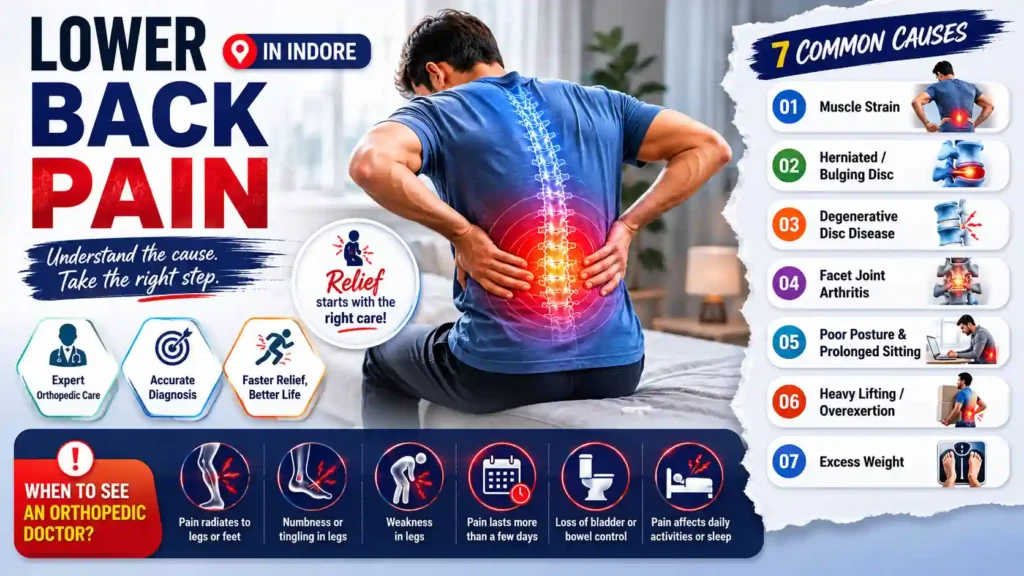
Cause 1: Muscle Strain and Lumbar Spasm
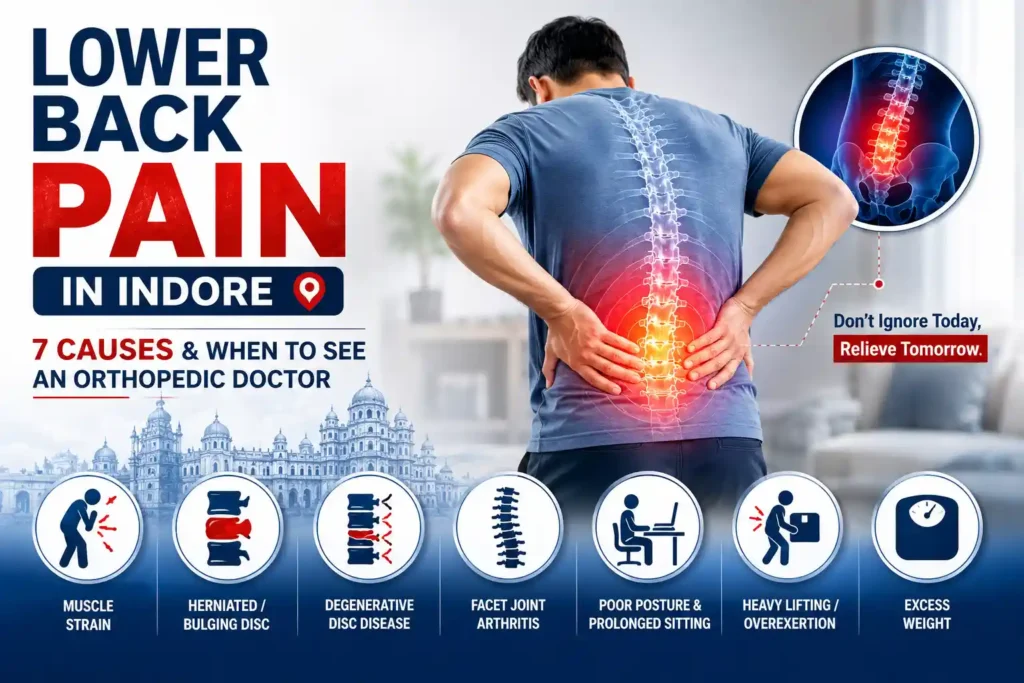
Muscle strain is the most common single cause of lower back pain and accounts for a significant proportion of patients who present to orthopaedic clinics in Indore. The lumbar muscles and the thick thoracolumbar fascia that covers them can be strained by a sudden awkward movement, by lifting a heavy object with a rounded spine, or by hours of sustained posture that gradually fatigue and overload the tissues.
The pain from muscle strain is typically felt as a dull, aching tightness across the lower back, often worse when changing position from sitting to standing and improving with gentle movement. A painful muscle spasm, where a group of back muscles contracts involuntarily and creates a sharp, seized quality of pain, can be triggered by even a minor movement after a period of muscle fatigue. Muscle strain is a benign condition and typically resolves with a combination of short-term rest, anti-inflammatory medications, heat application, and gentle mobilisation. The key clinical point is that pure muscle pain does not travel down the leg. When pain radiates below the knee, a nerve is involved and the cause is more serious.
Cause 2: Herniated or Bulging Disc
Between each pair of vertebrae in the lumbar spine sits an intervertebral disc: a firm outer ring of fibrous cartilage surrounding a soft, gel-like nucleus. These discs act as shock absorbers and allow the spine to flex, extend, and rotate. When the outer ring weakens or tears, the soft inner nucleus can bulge outward or herniate through the defect. If the herniated material contacts the spinal nerve roots exiting the spine at that level, it triggers nerve pain.
A disc herniation at the L4-L5 or L5-S1 level in the lumbar spine, by far the most common locations, produces pain that travels from the lower back through the buttock and into the leg, often extending all the way to the foot. This is sciatica, one of the most frequently misunderstood types of lower back pain. Patients with disc herniation often find that sitting aggravates their pain severely, while walking or lying flat provides some relief. Sneezing and coughing can trigger sharp electric-shock-like leg pain because they momentarily increase the pressure inside the spinal canal.
Disc herniations are one of the leading structural causes of lower back pain in Indore patients seen at Dr. Prince Uchadiya’s clinic, and the full range of treatment options from physiotherapy to epidural injections to minimally invasive surgery is available depending on severity. Patients can find detailed information about this condition on the herniated disc treatment page.
Cause 3: Degenerative Disc Disease
Degenerative disc disease is a gradual, age-related, but increasingly lifestyle-accelerated process in which the lumbar discs lose their water content, height, and mechanical resilience over years. As discs dehydrate and flatten, the vertebrae above and below come closer together. The altered biomechanics increase stress on the facet joints, cause the disc walls to bulge outward around their entire circumference, and can create bone spurs where the vertebral bodies attempt to stabilise the degenerating segment.
The pain pattern in degenerative disc disease is characteristically axial, meaning centred in the lower back rather than radiating, though nerve involvement can produce leg symptoms as well. Many patients report that the pain is better in the morning and worsens through the day with sustained activity. Forward flexion is usually more painful than extension. The condition was once considered a problem primarily of people over 50, but it is now frequently found on MRI in patients in their 30s in Indore, particularly those with sedentary lifestyles, smoking habits, or significant body weight.
Cause 4: Facet Joint Arthritis and Spondylosis
Each lumbar vertebra connects to the one above and below it through two small joints called facet joints, located at the back of the spinal column. Like any joint in the body, these facet joints have cartilage surfaces that can wear down over time. When facet joint arthritis develops, the resulting inflammation produces localised lower back pain that is typically worse with extension movements (bending backward) and prolonged standing, and often better with sitting or forward flexion.
Spondylosis is a broad term for the age-related degenerative changes in the spine that include facet arthritis, disc degeneration, and osteophyte (bone spur) formation acting together to reduce spinal mobility and produce pain. X-rays in patients with spondylosis typically show reduced disc space height, facet joint narrowing, and the presence of bone spurs along the vertebral margins. This explains the common patient experience of having back pain for which their reports show changes but doctors reassure them that it is not serious: the changes are real, but they are degenerative rather than requiring urgent surgical intervention in most cases.
The same degenerative process higher up the spine is covered under cervical spondylosis treatment.
Cause 5: Spondylolisthesis
Spondylolisthesis occurs when one vertebra slips forward over the one below it, disrupting the normal alignment of the lumbar spine. In younger patients and athletes, this is often caused by a stress fracture through the pars interarticularis, the bridge of bone between the upper and lower facet joints at each vertebral level, a condition called spondylolysis. In older patients, it is typically caused by severe facet joint degeneration that allows the vertebra to slip forward progressively.
The slippage can range from mild, where it produces only back pain and stiffness, to severe, where it narrows the spinal canal and compresses multiple nerve roots, causing bilateral leg pain, weakness, and in advanced cases, difficulty with bladder and bowel function. Young athletes involved in sports requiring repeated spinal extension, such as cricket fast bowlers, gymnasts, and kabaddi players, are at elevated risk of developing symptomatic spondylolysis that progresses to spondylolisthesis if not identified and managed early. Patients in Indore with this condition can access specialist evaluation and treatment through the back pain clinic at Dr. Prince Uchadiya’s practice.
Cause 6: Spinal Stenosis
Spinal stenosis is the narrowing of the spinal canal, reducing the space available for the nerve roots that travel through it. It most commonly develops as a consequence of accumulated degenerative changes including disc bulging, facet joint enlargement, and thickening of the ligamentum flavum, the ligament running along the back of the spinal canal. The combined effect of these changes gradually compresses the nerves within the canal.
The hallmark symptom of lumbar spinal stenosis is neurogenic claudication: leg pain, heaviness, numbness, or weakness that comes on with walking or prolonged standing and is relieved by sitting or bending forward. Patients with this condition often describe being able to walk only a short distance before their legs feel heavy and painful, but finding that sitting for a few minutes allows them to walk again. This distinguishes it from vascular claudication, where the pain is due to reduced blood flow rather than nerve compression. Spinal stenosis affects mostly patients over 50 and typically develops over years before becoming symptomatic enough to interfere significantly with daily activity.
Cause 7: Sciatica and Nerve Root Compression
Sciatica is not a diagnosis in itself but a description of a symptom: pain that radiates from the lower back through the buttock and down the back of the leg, following the path of the sciatic nerve. It is produced by compression or irritation of one of the lumbar nerve roots, most commonly from a disc herniation or from stenosis at the level where the nerve exits the spine. In Indore patients, sciatica is one of the most frequent presenting complaints in orthopaedic clinics, and it is also one of the most frequently mismanaged when patients treat it as ordinary back pain and focus only on the back.
The nerve root component of sciatica, the shooting electric pain, burning sensation, numbness, or tingling in the leg, indicates that the spine itself needs to be evaluated and treated, not just the muscles. Sciatica from a disc herniation typically responds well to conservative management with physiotherapy, anti-inflammatory medications, and in some cases an epidural steroid injection. Cases that do not respond after six to twelve weeks of structured treatment, or where progressive leg weakness is developing, require surgical decompression to prevent permanent nerve damage. All treatment options for nerve-related lower back pain in Indore are available through Dr. Prince Uchadiya’s specialist orthopaedic care.
Warning Signs: When Lower Back Pain in Indore Needs Immediate Medical Attention
Most episodes of lower back pain will improve with appropriate conservative care over days to weeks. However, certain symptoms when present alongside back pain signal a serious underlying condition that cannot wait for a routine appointment. These red flags require same-day or emergency evaluation.
- Pain radiating below the knee, particularly with numbness or tingling in the foot: This indicates nerve root involvement and needs proper assessment to determine the degree of compression.
- Bladder or bowel dysfunction alongside back pain: Difficulty urinating, incontinence, or loss of bowel control combined with back pain is a potential sign of cauda equina syndrome, a spinal emergency requiring surgery within hours to prevent permanent paralysis.
- Numbness in the groin, inner thighs, or perianal area: This pattern of numbness, described as saddle anaesthesia, is another indicator of cauda equina syndrome.
- Back pain after a fall, road accident, or significant trauma: Spinal fractures can be stable or unstable. A fracture that goes undiagnosed because pain seemed manageable can shift position and compress the spinal cord.
- Fever accompanied by back pain: This combination raises the possibility of a spinal infection (discitis or vertebral osteomyelitis), which requires urgent investigation and treatment.
- Back pain that is progressively worsening at night and not relieved by any position: Night pain that cannot be explained by posture or movement pattern is a red flag for tumour or other serious pathology.
- Unexplained weight loss combined with back pain: Significant weight loss alongside persistent back pain raises concern for malignancy involving the spine.
- Progressive leg weakness: If leg weakness is getting worse from day to day rather than staying stable, nerve damage is progressing and urgent decompression may be required.
As guidance from orthopaedic specialists consistently emphasises, any episode of back pain accompanied by these symptoms should not be managed at home or with painkillers alone. A specialist evaluation, including appropriate imaging, is essential.
How Lower Back Pain in Indore Is Diagnosed at Dr. Prince Uchadiya’s Clinic
The diagnostic approach to lower back pain begins with a thorough history and physical examination. The history includes details of when the pain started, what activities provoke or relieve it, whether it radiates into the legs, whether there are any neurological symptoms including numbness, tingling, or weakness, and whether any of the red flag symptoms described above are present.
Physical examination assesses lumbar range of motion, identifies areas of spinal tenderness or muscle spasm, evaluates lower limb strength and sensation in each nerve root distribution, and performs specific tests such as the straight leg raise for sciatic nerve involvement and the femoral nerve stretch test for upper lumbar nerve root compression. These clinical findings tell an experienced orthopaedic surgeon a great deal about the likely cause before any imaging is obtained.
Imaging investigations are ordered based on clinical findings. X-rays of the lumbar spine assess bone alignment, disc space height, and the presence of spondylolisthesis or scoliosis. An MRI scan is the most informative investigation for soft tissue pathology, visualising the discs, nerve roots, spinal canal, and any abnormalities in the vertebral bodies or adjacent soft tissues. MRI is particularly important when nerve symptoms are present. A CT scan provides detailed bony anatomy and is useful for surgical planning or when MRI is contraindicated. Blood tests are ordered when infection, inflammatory arthritis, or metabolic bone disease is clinically suspected.
Treatment Options for Lower Back Pain in Indore: From Conservative Care to Surgery
The treatment pathway for lower back pain in Indore is determined by the underlying cause, the duration and severity of symptoms, and the presence or absence of neurological involvement. The overwhelming majority of lower back pain cases, including many with disc herniations and mild nerve symptoms, respond to non-surgical management.
Surgery for lower back pain in Indore is reserved for specific indications: cauda equina syndrome (emergency), progressive neurological deficit, failed conservative management after three to six months of structured treatment, or a confirmed structural pathology such as a large disc herniation or significant spondylolisthesis causing severe functional limitation. When surgery is indicated, Dr. Prince Uchadiya uses minimally invasive techniques wherever possible, including endoscopic discectomy and minimally invasive decompression, which reduce tissue disruption and recovery time compared to traditional open approaches. Information about the minimally invasive surgical approaches available in Indore is on the minimally invasive surgery page.
Preventing Lower Back Pain From Returning: What Patients in Indore Should Do Differently
Most lower back pain episodes that resolve can recur if the underlying lifestyle factors and movement patterns that contributed to the first episode are not corrected. Prevention is not complicated but does require consistent attention to a set of modifiable habits.
Breaking up prolonged sitting with standing or walking for a few minutes every 30 to 40 minutes reduces cumulative disc pressure. Setting up a workstation with appropriate lumbar support, monitor height, and chair height so the spine is not held in prolonged flexion is essential for desk workers in Indore. Maintaining a healthy body weight reduces the mechanical load on every lumbar disc and facet joint with every step taken. Avoiding lifting heavy objects with a rounded, flexed spine and instead using the legs to generate the lift protects the lumbar discs from the compressive and shear forces that most commonly cause acute disc herniation.
Frequently Asked Questions About Lower Back Pain in Indore
1. What are the most common causes of lower back pain?
The most common causes of lower back pain are muscle strain and spasm, herniated or bulging lumbar discs, degenerative disc disease, facet joint arthritis, spondylolisthesis, spinal stenosis, and sciatic nerve compression. In clinical practice, muscle strain accounts for the largest proportion of acute episodes, while disc-related pathology is the most frequent structural cause of persistent or radiating lower back pain. Importantly, these conditions are not mutually exclusive; many patients have multiple contributing factors, which is why a thorough specialist evaluation is more useful than a self-diagnosis based on symptom description alone.
2. Can sitting for long hours cause lower back pain?
Yes, and this is one of the most significant and most preventable causes of lower back pain seen in Indore’s growing working population. When you sit, the lumbar discs experience significantly higher pressure than when you stand or walk. The muscles that support the spine fatigue with sustained static loading. The natural lumbar curve tends to flatten when seated without adequate lumbar support, creating sustained mechanical stress on the posterior disc walls and facet joints. Sitting for extended periods without breaks accumulates this stress progressively through the day. The solution is not to avoid sitting entirely but to break it up with movement every 30 to 40 minutes and to optimise seating posture with appropriate lumbar support.
3. Why does lower back pain happen suddenly without an injury?
Sudden back pain without an obvious injury event is common and occurs because the underlying structural changes in the disc, facet joint, or supporting muscles develop gradually and silently over weeks or months before a minor movement or moment of increased load tips the balance into symptomatic pain. A patient who reaches for something on a low shelf and feels their back seize was not injured by that movement; that movement simply exposed a pre-existing disc weakness or muscle imbalance that had been developing for some time. The apparently innocuous trigger and the dramatic pain response can seem disproportionate, but the clinical explanation is consistent: the pain reflects the underlying problem that had already been progressing.
4. Can sports or physical activity trigger lower back pain?
Yes, and certain sports and physical activities carry specific risks for the lumbar spine. Cricket fast bowlers are at elevated risk for spondylolysis and stress fractures due to the repeated hyperextension and rotation of the lower back in their bowling action. Weightlifters who deadlift or squat with poor technique place dangerous compressive and shear forces on the lumbar discs. Kabaddi and contact sports that involve sudden twisting and impact loading can trigger acute disc herniations. Even running can aggravate the lumbar spine if foot biomechanics, running form, or training load are suboptimal. Sports-related lower back pain in Indore should always be evaluated by a specialist to identify the specific structural cause before a return-to-sport plan is made.
5. Can kidney stones or gallbladder problems cause lower back pain?
Yes, and this is why lower back pain always deserves proper medical evaluation rather than a self-diagnosis of a muscle problem. Kidney stones produce a severe, colicky, one-sided flank and lower back pain that often radiates toward the groin and is associated with nausea or blood in the urine. Kidney infections produce back pain in the flank area accompanied by fever, chills, and urinary symptoms. Gallbladder disease can occasionally refer pain to the lower right back. Pancreatic conditions sometimes produce a band-like pain across the upper abdomen and back. When lower back pain is accompanied by fever, urinary changes, or abdominal symptoms, visceral causes must be excluded by a physician before the pain is attributed to a musculoskeletal source.
6. Why do some people have lower back pain even when reports look normal?
This is one of the most common sources of frustration for patients seeking lower back pain treatment in Indore. The reason is that the most common cause of acute lower back pain, muscle strain and spasm, produces no visible changes on X-ray or MRI. These investigations show bones, discs, and nerves but cannot image the functional state of muscles, the quality of motor control, or the inflammatory state of soft tissue at the microscopic level. Additionally, early-stage facet joint irritation and minor ligamentous stress can produce significant pain without detectable imaging changes. A normal report does not mean there is nothing wrong. It means that the structures visible on that particular investigation are not showing abnormality at the level of detection available, which is a different and more limited statement.
7. Can working long hours in heat or standing all day worsen back pain?
Yes. Workers in Indore who spend long hours standing on hard surfaces, such as factory workers, construction labourers, roadside vendors, and teachers, are at elevated risk of chronic lower back pain. Prolonged standing without movement causes sustained compressive loading of the lumbar facet joints and disc structures. Exposure to significant heat causes dehydration, which accelerates lumbar disc water loss and reduces the disc’s ability to cushion load effectively. Vibration from heavy machinery or driving adds a repetitive loading pattern that over years causes accelerated disc degeneration. Appropriate footwear, anti-fatigue matting for standing workers, adequate hydration, and structured rest breaks with postural change are the most effective preventive measures for this occupational group.
8. When should you see an orthopedic doctor for lower back pain in Indore?
You should see a specialist for lower back pain in Indore if the pain has not improved significantly after four to six weeks of basic conservative measures including rest, over-the-counter anti-inflammatory medications, and activity modification. You should see a specialist immediately, without waiting, if any of the red flag symptoms described in this article are present: pain radiating down the leg, numbness or weakness in the legs or feet, bladder or bowel changes, fever with back pain, pain following a fall or trauma, or rapidly worsening pain that is not responding to any position or medication. Early specialist evaluation consistently produces better outcomes than delayed consultation because treatable structural problems are addressed before they worsen or cause permanent nerve damage.
9. What are warning signs that lower back pain needs medical attention?
The key warning signs that lower back pain requires medical attention rather than home management are: pain radiating into one or both legs, particularly below the knee; numbness or tingling in the leg, foot, or toes; weakness in a leg that is getting progressively worse; inability to control bladder or bowel function; pain that is constant and severe at night regardless of position; fever or chills accompanying back pain; pain that developed after a fall, accident, or significant trauma; unexplained weight loss alongside persistent back pain; and back pain in a patient with a history of cancer. Any single one of these is sufficient reason to seek specialist evaluation promptly rather than continuing to manage the pain independently.
10. Can lower back pain become chronic if left untreated?
Yes, and this is one of the most clinically important reasons to treat acute lower back pain properly from the beginning rather than ignoring it or managing it only with short-term painkillers. Acute back pain that resolves completely is common. But back pain that is not adequately treated, or where the underlying cause is not identified and addressed, frequently transitions into a chronic pain state where the nervous system itself becomes sensitised, producing persistent pain even after the original tissue injury has healed. Chronic lower back pain is significantly more difficult to treat than acute pain, requires longer treatment timelines, and has a substantially greater impact on quality of life, work capacity, and mental health. Getting proper treatment for lower back pain in Indore during the acute phase is the most effective way to prevent chronicity.
11. What tests help diagnose the cause of lower back pain?
The investigation pathway for lower back pain in Indore is determined by the clinical findings during examination. X-rays assess bone alignment, disc space height, spondylolisthesis, and structural deformities. MRI is the most informative investigation for disc herniations, nerve root compression, spinal stenosis, and soft tissue pathology, and is essential when any neurological symptoms are present. CT scans provide superior bony anatomy detail and are particularly useful for surgical planning. Blood tests including inflammatory markers (ESR, CRP), complete blood count, and metabolic panel are ordered when infection, inflammatory arthritis, or metabolic bone disease is clinically suspected. Not every patient with lower back pain needs all of these investigations. The clinical assessment determines which tests will provide useful information for that specific patient’s situation.
12. Can lower back pain happen at a young age?
Absolutely, and it is increasingly common in Indore. Recent data shows that 40 to 49 percent of Indian adults aged 20 to 35 report episodes of lower back pain within any given month. Young adults develop lower back pain from muscle strain, early disc degeneration accelerated by sedentary lifestyles, spondylolysis from sports participation, poor ergonomic setups at home and work, and postural habits developed over years of studying. The significant increase in young patients presenting with lower back pain in Indian cities reflects the combination of digital lifestyles that increase sitting time, reduced physical activity, and earlier onset of disc dehydration than previous generations experienced. Young age is not a reassurance that back pain is always minor; some of the most serious structural problems, including large disc herniations, occur in young adults.
13. What treatment options are available for lower back pain in Indore?
Dr. Prince Uchadiya’s clinic in Indore offers a full spectrum of evidence-based treatment options for lower back pain, tailored to the underlying cause and severity of each patient’s condition. Non-surgical options include structured physiotherapy with core strengthening and postural retraining, anti-inflammatory and analgesic medications, epidural steroid injections for nerve root pain, facet joint injections for facet-mediated pain, and activity modification guidance with ergonomic advice. For cases where conservative treatment has failed to produce adequate improvement and surgery is indicated, minimally invasive procedures including endoscopic discectomy, laminectomy, and spinal decompression are performed using techniques that minimise tissue disruption and recovery time. Every treatment plan begins with a thorough diagnostic evaluation to ensure the intervention matches the specific cause.
14. How can you prevent lower back pain from coming back?
Preventing recurrence of lower back pain requires addressing the same biomechanical, lifestyle, and movement factors that contributed to the original episode. Core strengthening exercises, maintained consistently even after pain resolves, provide the most reliable structural protection to the lumbar spine. Breaking up prolonged sitting every 30 to 40 minutes, setting up an ergonomic workstation, and avoiding heavy lifting with a rounded spine are the three most impactful daily habit changes. Maintaining a healthy body weight reduces the mechanical load on every lumbar structure with every step. Staying physically active with appropriate aerobic exercise, particularly walking and swimming, keeps the spinal muscles and discs well conditioned. Patients who complete their full physiotherapy program and maintain their exercise habits after lower back pain treatment in Indore have significantly lower recurrence rates than those who stop as soon as the acute pain resolves.
15. When is surgery needed for lower back pain treatment?
Surgery for lower back pain in Indore is indicated in a specific minority of cases where conservative management has genuinely failed, or where the clinical urgency of the situation makes surgical delay inappropriate. Emergency surgery is required for cauda equina syndrome, where nerve compression is producing bladder, bowel, or perineal dysfunction. Urgent surgery is indicated for rapidly progressive neurological weakness that is worsening day by day despite conservative measures. Elective surgery is considered after three to six months of structured, well-supervised conservative management has failed to produce adequate relief in patients with confirmed structural pathology, such as a large disc herniation producing disabling leg pain, or significant spondylolisthesis causing persistent instability and neurological symptoms. Surgery for back pain alone, without clear structural pathology and failed conservative management, is generally not indicated. The decision is always made after a careful discussion of risks, benefits, alternatives, and the patient’s functional goals.
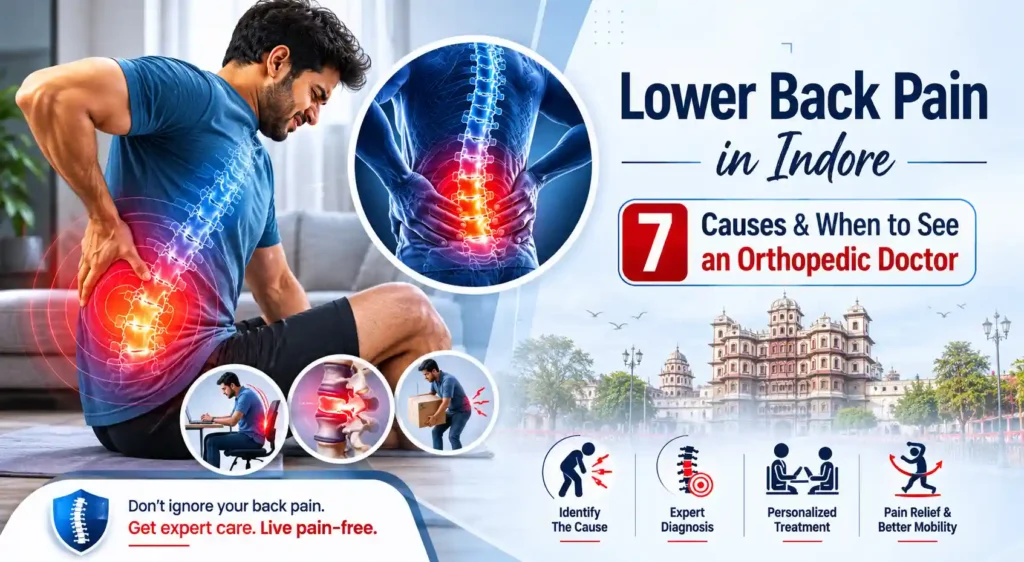
If you have been living with lower back pain in Indore that is not improving, affecting your sleep, limiting your movement, or producing any of the warning signs described in this article, the right step is a specialist evaluation. Dr. Prince Uchadiya’s orthopaedic clinic in Indore provides a complete diagnostic assessment, a clearly explained treatment plan, and the full range of non-surgical and surgical options to address the specific cause of your pain. Do not wait for lower back pain to become a chronic problem before seeking care.