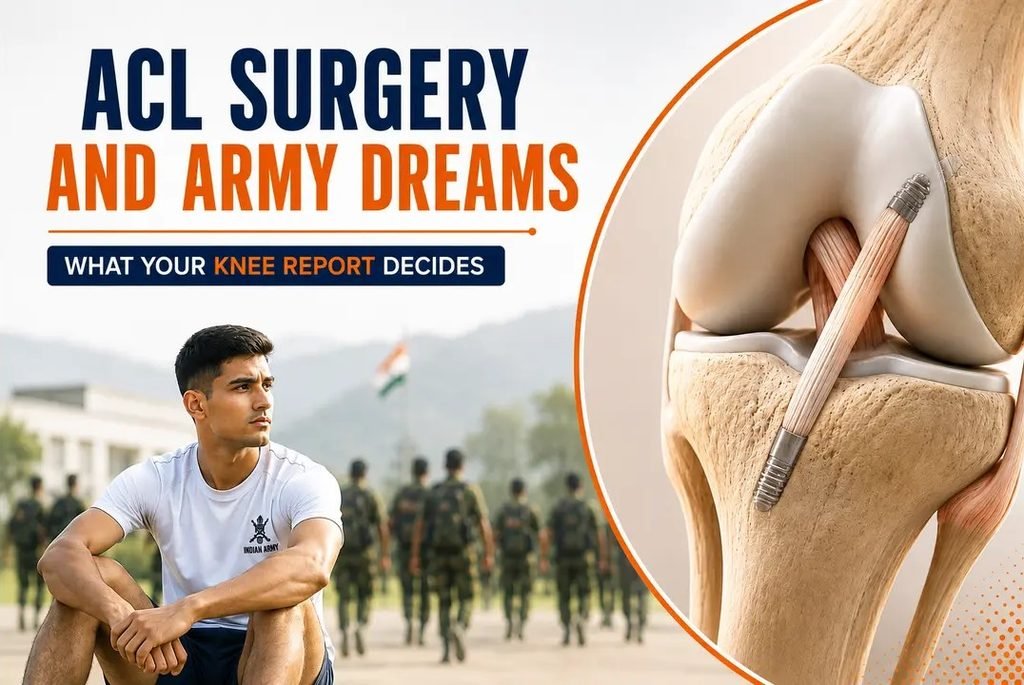
Thousands of young athletes across India leave the operating theatre every year with a reconstructed ACL and one question in mind: does this surgery end their chance at the uniform? ACL surgery in Indian Army eligibility is not decided by the operation itself. It is decided by what your knee looks like on the day of the medical, months or years later. That distinction should shape how you plan your recovery and the timing of your application.
What does ACL surgery in Indian Army eligibility actually mean? ACL surgery in Indian Army eligibility refers to whether a candidate who has undergone anterior cruciate ligament reconstruction can be medically cleared for enlistment. Under current Armed Forces Medical Standards, ligament reconstruction is generally graded as a cause for rejection, though candidates with a stable, fully healed knee and enough time since surgery have been cleared on medical review.
How ACL Surgery In Indian Army Eligibility Is Actually Decided
The Armed Forces Medical Standards do not treat every operated knee the same way. A candidate who had ACL reconstruction surgery two years ago with no instability is looked at differently from one who is six months post op and still building quadriceps strength. Recruitment medical boards work off functional stability, not the date printed on your discharge summary.
During the SSB medical, examiners look at a specific set of markers on the operated knee:
- Ligament laxity on manual stress testing, including the Lachman test
- Range of motion compared with the uninjured leg
- Quadriceps and hamstring strength symmetry
- Scar healing and any sign of ongoing swelling
- Presence of internal fixation hardware such as screws or buttons
Each finding goes into the medical officer’s note, and together they decide whether your file is marked fit, unfit, or sent to a Review Medical Board. Knee laxity, as Cleveland Clinic’s overview of ACL tears explains, is one of the clearest physical signs examiners rely on, which is why a stable, well rehabilitated knee matters more than the calendar.
ACL Reconstruction vs Meniscus Repair: Why the Army Treats Them Differently
Not every surgery carries equal weight in a medical. A straightforward ligament reconstruction is generally reviewed on its own merits, while a case involving a combined ACL and meniscus injury is scrutinised more closely, since damage to both structures affects joint stability in a way isolated ligament work does not. A prior revision ACL surgery sits at the strict end of that scale, since it points to an earlier graft that did not hold.
| Surgery Type | How It Is Typically Viewed | Why |
|---|---|---|
| Isolated ACL reconstruction | Reviewed mainly on current knee function | Single structure involved, no cartilage damage |
| Combined ACL and meniscus repair | Reviewed more strictly | Added instability and higher reinjury risk |
| Meniscectomy only, no ACL involved | Generally more favourable odds | No ligament graft to assess |
| Revision ACL surgery | Reviewed most cautiously | History of prior graft failure |
How Long After ACL Surgery You Can Realistically Apply
Timing is one of the biggest variables in ACL surgery in Indian Army eligibility, and there is no single fixed number of months that guarantees clearance. A rough, commonly reported timeline looks like this:
- 0 to 3 months: protected healing while the graft incorporates into bone, walking without crutches once cleared
- 3 to 6 months: structured strengthening, with jogging introduced only after the surgeon’s clearance, since return to running too early raises reinjury risk
- 6 to 12 months: sport level training resumes for most patients, and functional tests begin to normalise
- 12 to 18 months: many candidates who reach full strength symmetry choose to apply around this point
- Beyond 18 months: a longer gap generally works in the candidate’s favour, though the medical board still tests current function rather than time elapsed
Preparing Your Knee Before the Medical Exam
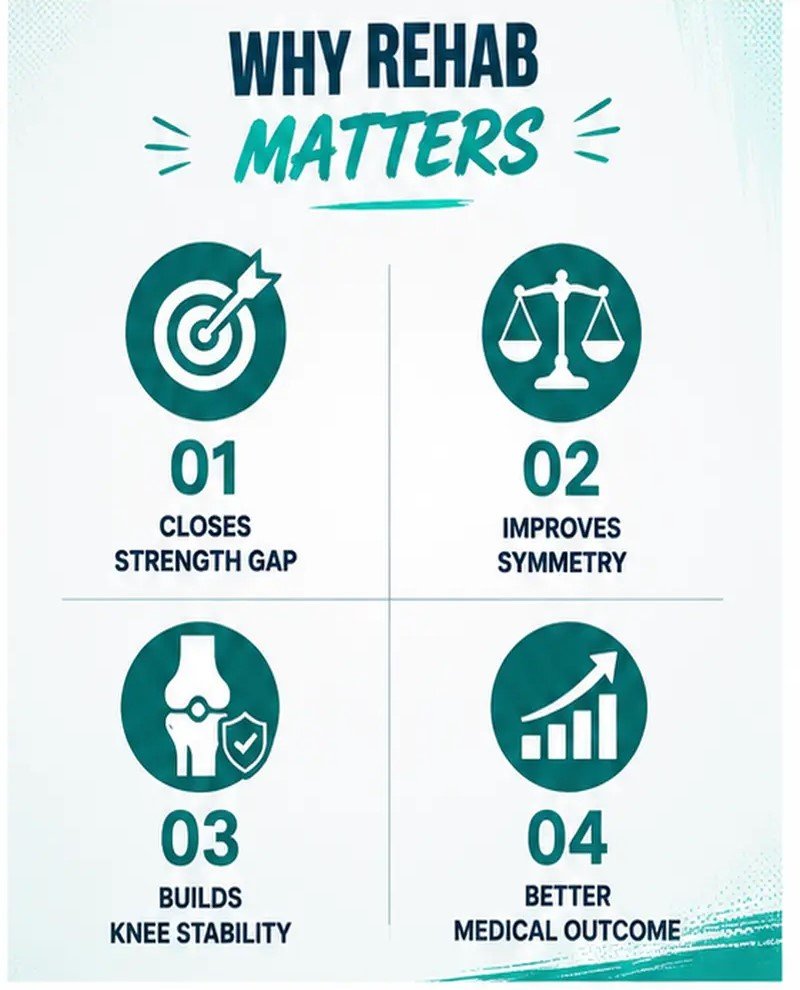
A knee that passes a recruitment medical is usually one that went through disciplined, supervised rehabilitation rather than a rushed one. Structured post surgery physiotherapy closes the strength gap between the operated and uninjured leg, and that symmetry is exactly what an examining doctor checks with simple bedside tests. Mayo Clinic’s overview of ACL treatment notes that graft healing and rehabilitation, not the surgery date, are what shape long term knee function.
A knee that looks fine while walking can still fail single leg hop tests, and those functional gaps often separate a fit report from an unfit one.
Carry your operative notes, implant details if any, and physiotherapy discharge summary to the medical. Clear documentation of a well healed grade 3 ACL tear that was properly reconstructed often works in a candidate’s favour, since it shows the board exactly what was treated and how completely.
What About CISF, BSF, and State Police Forces?
Army rejection is not the end of the road for uniformed service. CISF, BSF, and state police boards run their own medical evaluations, and while the core scrutiny around ligament surgery is similar, standards can differ between forces. Some candidates who did not clear an Army medical have gone on to clear police recruitment medicals with a well documented, stable knee.
Concealing Your Surgery: Why It Backfires
Some candidates consider leaving the surgery off their medical declaration, hoping a healed scar will go unnoticed. It rarely does, since scar patterns and imaging are part of a routine examination.
Concealing a ligament surgery on a recruitment medical form is treated as suppression of material fact, and if it is discovered after enrollment, the outcome is usually discharge rather than a simple rejection.
Declaring the surgery honestly, with documentation, gives the medical board something concrete to assess. Concealment only gives them a reason to question the rest of your file too.
If You Are Declared Unfit: The Appeal Route
A rejection at the first medical is not always final. Candidates can request a review through the Medical Board or Appeal Medical Board, where fresh evidence of knee stability and function can be presented, including updated imaging and a functional assessment from the operating surgeon. Candidates whose knees show no laxity, a well healed scar, and full functional strength after 12 to 18 months of recovery have had unfit gradings reversed on review, though outcomes vary by case and by board.
Every case that touches ACL surgery Indian Army eligibility gets decided on the same knee, on the same day, in front of the same examining doctor. The surgery date matters less than what your ligament, strength, and gait show at that appointment. Prepare for it the way you would train for the physical test itself, with structured rehabilitation and honest documentation. For what happens when the ligament is left untreated instead, see this guide on an ACL tear without surgery.