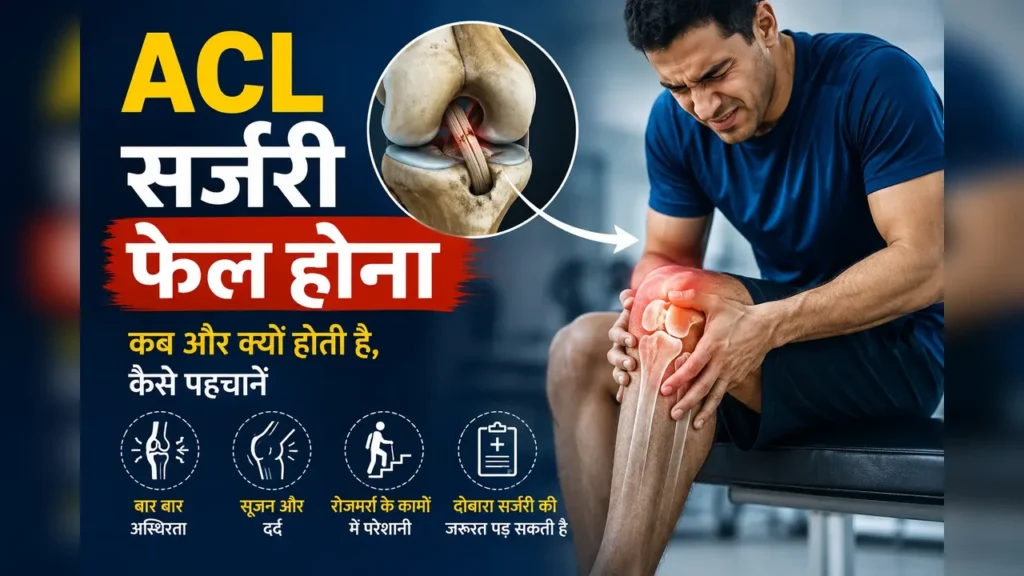

The knee gives way mid-squat. Or it twists during a deadlift. Your gym plans for the next six months go on hold. That’s how it starts for most gym athletes with a torn ACL.
ACL surgery for gym athletes in Indore isn’t the same talk I have with someone who just wants to walk without pain. A person who lifts weights puts real load through the knee. That changes how I plan surgery. It also changes the months after it.
I’ve operated on this injury more times than I can count. My patients range from first-time gym-goers to state athletes. This is what I tell them in clinic. It covers how recovery unfolds. It also covers when it’s safe to pick up a barbell again.
Key Takeaways
- About 83% of athletes get back to sport after ACL surgery. But real gym strength takes closer to 9 to 12 months. It’s not a few weeks.
- About 15% of athletes who return to sport hurt the knee again. That number jumps to 23% in athletes under 25 who go back too soon.
- Light gym work like walking or cycling usually starts by 4 to 6 weeks. Your physio needs to give the go-ahead first.
- Heavy squats and deadlifts are best left until 6 to 9 months out. Your knee needs to pass strength tests first.
- Return to the gym isn’t about the calendar. It’s about what your knee can actually do.
Why a Gym Athlete’s Knee Needs a Different Plan
A knee that squats and lifts does a lot more than one that just climbs stairs. That’s the real difference between the two.
Most advice online treats “walking normally” as the finish line. For someone who trains that’s barely halfway.
Your rehab has to fit what you actually do in the gym. It could be powerlifting. It could be strength work. It could be bodybuilding. That’s the whole point of real ACL rehab. It’s where generic recovery plans fall short.
What ACL Reconstruction Surgery Actually Involves
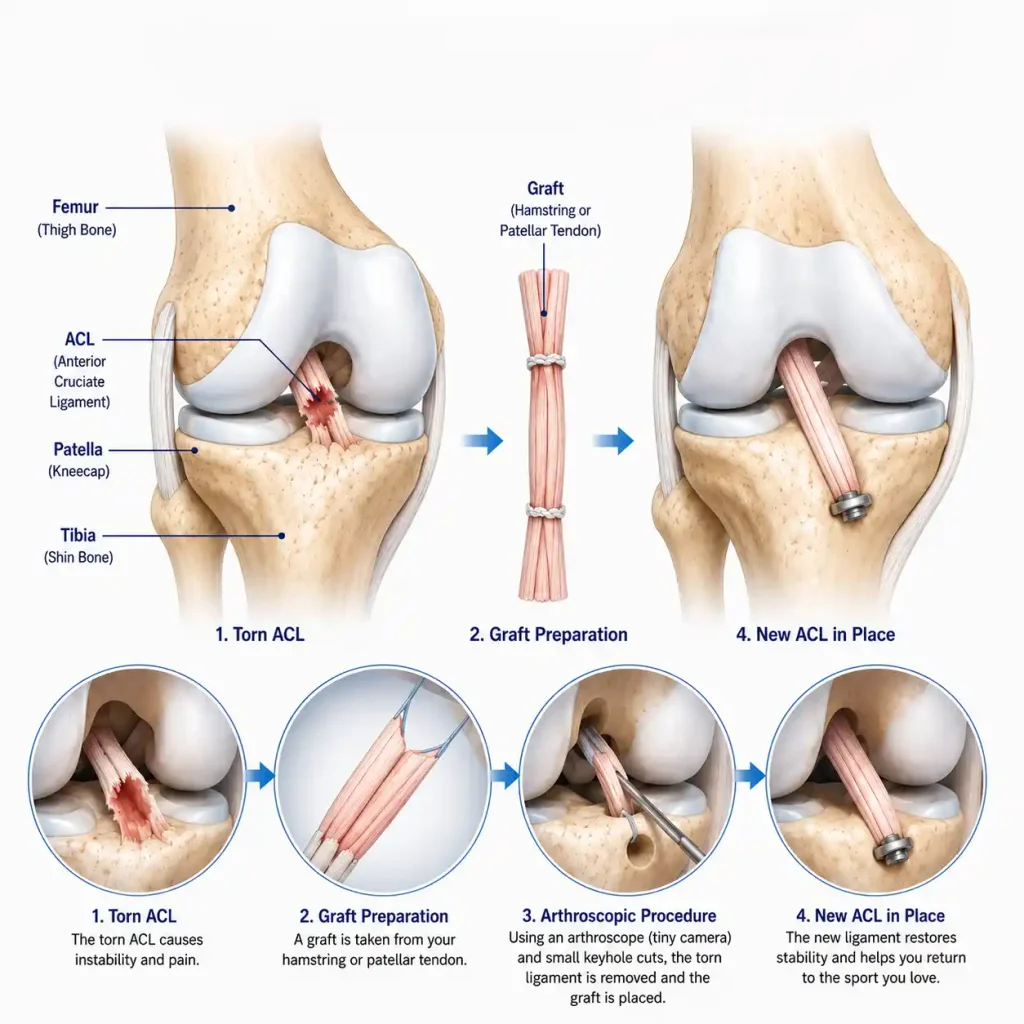
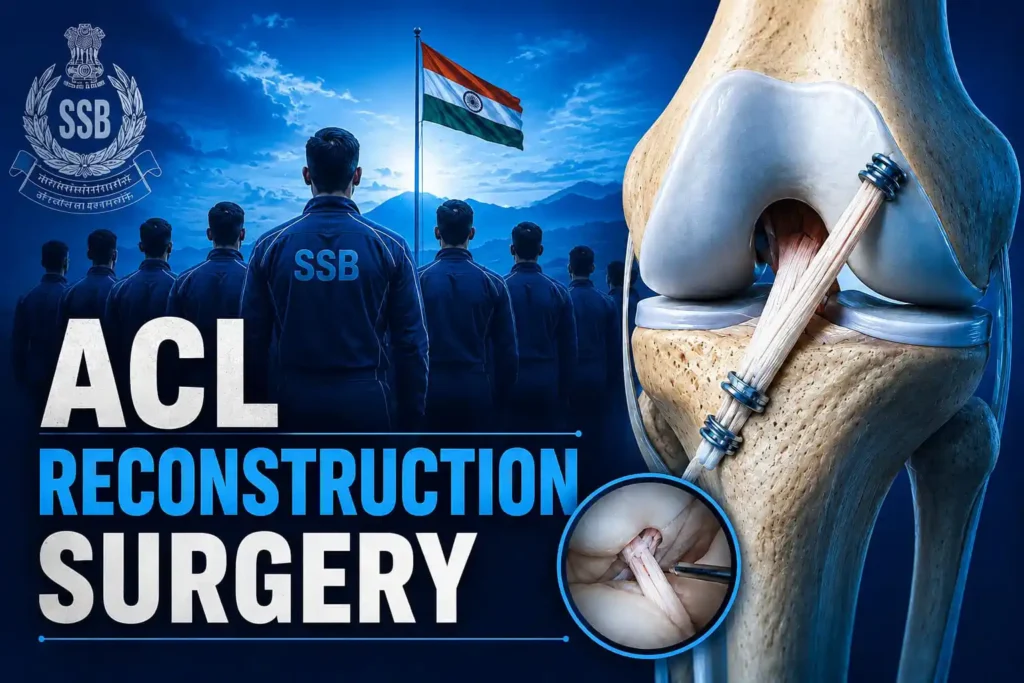
In simple terms we replace the torn ligament with a graft. It’s usually taken from your own hamstring or the patellar tendon. This depends on your knee and your sport. The surgery uses small keyhole cuts and a camera. There’s no large cut to worry about.
Most patients I operate on in Indore go home within a day or two. You can read more about how the ACL reconstruction procedure actually works.
Here’s what I tell every patient before surgery. The operation fixes the ligament. It doesn’t build your leg back up. That part is on rehab.
“The operation fixes the ligament, but rehab builds the athlete back. Skipping steps in rehab is the single biggest reason I see repeat injuries.” — Dr. Prince Uchadiya
How Recovery Unfolds, Month by Month
No two knees heal at the same pace. Treat this table as a rough map, not a strict schedule.
| Recovery Phase | Timeframe | What’s Typically Allowed |
|---|---|---|
| Protection Phase | Week 0–4 | Walking with support, gentle range-of-motion work, getting swelling down |
| Early Strengthening | Week 4–8 | Stationary cycling, light resistance bands, basic balance drills |
| Progressive Loading | Month 3–5 | Leg press, light squats, controlled lunges, under supervision |
| Sport-Specific Training | Month 6–9 | Jogging, agility drills, moderate weight training with form checks |
| Full Return to Sport | Month 9–12 | Heavy lifting, sprinting, cutting movements, competitive sport |
This broadly matches the ACL recovery timeline. Your physio will still adjust your pace. It depends on your graft and your strength.
When Can You Return to the Gym After ACL Surgery?
This is the question almost everyone asks first. It depends on what you mean by “gym.”
Walking on a treadmill or riding a bike can often start around 4 to 6 weeks. A full return to gym with free weights and no limits is usually closer to nine months.
1. When can I start lifting weights after ACL surgery?
Very light resistance work usually starts around week 6 to 8. Think leg extensions with barely any weight. It depends on your swelling and how comfortable your physio is with your control.
Weightlifting on gym machines tends to begin around month 3. Keep the weights light. Have someone experienced watch your form closely.
Heavy lifting comes later. It’s tied to strength tests, not a date on the calendar.
2. What gym exercises are safe after ACL surgery?
In the first few months leg presses, straight-leg raises, and low step-ups are usually fine. They build strength without stressing the healing graft.
Stay away from deep knee bends, jumping, and sudden twists. Wait until your surgeon and physio both sign off. If something hurts that’s your knee telling you to back off.
3. When can I do leg workouts after ACL surgery?
Leg workouts come in stages. Isolated exercises, working one muscle at a time, usually start around month 2 to 3.
Compound movements come next, like lunges and step-downs. They make your hip, knee, and ankle work together. These usually start around month 4 to 5. Your balance needs to really improve first.
4. Can I Return to Heavy Squats and Deadlifts After ACL Surgery?
Heavy squats and deadlifts are usually the last things to come back, not the first. Wait at least 6 to 9 months. Your knee needs to check out first.
“Patients always ask me when they can squat heavy again. I ask them something else instead: can your operated leg produce the same force as your good one? That answer tells us more than any date on a calendar.” — Dr. Prince Uchadiya
Before we clear anyone for heavy squats we check both legs for equal strength. We also check balance. We also look for swelling after training.
Getting Your Leg Strength Back
You can’t rush leg strength back by just training harder. It’s a slow process. There’s a reason for that.
Early on physio focuses on waking the quad muscle back up. After knee surgery it often goes quiet, almost like it forgot how to fire. That’s normal. It’s not something you did wrong.
As things progress we add resistance step by step. We move from bodyweight to machines. Then we move to free weights. Structured knee rehab exercises, done under a physiotherapist’s eye, make this process safer and faster.
Strength training should always compare both legs. Many patients feel “back to normal” just because the pain is gone. But a strength gap between the legs is a common cause of reinjury later.
How Do I Know When I’m Ready to Return to the Gym?
Being ready for the gym after ACL surgery isn’t about counting months. It comes down to a few specific things we check.
We check quad and hamstring strength. We check single-leg hop tests. We check how stable the knee feels under load. This usually happens around month 6 to 9.
Many patients ask if prep work before surgery matters too. It does. Athletes who do proper pre-op rehab before ACL surgery tend to rebuild strength faster once surgery is done.
If your knee still swells after a workout you’re not ready for full intensity yet. Same if one leg feels weaker than the other. That’s true no matter how many months have passed.
Keeping the Knee From Getting Injured Again
Preventing ACL reinjury comes down to respecting strength tests. It’s not about the calendar. Reinjury rates go up when athletes skip testing and go back just because it “feels fine.”
Warm up properly before every session. Don’t drop single-leg stability work once you’re back to full training. It might feel basic but weak hips and a lazy core cause a surprising number of repeat ACL injuries.
Pay attention to what your knee tells you. Mild fatigue after a session is normal. Sharp pain or swelling is not. A knee that feels like it might give way means it’s time to stop and call your physio.
Can I Fully Recover and Regain My Previous Fitness Level After ACL Surgery?
In most cases yes. Gym athletes generally get back to their old fitness level. Some end up lifting better than before. Rehab forces them to fix old weaknesses they never dealt with.
Return to sport after ACL reconstruction is a realistic goal if you stick with your rehab plan. It takes more patience than most people expect. But it’s doable.
How complete your recovery is depends on a few things. The graft used matters. Any extra injury like a meniscus tear matters too. So does how well you stuck to rehab. Every knee moves at its own pace. Accept that rather than fight it.
A Word on the Cost of ACL Surgery for Gym Athletes in Indore
Many patients want to know the cost before they decide on surgery. That’s fair. Recovery takes real time. It also takes real money.
You can check typical figures for ACL surgery cost in Indore to plan ahead. It also covers what affects the final number.
“My approach with gym athletes is simple. I don’t just fix the ligament, I plan the whole journey back to the gym with them. Every squat and deadlift they do again safely, that’s the real outcome of surgery and rehab working together.” — Dr. Prince Uchadiya
Final Thoughts
A torn ACL feels like the end of your training. It isn’t. It’s a detour, not a dead end. The gym athletes who do best are the ones who trust the process. They don’t chase a date on the calendar. They chase strength, balance and control, in that order.
Rehab will test your patience more than your surgery ever does. Stick with it anyway. Most people who do get back to lifting, squatting and training the way they used to. Some come back stronger.
If your knee is telling you something isn’t right, don’t push through it. Talk to your surgeon or physio. A short pause now beats a long setback later.