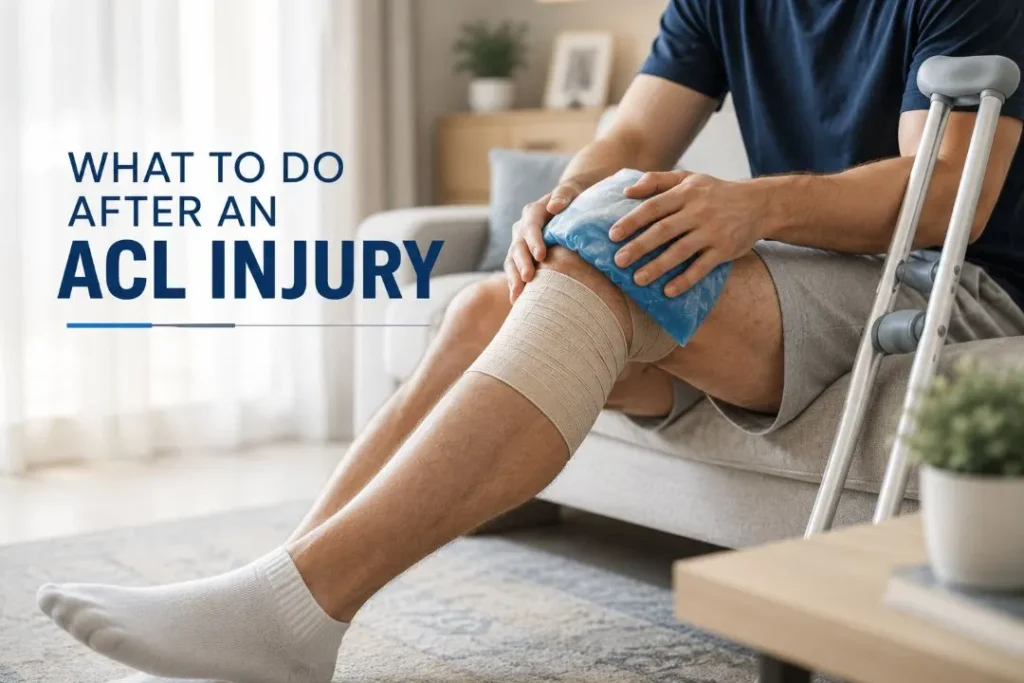
Your knee gave out mid-step, you heard a pop, and now it feels like it might buckle again with the next move you make. That moment is when most people start searching for ACL injury treatment at home, usually before they have even seen a doctor. The good news is that a lot of what happens in the first days after an ACL injury genuinely does take place at home, and doing it right can shape how smoothly the rest of your recovery goes.
This guide walks through practical ACL injury treatment at home, what home care cannot fix, and when it is time to call an orthopaedic specialist.
What Actually Happens When the ACL Tears
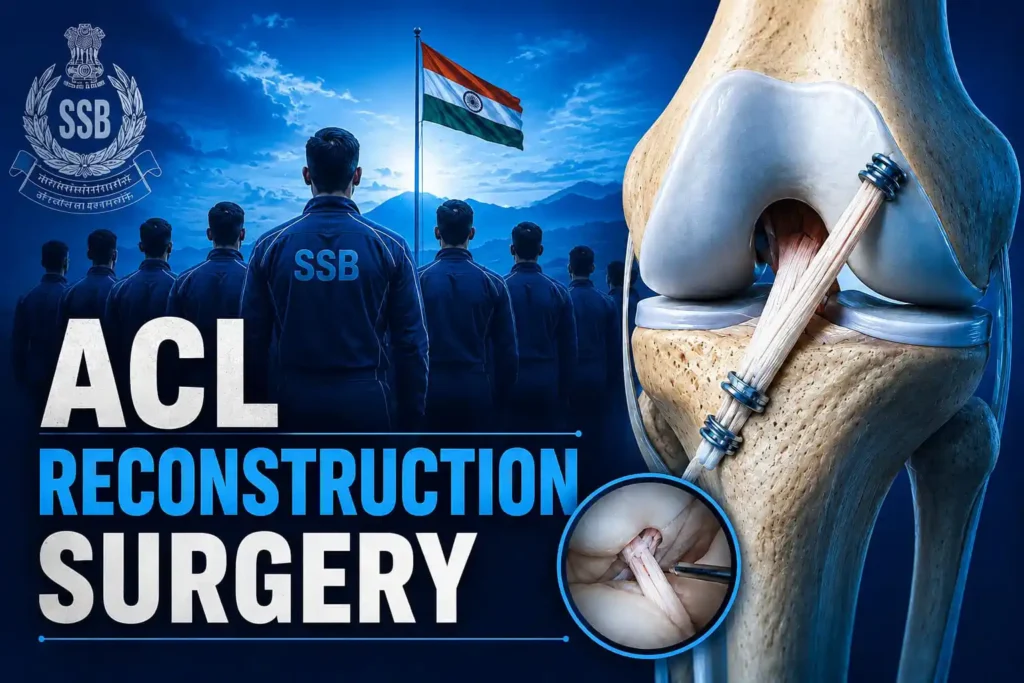
The anterior cruciate ligament sits inside the knee and keeps the shinbone from sliding too far forward under the thighbone. It is what lets you twist, pivot, and change direction without your knee giving way. When it tears, that stability disappears immediately, which is why the classic description is a knee that “gives out.”
An ACL tear does not heal on its own the way a sprained ankle might. Ligament tissue has a poor blood supply, so the torn ends do not knit back together naturally. What home treatment can do is control the early symptoms, protect the knee from further damage, and set you up for whatever treatment path, surgical or not, comes next.
The First 48 Hours: What Home Care Can Manage
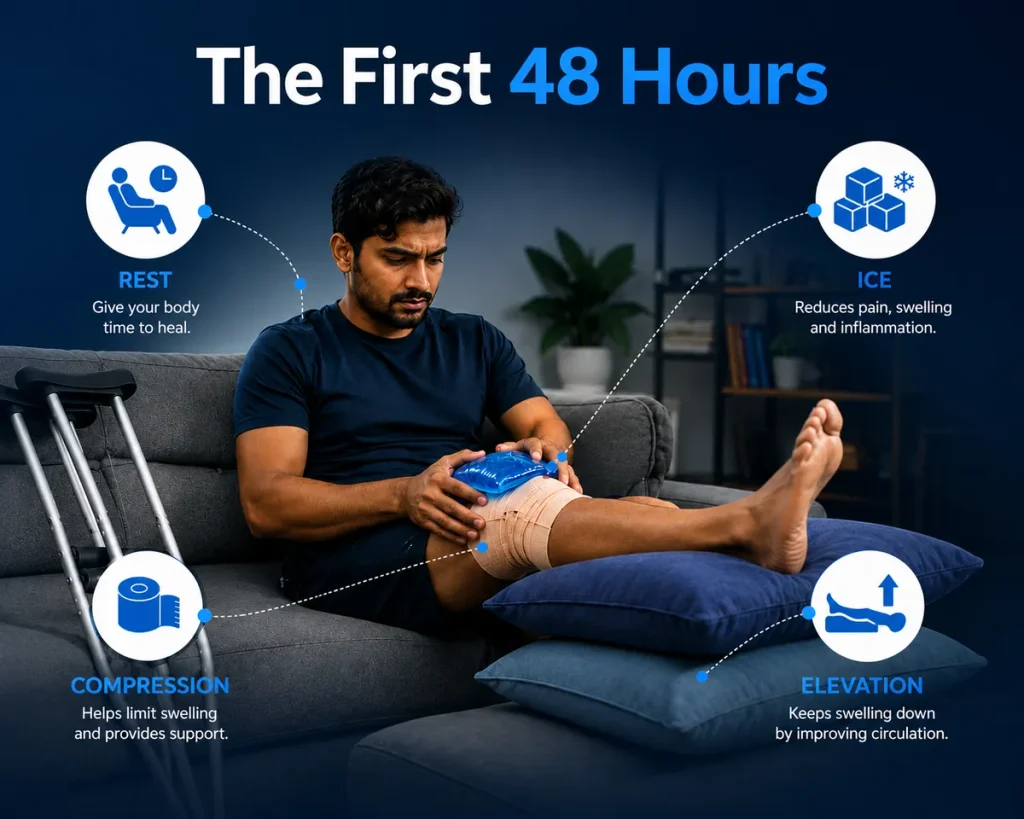
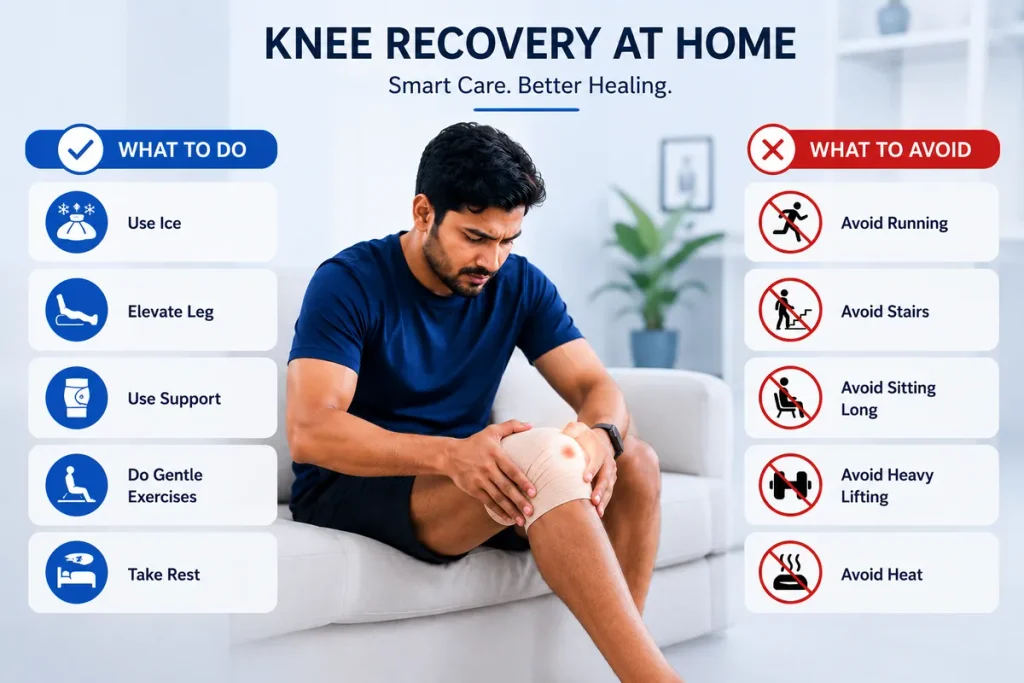
Doctors still rely on the Mayo Clinic RICE method as the standard first response, and for good reason. It genuinely reduces swelling and pain when done correctly.
- Rest. Stay off the leg. Use crutches if standing puts any weight through the knee.
- Ice. Apply an ice pack for 15 to 20 minutes every two hours while awake, for the first two to three days.
- Compression. Wrap the knee with an elastic bandage snug enough to control swelling, not so tight it cuts off circulation.
- Elevation. Keep the knee raised above heart level whenever you are sitting or lying down.
A clean 40 to 60 word definition worth remembering: an ACL injury is a tear of the ligament that stabilises the knee during twisting and pivoting movements, usually caused by a sudden change in direction, a hard landing, or direct impact, and it typically causes immediate swelling, pain, and a feeling of the knee giving way.
Home Exercises That Can Actually Help
Once the initial swelling has settled, usually within the first week, gentle movement becomes a genuine part of ACL injury treatment at home rather than something to avoid. Complete immobilisation for too long causes its own problems: stiffness, muscle loss around the knee, and a longer road back later.
- Quad sets. Sit with your leg straight, tighten the thigh muscle, and hold for five seconds. Repeat ten times, several times a day.
- Heel slides. Lying down, slowly slide your heel toward your buttocks to work on bending the knee within a comfortable range.
- Straight leg raises. Once quad sets feel easy, lift the straightened leg a few inches off the bed and lower it slowly.
- Ankle pumps. Simple but effective for keeping circulation moving while you are resting the knee.
These early exercises for ACL injury at home are meant to maintain muscle activation, not to test the knee’s stability. Anything that involves twisting, pivoting, or bearing full weight on a bent knee should wait until a professional has assessed the injury.
What Can Make an ACL Injury Worse at Home
Some habits that feel productive can actually set recovery back.
Pushing through a “giving way” sensation to test the knee is one of the most common reasons a partial ACL tear becomes a complete one, or damages the meniscus alongside it.
| What Feels Helpful | Why It Can Backfire |
|---|---|
| Walking without support to “keep it moving” | Repeated instability episodes damage cartilage and the meniscus |
| Squats or lunges early on | These load the knee in the exact pattern the ACL normally controls |
| Skipping the brace because it feels fine that day | The knee can feel stable right up until it suddenly is not |
| Complete bed rest for weeks | Leads to stiffness and quad muscle wasting that slows later rehab |
Bracing and Support at Home
A hinged knee brace is one of the most useful pieces of home care for ACL injury in the early weeks. It does not replace the ligament, but it limits the forward and rotational movement that causes the knee to give way, which lets you move around the house more safely while a treatment decision is being made.
Crutches serve the same protective purpose for weight bearing. Use them until a doctor confirms how much load the knee can safely take.
Can an ACL Tear Heal Without Surgery
This is one of the most searched questions after an ACL injury, and the honest answer is that it depends on the person, not just the tear. Some patients, particularly those who are older, less active, or who do not play pivoting sports, do well with a structured non-surgical program built around physiotherapy, bracing, and strength work. Others, especially younger and more active patients, tend to have repeated instability episodes without surgery, which raises the risk of further cartilage and meniscus damage over time. ACL tear without surgery covers the specific criteria that make someone a reasonable candidate for the non-operative route.
ACL Injury Treatment at Home vs When You Need a Clinic
Not every part of recovery can happen on your own. Home care handles the early symptoms and protects the knee, but confirming the diagnosis, deciding between surgery and rehabilitation, and monitoring how the knee responds over weeks still needs a clinician involved. Think of ACL injury treatment at home as the first chapter of recovery, not the whole book.
Managing Pain Without Overusing Medication
Ice, elevation, and rest handle most of the early discomfort on their own. When medication is needed, over the counter anti-inflammatories are typically enough for the first week or two, and your doctor will advise if anything stronger is appropriate. Persistent or worsening pain, rather than the expected soreness of an injured knee, is a signal to get evaluated rather than to manage it at home indefinitely.
Signs Home Treatment Is No Longer Enough
- The knee locks, catches, or will not fully straighten
- Swelling keeps returning despite rest and ice
- The knee gives way during ordinary walking, not just sport
- Pain is severe enough that you cannot bear any weight after the first few days
- Two weeks of home care has not improved stability at all
Any of these point toward getting an examination and likely an MRI. A ligament injury doctor can confirm the grade of the tear and whether other structures, like the meniscus, are involved, which changes the treatment plan considerably.
Building a Long-Term Home Recovery Routine
Whether or not surgery ends up being the path forward, structured knee rehab exercises at home remain central to recovery. The goal in the weeks after the acute injury shifts from protecting the knee to gradually rebuilding the muscles around it, since strong quadriceps and hamstrings compensate for some of the stability the ACL used to provide.
Consistency matters more than intensity here. Most patients who do well with ACL injury treatment at home are the ones who follow their exercise routine daily rather than pushing hard for a few days and then stopping when the knee feels better.
The Bottom Line
After an ACL injury, it’s easy to focus on what you should do at home and assume the knee will settle with time. But if you’re looking into 10 Mistakes to Avoid After an ACL Injury, one of the biggest mistakes is relying on home treatment without finding out what actually happened inside the knee.
RICE, protected movement, and a brace can help during the early days. But they can’t tell you whether the ACL is partially or completely torn, or whether your knee is likely to remain stable without surgery. That’s why getting a proper diagnosis early matters, even if the pain and swelling start to improve.