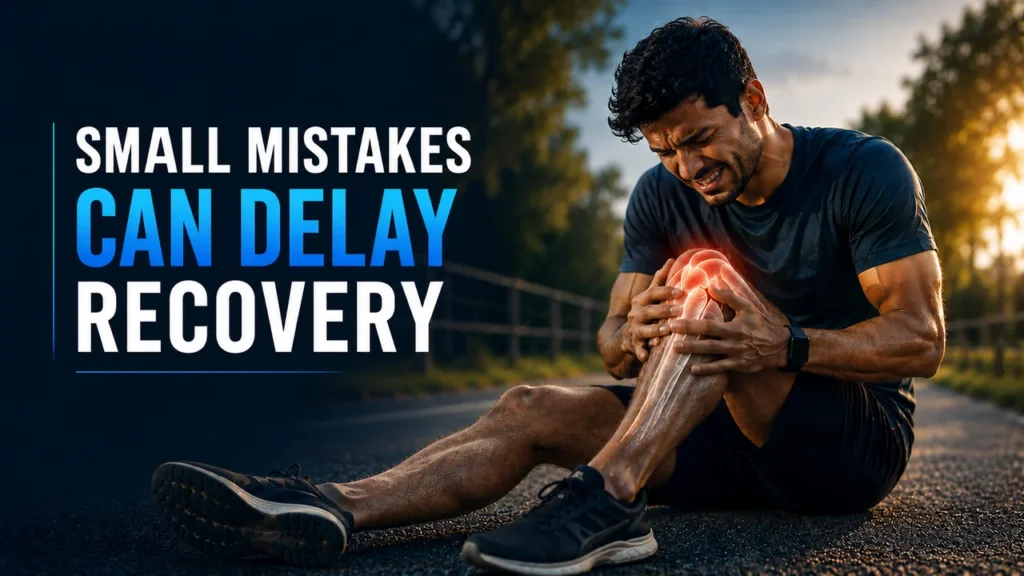
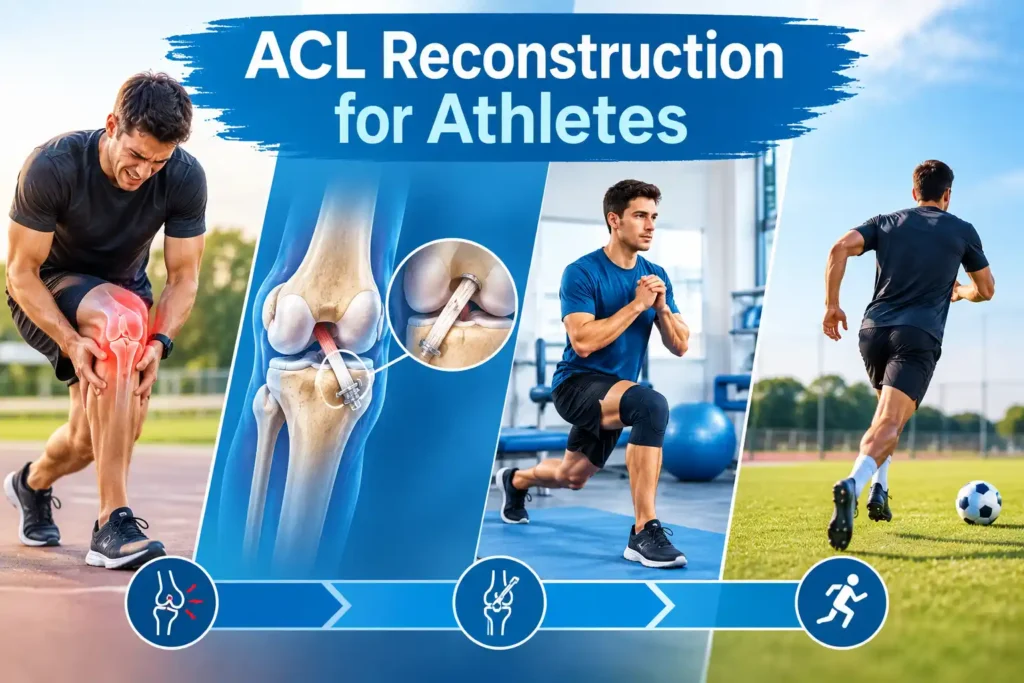
If you are an athlete in Indore who just heard the words “ACL tear,” your first question is probably not about the surgery. It’s about your game. Will you run again? Will you play at the same level? When can you get back on the field?
ACL reconstruction for athletes in Indore is one of the most common sports injury surgeries we perform and it’s also one of the most misunderstood. Many athletes think the surgery is the hard part. In truth, the real work starts after the operation, during rehab and return to training.
Key Takeaways
- The pooled return-to-sport rate among elite athletes after ACL reconstruction is 83%, with a graft rupture rate of about 5.2%.
- Athletes who return to knee-strenuous sport before 9 months face a reinjury rate nearly 7 times higher than those who wait.
- Most athletes can start light jogging around 3 to 4 months, gym training by 4 to 5 months and competitive sport between 9 and 12 months.
- Structured physiotherapy, not just surgery, decides how well and how fast an athlete returns.
- Skipping strength and stability testing before return to play is the single biggest reason for repeat ACL injuries.
Understanding ACL Reconstruction Surgery
The anterior cruciate ligament (ACL) is a small band of tissue inside your knee. It keeps your shin bone from sliding forward and controls rotation when you pivot, cut, or land from a jump.
When this ligament tears, it does not heal on its own. That’s why ACL reconstruction surgery is usually recommended for athletes who want to return to pivoting sports like football, cricket, badminton, or basketball.
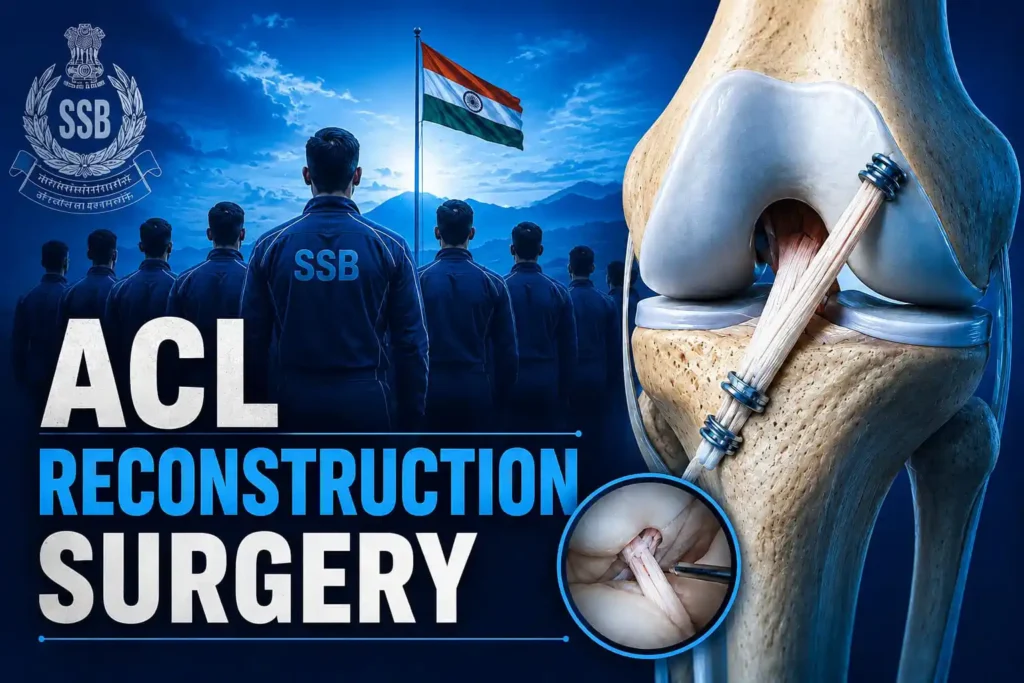
During the procedure, we remove the torn ligament and replace it with a graft. This graft is often taken from your own hamstring or patellar tendon. Using an arthroscope, a tiny camera, we place the new ligament through small keyhole cuts. There is no large incision, less pain and a quicker start to rehab.
If you want a deeper look at how this surgery works step by step, our detailed guide on ACL reconstruction surgery covers the full procedure.
The ACL Recovery Timeline for Athletes
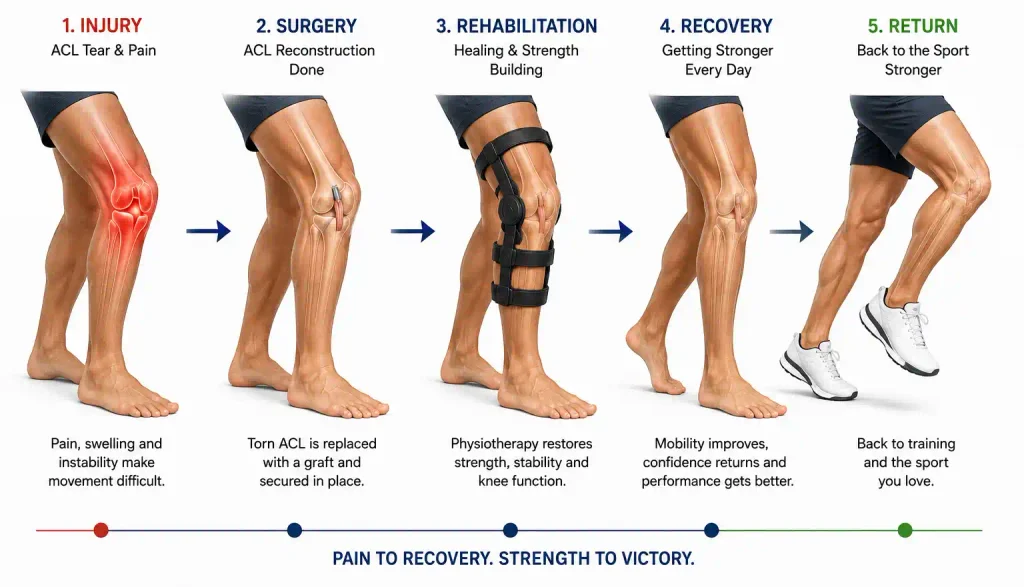
Every athlete heals differently. Age, sport, graft type and how well you follow rehab all play a role. Still, most athletes follow a broadly similar ACL recovery timeline.
Weeks 1 to 2: Protecting the Knee
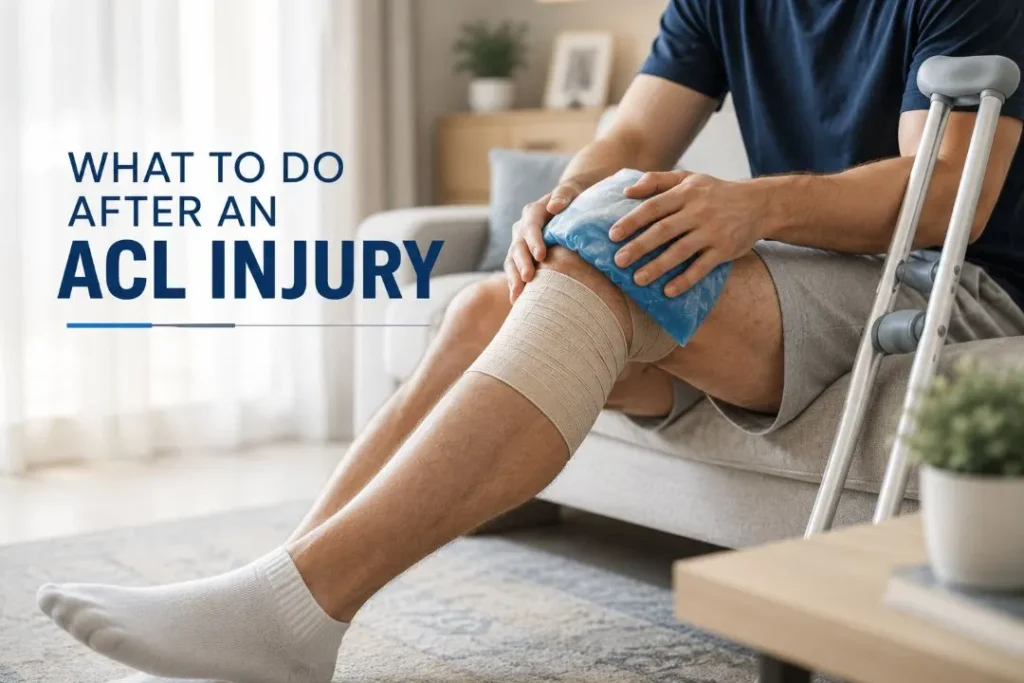
Right after surgery, the goal is simple: reduce swelling and protect the graft. You’ll use crutches, wear a brace and start gentle knee movement exercises under guidance.
Weeks 3 to 6: Regaining Motion
By this stage, most athletes walk without crutches. Physiotherapy focuses on getting full knee bend back and waking up the quadriceps muscle, which weakens fast after knee surgery.
Months 2 to 3: Building Strength
This is where real strength training begins. Squats, step-ups and balance drills form the base. Cycling on a stationary bike is often introduced here too.
Months 3 to 5: Running and Agility
Light jogging usually starts once strength and control targets are met, not just because a calendar date has passed. Agility drills follow once running feels stable and pain-free.
Months 6 to 9: Sport-Specific Training
Athletes begin sport-specific movements: cutting, pivoting, jumping and landing drills. This phase is where the knee is tested under real athletic stress.
Months 9 to 12: Return to Competition
Full return to competitive sport is generally cleared between 9 and 12 months and only after passing strength and functional tests. Rushing this stage is where most repeat injuries happen.
Comparison: Recovery Milestones by Activity Level
| Activity | Typical Timeline | What Must Be Achieved First |
|---|---|---|
| Walking without support | 3 to 6 weeks | Full knee extension, controlled swelling |
| Light jogging | 3 to 4 months | 80–90% quad strength, no pain or swelling |
| Gym training (weights) | 4 to 5 months | Stable balance, good knee control |
| Sport-specific drills | 6 to 9 months | Passed agility and hop tests |
| Return to competitive sport | 9 to 12 months | 90%+ strength symmetry, cleared functional tests |
As Dr. Prince Uchadiya puts it, “The calendar tells you when it’s possible to return. Your strength tests tell you when it’s safe. Athletes should always trust the second one.”
ACL Rehabilitation and Physiotherapy: The Real Engine of Recovery
Surgery repairs the ligament. ACL rehabilitation is what makes it functional again. Skipping physiotherapy, or rushing through it, is the most common mistake we see among young athletes.
Good ACL physiotherapy covers several things at once. It restores full range of motion. It rebuilds quadriceps and hamstring strength. It retrains balance and proprioception, meaning your knee’s sense of position in space. Without this, athletes often feel “unstable,” even after the graft has healed well.
Physiotherapy is usually needed for 6 to 9 months, sometimes longer for competitive athletes. It doesn’t stop once you start running. It evolves with you, adding sport-specific challenges as your knee gets stronger.
When Can Athletes Start Running After ACL Reconstruction?
This is one of the most common questions we get and the honest answer is: it depends on strength, not just time.
Most athletes begin straight-line jogging around 3 to 4 months after surgery. Before that, the graft is still maturing biologically and heavy impact can affect ACL graft healing.
Running is cleared step by step. First, you walk without a limp. Then you jog on a treadmill or flat ground. Only after that do we introduce direction changes and speed work. For a detailed week-by-week breakdown, see our guide on return to running after ACL surgery.
When Can Athletes Return to Gym Training After ACL Reconstruction?
Light gym work, like bodyweight squats and resistance band exercises, often starts within the first month. Structured weight training with machines usually begins around 4 to 5 months, once the knee shows good control under load.
Heavy squats, lunges and single-leg exercises are added gradually. The focus stays on quality of movement, not the amount of weight lifted. A knee that shakes or gives way under light load is not ready for heavier training, no matter how many months have passed.
When Can Athletes Safely Return to Sports After ACL Reconstruction?
Return to sports after ACL surgery is the milestone every athlete waits for and it deserves the most caution.
We don’t clear athletes based on time alone. Before full return to sport, we check quadriceps and hamstring strength on both legs, hop test performance comparing the operated and non-operated leg and confidence and control during cutting and pivoting movements.
Most athletes reach this stage between 9 and 12 months. Returning earlier, even at 6 or 7 months, sharply raises the risk of a second injury. As mentioned earlier, athletes who return before 9 months face nearly seven times the reinjury rate compared to those who wait.
Can Swimming Help During ACL Reconstruction Recovery?
Yes, swimming is one of the better low-impact options during recovery, but timing matters.
Gentle kicking and pool walking can often begin once the surgical wound has fully healed, usually around 3 to 4 weeks and with your surgeon’s clearance. Swimming helps maintain cardiovascular fitness without loading the knee joint the way running does.
Breaststroke kick is usually avoided early on, since the leg movement puts twisting stress on the healing knee. Freestyle kick with a pull buoy is generally a safer starting point. Always check with your physiotherapist before adding swimming to your routine, since every knee heals at its own pace.
How Long Does Physiotherapy Take After ACL Reconstruction?
For most athletes, structured physiotherapy runs for 6 to 9 months. Recreational athletes with lower sport demands may complete core rehab a little sooner. Competitive and elite athletes often continue supervised training closer to the 9 to 12 month mark, blending rehab with sport-specific conditioning.
Physiotherapy is not a fixed countdown. It’s phase-based. You move to the next phase only when you meet the strength and control goals of the current one, not simply because a certain number of weeks has passed.
Can ACL Reconstruction Surgery Fail and What Happens If It Does?
Yes, ACL reconstruction can fail, though it’s uncommon with a well-performed surgery and disciplined rehab. Failure usually shows up as ongoing instability, a feeling of the knee giving way, or a new injury to the graft itself.
Common causes include returning to sport too early, incomplete rehabilitation, poor graft placement during surgery, or a new traumatic injury to the same knee. Graft rupture rates in elite athletes sit around 5.2%, which is a useful number to keep in perspective. It’s a real risk, but not the most likely outcome.
If a graft does fail, revision ACL surgery is possible. It often takes longer to recover from and may need a different graft source, but many athletes still return to sport successfully after a well-planned revision.
How Can Athletes Prevent Another ACL Injury After Returning to Training?
ACL injury prevention is not a one-time checklist. It’s an ongoing habit, especially for athletes returning to pivoting or jumping sports.
Strength imbalance between legs is one of the biggest risk factors, so athletes should keep training both sides equally, not just the stronger leg. Landing mechanics matter too. Learning to land softly, with bent knees and controlled hips, reduces stress on the ligament significantly.
Neuromuscular training programs, which combine balance, strength and landing drills, have shown real success in lowering reinjury rates. Fatigue is another overlooked factor. Many ACL injuries happen later in a match or training session, when control naturally drops. Building endurance alongside strength matters just as much as raw power.
ACL Reconstruction Cost for Athletes in Indore
Many athletes and their families also want clarity on expenses before committing to surgery. Costs vary depending on graft type, hospital stay and implants used. If budget planning is part of your decision, our detailed page on ACL surgery cost in Indore breaks this down clearly.
“The biggest gift I can give an athlete isn’t a faster recovery. It’s an honest one. A knee that’s rushed back rarely stays strong for long.”
Final Thoughts
ACL reconstruction for athletes in Indore is not just a surgical procedure. It’s a months-long process that rewards patience and disciplined rehab far more than it rewards speed.
If you’re an athlete dealing with an ACL injury, the most useful thing you can do right now is get an accurate diagnosis and a rehab plan built around your specific sport and goals. That’s where real recovery begins.
If you’d like to discuss your knee, your sport or your recovery timeline, Dr. Prince Uchadiya’s clinic in Indore is here to help you plan a return that actually lasts.