A sudden twist, awkward landing or quick change in direction can injure the ACL inside your knee. Many people notice a popping sound, fast swelling or a feeling that the knee may give way. These signs can suggest an ACL injury, but only a healthcare professional can confirm the cause.
The anterior cruciate ligament, commonly called the ACL, helps keep the knee stable during walking, running, jumping and turning. When it stretches too far or tears, everyday movements may become painful or feel uncertain.
What Is an ACL Tear?
The anterior cruciate ligament is a strong band of tissue inside the knee. It connects the thighbone to the shinbone and helps control forward and rotational movement of the knee.
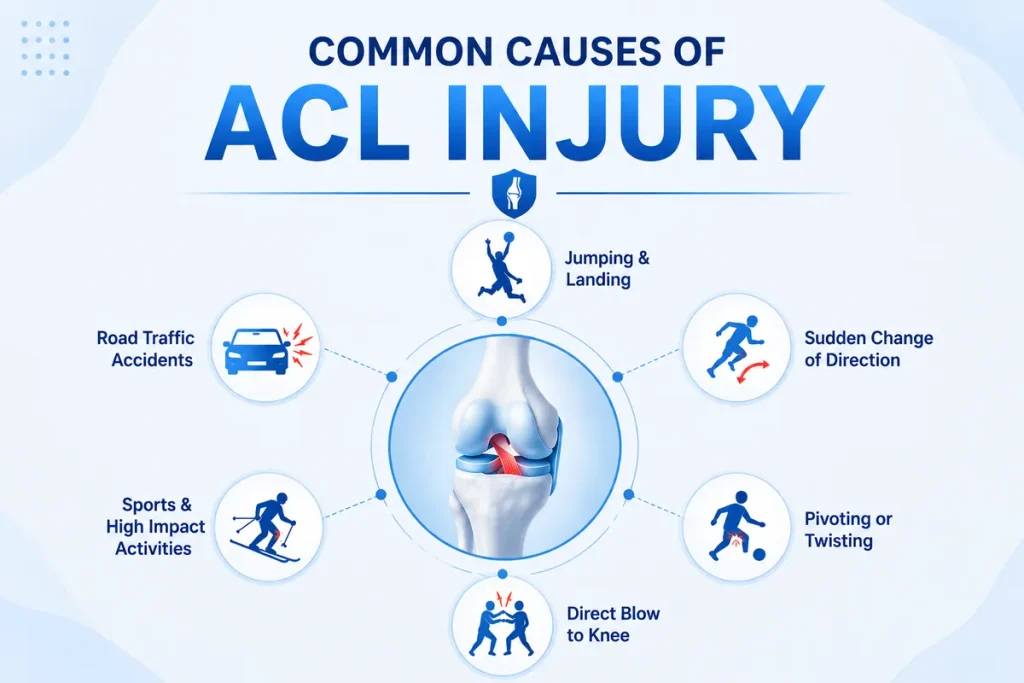
An ACL tear happens when the ligament stretches beyond its normal limit or breaks. The injury may be partial or complete. It often happens during football, basketball, soccer, tennis, skiing or other activities that involve sudden stops, jumping, landing or changes in direction.
An ACL injury can also happen after a fall, road accident or direct blow to the knee. Contact with another person is not always necessary. A sudden twist while the foot remains planted can place significant stress on the ligament.
A popping sound followed by swelling and knee instability should be assessed by a qualified healthcare professional.
What Does an ACL Tear Feel Like?
The symptoms can vary depending on the severity of the tear and whether the meniscus, cartilage or another ligament is also injured. Some people feel severe pain immediately. Others notice that the knee feels unstable after the initial pain settles.
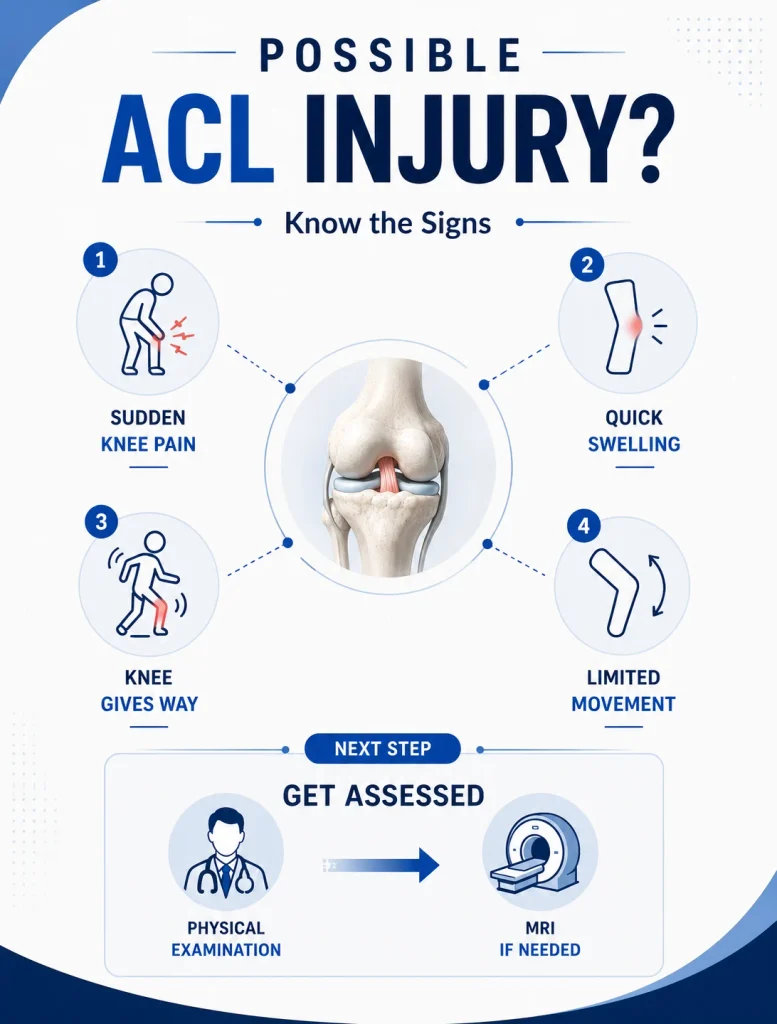
Common symptoms include:
- A popping sound or popping sensation inside the knee.
- Sudden pain after twisting, landing or changing direction.
- Swelling that develops within a few hours.
- Difficulty putting weight on the injured leg.
- A feeling that the knee is loose or unstable.
- The knee giving way while walking or turning.
- Reduced ability to bend or straighten the knee.
- Tenderness around the knee joint.
A popping sound alone does not prove that the ACL has torn. Similar symptoms may occur with a meniscus injury, kneecap problem, bone injury or another knee ligament injury.
For a detailed explanation of common symptoms, see the Mayo Clinic information on ACL injury symptoms.
Common Signs of an ACL Tear
1. A pop during the injury
Some people hear or feel a distinct pop at the moment the injury occurs. It may feel as if something has snapped inside the knee. However, not everyone with an ACL tear notices a pop.
The way the injury happened can provide useful information. ACL injuries commonly occur when someone lands awkwardly, stops suddenly, pivots or changes direction while the foot remains planted.
2. Fast knee swelling
Swelling may appear within a few hours of an ACL injury. In some cases, the knee becomes noticeably larger soon after the incident. Rapid swelling can occur when blood or fluid collects inside the joint.
Swelling is not specific to an ACL tear. It can also occur with fractures, cartilage injuries and other ligament damage. A doctor will consider the timing of the swelling along with the injury mechanism and other symptoms.
3. Knee instability
A torn ACL can make the knee feel unreliable. You may feel that it will buckle when you stand, walk downstairs, turn or place weight on the leg.
This feeling is often described as the knee “giving way.” It may happen once, or it may return during normal activities. Repeated instability should not be ignored because it can place additional stress on other knee structures.
ACL injuries can occur together with meniscus damage. If your doctor suspects more than one injury, you can read about ACL and meniscus injuries.
4. Pain and difficulty bearing weight
Pain may be severe at first, especially if the knee has suffered another injury. Some people can walk after an ACL tear, while others struggle to put weight on the leg.
Being able to walk does not rule out an ACL injury. Walking may become easier after the initial pain and swelling reduce, but the knee can still remain unstable.
5. Reduced movement
Swelling and pain may make it difficult to fully bend or straighten the knee. Some people also notice catching or locking. These symptoms may suggest damage to the meniscus or cartilage in addition to an ACL injury.
Do not force the knee through painful movement. Repeatedly testing the knee can increase discomfort and may worsen an associated injury.
Can You Walk With a Torn ACL?
Yes, some people can walk with a torn ACL, especially after the first few days when pain and swelling begin to settle. Walking ability does not show whether the ligament is intact.
You may still have an ACL tear if:
- The knee feels unstable during turns.
- The knee gives way on stairs.
- You cannot return to running or sports.
- Swelling returns after activity.
- The knee feels weak even though you can walk.
Avoid running, jumping, twisting and sports until a qualified clinician assesses your knee. Continuing these activities while the knee is unstable can lead to further damage.
How to Know If You Have an ACL Tear
You may suspect an ACL injury if the knee twisted during a sudden movement and was followed by a pop, quick swelling or instability. These signs can help you decide to seek medical care, but they cannot confirm the diagnosis at home.
When speaking with a doctor, try to remember:
- What movement caused the injury.
- Whether your foot was planted.
- Whether you heard or felt a pop.
- How quickly swelling appeared.
- Whether you could continue walking or playing.
- Whether the knee locked, caught or gave way.
- Whether you have injured the same knee before.
This information helps the clinician understand how the injury happened and decide which tests may be useful.
How Does a Doctor Diagnose an ACL Tear?
A doctor usually begins with your medical history and a physical examination. The examination may include checking swelling, tenderness, movement and knee stability. The injured knee may be compared with the other knee.
The doctor may perform specific tests, such as:
- Lachman test: Checks whether the shinbone moves too far forward compared with the thighbone.
- Anterior drawer test: Assesses forward movement of the shinbone while the knee is bent.
- Pivot shift test: Checks for rotational instability.
A physical examination may provide a strong indication of an ACL injury. Imaging can help confirm the diagnosis or identify other damage.
If swelling, instability or restricted movement continues after the injury, an assessment by an ACL expert in Indore can help identify the cause and guide the next step.
1. X ray
An X ray does not usually show the ACL because it is soft tissue. However, it may help rule out a fracture or identify certain bone injuries.
2. MRI scan
An MRI creates detailed images of soft tissues, including the ACL, meniscus, cartilage and other ligaments. It can show the extent of an ACL tear and help identify associated injuries.
Read more about ACL diagnosis and treatment from Mayo Clinic.
Not every knee injury needs an MRI immediately. Your clinician will decide based on the examination, symptoms and suspected injuries.
ACL Tear or Knee Sprain?
A knee sprain means that a ligament has been stretched or injured. An ACL tear is one specific type of ligament injury. The two terms are not interchangeable.
| Feature | Possible ACL tear | Mild knee sprain |
|---|---|---|
| Injury mechanism | Sudden pivot, landing or change of direction | Stretching or twisting force |
| Popping sensation | May occur | Less common, but possible |
| Swelling | Can develop quickly | May be mild or slower |
| Stability | Knee may give way | Usually remains more stable |
| Walking | May be difficult or unstable | Often possible with discomfort |
| Diagnosis | Physical exam and sometimes MRI | Usually based on examination |
These patterns are not a substitute for an examination. A person can have more than one injury at the same time.
What Should You Do After a Possible ACL Injury?
Stop the activity and protect the knee. Rest can reduce further strain, especially if the knee feels unstable.
Until you receive medical advice, you can:
- Limit weight on the injured leg if walking hurts.
- Apply a cold pack wrapped in cloth for about 20 minutes at a time.
- Use a light compression bandage if it feels comfortable.
- Raise the leg while resting.
- Use crutches only if a healthcare professional has advised you or you know how to use them safely.
Do not place ice directly on the skin. Do not wrap the knee so tightly that your foot becomes numb, cold or discoloured. Avoid returning to sport simply because the swelling has reduced.
For general home care information, see this guidance on ACL injury aftercare from MedlinePlus.
You can also learn more about post injury rehabilitation if your clinician recommends supervised exercises after the injury.
When Should You See a Doctor?
Arrange a medical assessment if you have knee swelling, instability, ongoing pain or difficulty walking after an injury. You should also seek care if the knee repeatedly gives way or if you cannot fully bend or straighten it.
Seek urgent medical help if:
- You cannot put any weight on the leg.
- The knee looks deformed.
- You have severe swelling or intense pain.
- The foot becomes numb, cold or changes colour.
- The knee locks and cannot move.
- You heard a pop and the knee quickly became swollen.
Prompt assessment can help identify an ACL tear and other injuries. It also helps you avoid movements that may cause more damage.
Does Every ACL Tear Need Surgery?
No. Treatment depends on the type of tear, knee stability, activity level, age, work demands and whether other knee structures are injured.
Some people may improve with physiotherapy, strength training and activity changes. Surgery may be considered for people who have ongoing instability, want to return to sports that involve pivoting, or have additional injuries that need treatment.
Persistent instability or difficulty returning to activity may lead to a discussion about ACL surgery. The treatment decision should follow an examination and a discussion with an orthopaedic specialist.