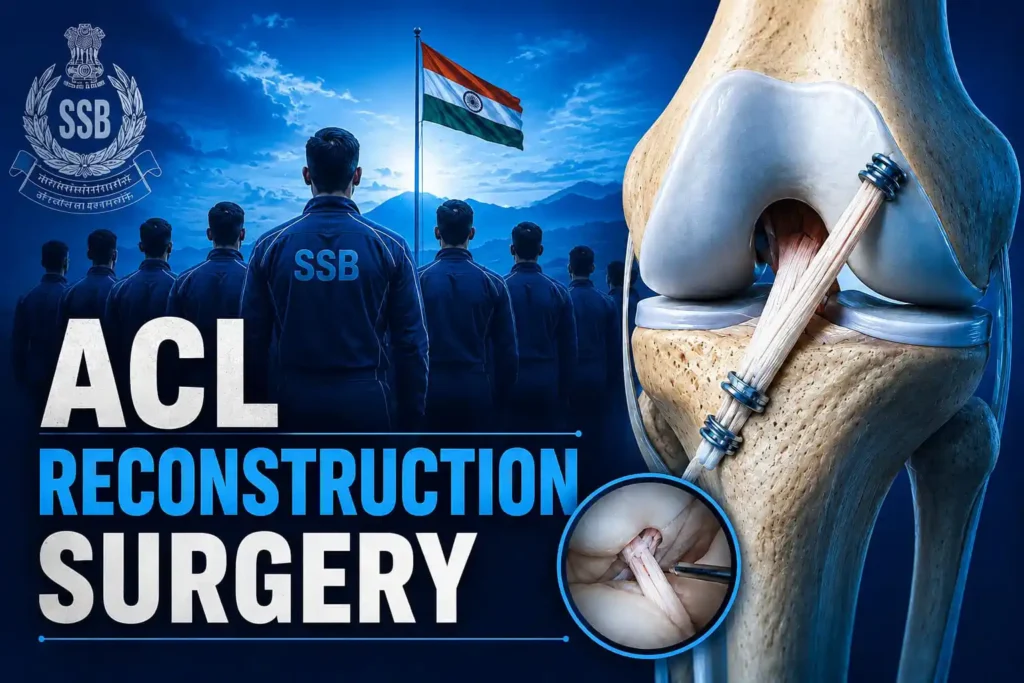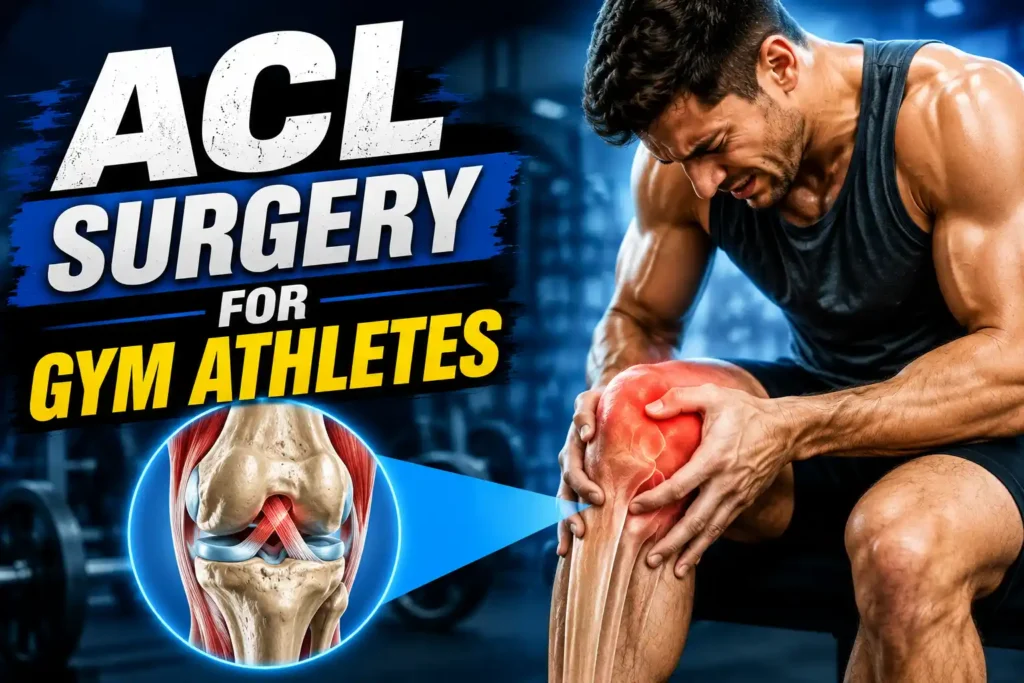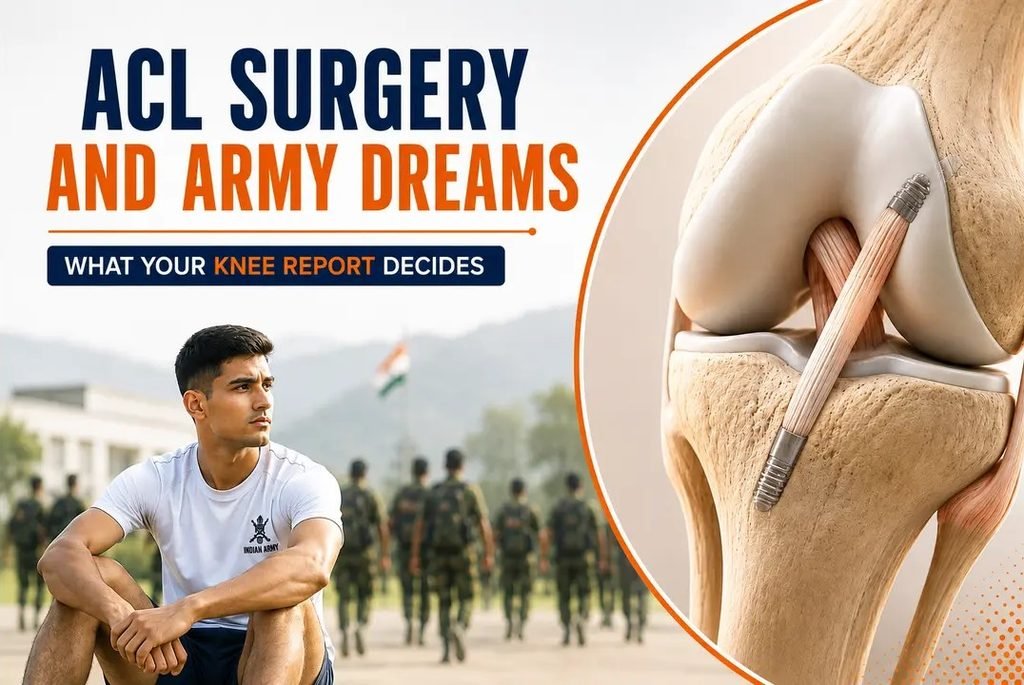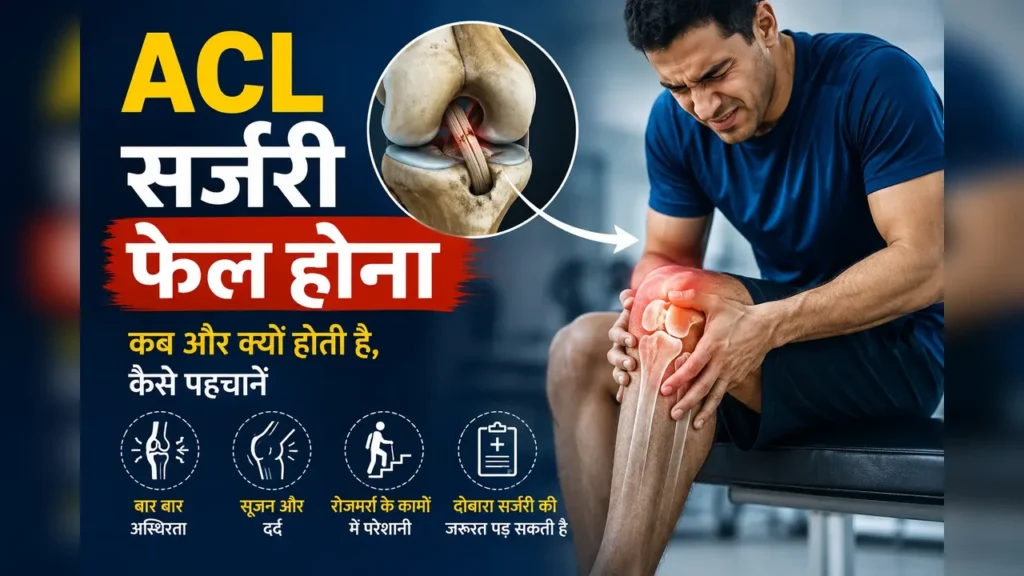
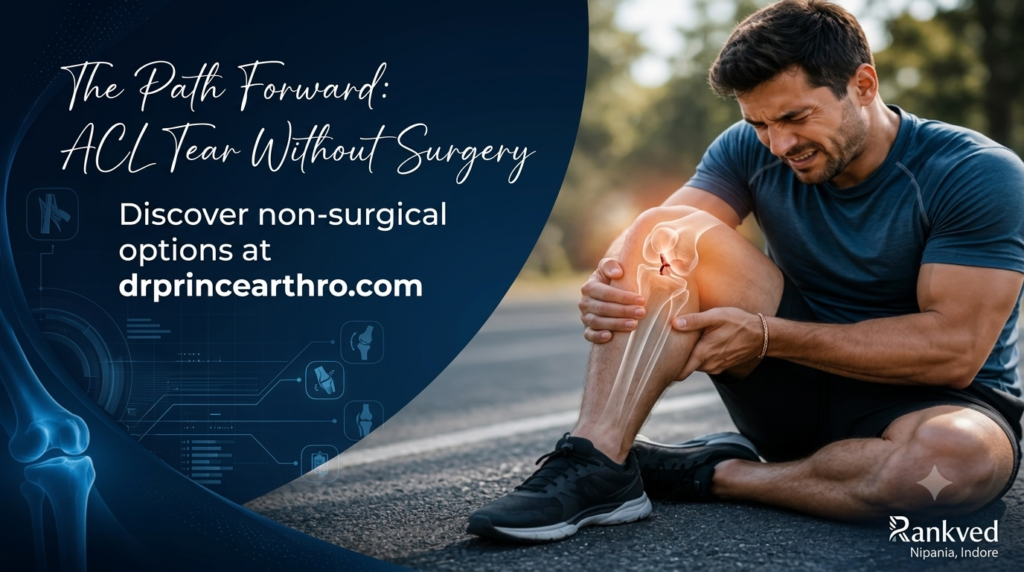
Many people assume a torn ACL always means surgery. That is not true. A significant number of ACL tears can be managed successfully without surgery, especially partial tears, stable knees, or in patients with lower activity demands. If you are exploring options for an ACL tear without surgery, this guide explains who qualifies, what the recovery process looks like, and how to make an informed decision with your orthopedic specialist in Indore.
Understanding ACL Tears and Non-Surgical Options
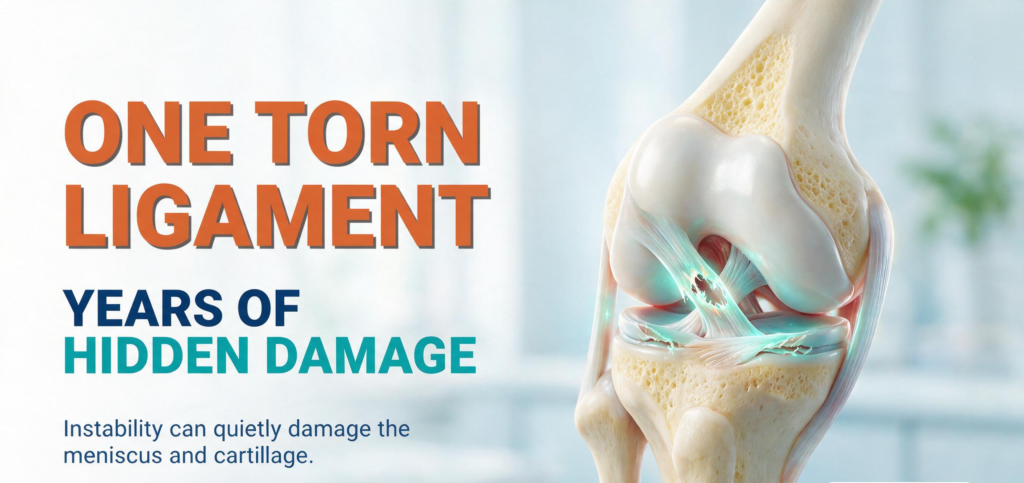
The anterior cruciate ligament (ACL) is one of the key stabilizers inside your knee joint. It prevents the shinbone from sliding forward and controls rotational stability during pivoting movements. When this ligament tears, patients often hear a pop, feel immediate pain, and notice swelling within hours.
Not every ACL tear requires surgical reconstruction. The decision depends on multiple factors: the grade of the tear (partial versus complete), knee stability after initial swelling subsides, associated injuries like meniscus tears, and your personal activity goals.
Who Can Consider ACL Tear Without Surgery?
Non-surgical management works best for specific patient profiles:
- Partial ACL tears where some ligament fibers remain intact
- Complete tears in patients with stable knees on clinical examination
- Low to moderate activity individuals who do not participate in pivoting sports like football, basketball, or tennis
- Older adults or those with medical conditions that increase surgical risk
- Patients willing to commit to structured rehabilitation over several months
If your knee feels stable during walking, climbing stairs, and light jogging after the initial injury phase, you may be a candidate for conservative treatment.
The Science Behind Healing an ACL Tear Without Surgery
Recent research has shifted how orthopedic specialists view ACL recovery. While a completely torn ACL rarely reconnects on its own in the traditional sense, functional recovery without surgery is absolutely achievable through neuromuscular training and dynamic stabilization.
How Non-Surgical Recovery Works
Your knee does not rely solely on the ACL for stability. The surrounding muscles, particularly the hamstrings and quadriceps, can be trained to provide dynamic support. This process is called neuromuscular re-education.
Key mechanisms include:
- Strengthening the hamstring muscles to prevent forward tibial translation
- Improving proprioception (your body’s sense of joint position)
- Enhancing balance and coordination to prevent instability episodes
- Building core and hip strength to control lower limb alignment
Studies show that patients who complete structured rehabilitation programs can return to daily activities and even some sports without ACL reconstruction. Success rates vary, with some research indicating 60 to 80 percent of carefully selected patients achieve satisfactory outcomes without surgery.
Initial Management: The First Weeks After Injury
The opening phase after an ACL tear focuses on protecting the knee while reducing pain and swelling. This period sets the foundation for everything that follows.
Week 0 to 2: Settling the Knee
Immediate priorities include:
- Rest and protection: Use crutches if walking is painful or if your knee feels unstable
- Ice therapy: Apply ice packs for 15 to 20 minutes every 2 to 3 hours to control swelling
- Compression: Wear an elastic bandage or compression sleeve
- Elevation: Keep your leg raised above heart level when resting
- Pain management: Over the counter anti inflammatory medications as advised by your doctor
- Gentle range of motion: Begin bending and straightening the knee within pain free limits
Terminal knee extension exercises are critical during this phase. You must regain the ability to fully straighten your knee to prevent long term stiffness and gait abnormalities.
Week 2 to 6: Restoring Movement and Activation
As swelling decreases, focus shifts to:
- Achieving full knee flexion and extension
- Activating the quadriceps muscle through isometric holds
- Beginning closed-chain exercises like mini squats and step-ups
- Stationary cycling with low resistance
- Gait retraining to walk without limping
A functional knee brace may be recommended during this phase to provide external stability while your muscles regain strength.
Structured Rehabilitation Protocol for ACL Tear Without Surgery
Recovery without surgery follows a phased approach similar to post-operative rehabilitation, but with different milestones and expectations.
Phase 1: Foundation Building (Weeks 0 to 6)
Goals: Reduce swelling, restore full range of motion, activate quadriceps and hamstrings
Exercises:
- Heel slides for knee flexion
- Prone hangs for knee extension
- Quad sets and straight leg raises
- Clamshells for hip abductor strength
- Calf raises
- Stationary bike (no resistance initially)
Phase 2: Strength Development (Weeks 6 to 12)
Goals: Build lower limb strength, improve single leg control, normalize walking pattern
Exercises:
- Bodyweight squats progressing to weighted squats
- Lunges in multiple directions
- Single leg balance exercises
- Hamstring curls with resistance bands
- Step ups and step downs
- Leg press machine (light to moderate weight)
Phase 3: Neuromuscular Control (Months 3 to 6)
Goals: Enhance proprioception, develop deceleration control, prepare for dynamic activities
Exercises:
- Balance board and wobble cushion training
- Single-leg squats with proper knee alignment
- Lateral shuffles and carioca drills
- Light jogging on flat surfaces
- Agility ladder work
- Plyometric introduction (box jumps, small hops)
Phase 4: Sport Specific Training (Months 6 to 9+)
Goals: Return to recreational activities, build confidence, test functional stability
Exercises:
- Cutting and pivoting drills at progressive speeds
- Sport-specific movement patterns
- Advanced plyometrics (depth jumps, bounding)
- Return to sport testing with objective criteria
Most patients require 6 to 12 months of dedicated rehabilitation before feeling confident in higher-demand activities. Patience and consistency matter more than speed.
Comparing Surgical and Non-Surgical ACL Treatment
Understanding the differences helps you make an informed choice aligned with your lifestyle and goals.
| Aspect | Non-Surgical ACL Management | ACL Reconstruction Surgery |
|---|---|---|
| Best for | Partial tears, stable knees, low impact activities | Complete tears, unstable knees, pivoting sports |
| Recovery timeline | 3 to 6 months for daily activities, 6 to 12 months for sports | 6 to 9 months for daily activities, 9 to 12 months for sports |
| Risks | Potential knee instability, secondary meniscus injury | Surgical complications, graft failure, infection |
| Cost | Lower (physical therapy and bracing) | Higher (surgery, hospital, rehabilitation) |
| Long-term outcomes | Good for selected patients, may limit high demand sports | Generally restores stability for pivoting activities |
| Re injury risk | Depends on activity modification and strength | Graft re tear possible, especially in young athletes |
Both pathways require commitment. Surgery does not guarantee a return to sport, and non-surgical management does not mean giving up an active life.
Advanced Non-Surgical Treatments and Adjuncts
Beyond traditional physical therapy, several emerging options may support ACL healing without surgery.
Functional Bracing
Custom fitted knee braces provide external stability during rehabilitation and activity. They are particularly useful for patients who experience occasional instability episodes but wish to avoid surgery.
Platelet-Rich Plasma (PRP) Injections
PRP therapy involves injecting concentrated growth factors from your own blood into the injured area. Some studies suggest PRP may enhance tissue healing and reduce inflammation, though evidence for ACL specifically remains mixed.
Cross-Bracing Protocol
A newer approach involves immobilizing the knee at 90 degrees of flexion for several weeks using a specialized brace. Early research indicates this may promote ligament healing in some complete tears, though long-term data is still emerging.
Activity Modification
Changing how you move and which activities you pursue can protect your knee long-term. This might mean switching from basketball to cycling, or from tennis to swimming.
When Surgery Becomes Necessary
Non surgical management is not appropriate for everyone. Certain situations strongly favor ACL reconstruction:
- Young athletes who want to return to pivoting sports like football, cricket, or badminton
- Complete ACL tears with persistent knee instability despite rehabilitation
- Combined injuries involving the meniscus or other ligaments
- Patients who experience repeated giving way episodes during daily activities
- Individuals whose occupation requires kneeling, climbing, or heavy physical work
If you try conservative treatment for 8 to 12 weeks and your knee remains unstable or limits your quality of life, surgical consultation becomes reasonable.
Recovery Timeline: What to Expect
Recovery varies significantly between individuals. Age, fitness level, tear severity, and adherence to rehabilitation all influence outcomes.
Short Term Expectations (0 to 3 Months)
- Swelling and pain decrease substantially
- Walking without crutches becomes comfortable
- Range of motion approaches normal
- Basic strengthening exercises feel manageable
Medium-Term Expectations (3 to 6 Months)
- Jogging and light aerobic exercise become possible
- Single leg strength improves noticeably
- Confidence in knee stability increases
- Most daily activities feel normal
Long-Term Expectations (6 to 12+ Months)
- Return to recreational sports may be achievable
- Advanced strengthening and plyometrics feel safe
- Full functional recovery for non-pivoting activities
- Ongoing maintenance exercises prevent deconditioning
Recovery without surgery generally takes 3 to 6 months to return to daily activity, and 6 to 12 months before low-impact exercise feels dependable. High-demand pivoting sports may remain challenging without reconstruction.
Making the Right Choice for Your Knee
Deciding between surgery and non-surgical management requires honest self-assessment and professional guidance.
Questions to Ask Yourself
- What activities do I want to return to?
- Am I willing to modify my lifestyle if needed?
- Can I commit to 6 to 12 months of structured rehabilitation?
- Does my knee feel stable during walking and light activity?
- What are my long-term health and fitness goals?
Working With Your Orthopedic Specialist
A thorough evaluation includes physical examination, MRI imaging, and discussion of your personal goals. Your doctor will assess knee stability, check for associated injuries, and help you understand realistic outcomes for both pathways.
For patients in Indore seeking expert evaluation, specialized orthopedic care is available to guide your decision. Understanding your options for ACL surgery helps you weigh surgical versus non-surgical pathways with clarity.
Post-Injury Rehabilitation: Your Path to Recovery
Whether you choose surgery or not, rehabilitation forms the cornerstone of ACL recovery. A structured program addresses strength, flexibility, balance, and sport-specific demands.
Dedicated post-injury rehabilitation ensures you progress safely through each phase, minimizing re-injury risk and maximizing functional outcomes. Working with experienced physiotherapists who understand ACL injuries accelerates recovery and builds confidence.
Frequently Asked Questions About ACL Tear Without Surgery
1: Can a completely torn ACL heal without surgery?
A fully ruptured ACL rarely reconnects anatomically without surgery. However, many patients achieve functional stability through intensive rehabilitation that strengthens surrounding muscles and improves neuromuscular control. Success depends on activity level, knee stability, and commitment to therapy.
2: How long does it take to recover from an ACL tear without surgery?
Recovery without surgery typically takes 3 to 6 months for return to daily activities and 6 to 12 months for recreational sports. Full functional recovery varies by individual, with some patients requiring longer rehabilitation for high-demand activities.
3: Who is the best candidate for non-surgical ACL treatment?
Ideal candidates include patients with partial ACL tears, stable knees on examination, low to moderate activity demands, and those who do not participate in pivoting sports. Older adults and individuals with medical conditions increasing surgical risk also benefit from conservative management.
4: What exercises are best for ACL tear without surgery?
Effective exercises include terminal knee extensions, clamshells, step-ups, single-leg squats, hamstring curls, balance board training, and progressive plyometrics. A phased rehabilitation program under professional guidance ensures safe progression and optimal outcomes.
5: Can I return to sports after an ACL tear without surgery?
Many patients return to non-pivoting sports like cycling, swimming, and straight-line running without surgery. Return to pivoting sports like football or basketball is less predictable and depends on knee stability, strength, and individual response to rehabilitation.
6: What are the risks of not having ACL surgery?
Potential risks include persistent knee instability, increased risk of meniscus tears, cartilage damage over time, and activity limitations. However, carefully selected patients who complete rehabilitation and modify activities can avoid these complications.
Final Thoughts on Managing ACL Tear Without Surgery
An ACL tear without surgery is a realistic and successful treatment path for many patients. The key lies in proper patient selection, commitment to structured rehabilitation, and realistic expectations about activity modification.
If you are experiencing knee instability or pain after an ACL injury, consult an orthopedic specialist in Indore to discuss your options. With the right approach, you can regain function, return to meaningful activities, and protect your knee long-term without surgical intervention.
For personalized evaluation and treatment planning, expert orthopedic care is available to help you navigate your recovery journey with confidence.