
The moment your knee gives way, the instinct is to figure out what will fix it fastest. But in the first few weeks after a tear, avoiding the wrong moves matters just as much as doing the right ones. A lot of the damage that turns a manageable ACL injury into a complicated one happens after the original injury, from decisions made with good intentions but bad information.
Here are 10 mistakes to avoid after an ACL injury, and why each one sets recovery back more than people expect.
1. Pushing Through the Instability
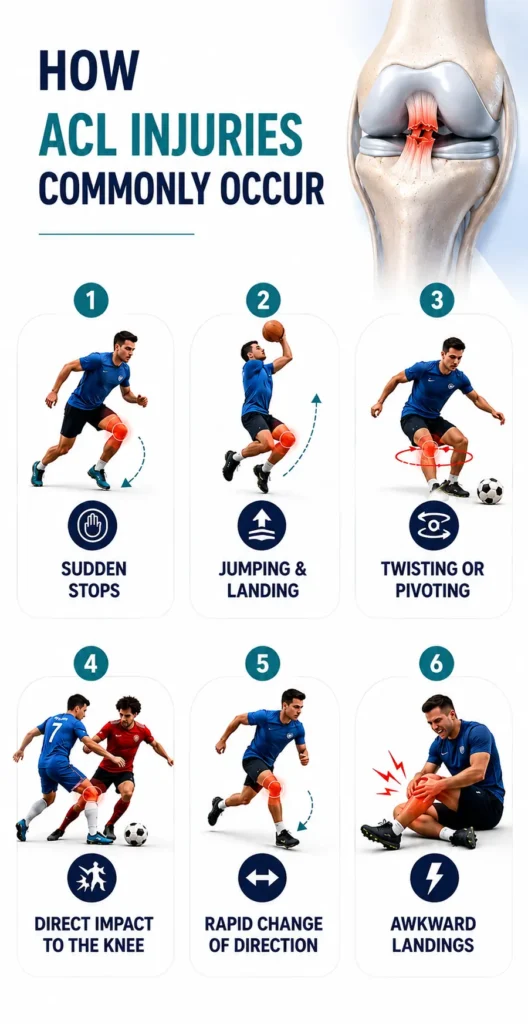
Right after a tear, the knee often feels stable enough to walk on, especially once the initial swelling calms down. That stability is misleading. The ligament that normally stops the shinbone from sliding forward is torn, so the knee can give way without warning during an ordinary step, a stair, or a turn.
Testing the knee to see if it “still works” is one of the fastest ways to turn a partial tear into a complete one. Each episode of the knee buckling also risks damaging the meniscus and the cartilage underneath it, which is why doctors ask patients to avoid twisting or pivoting movements entirely until the knee has been properly assessed.
2. Staying Completely Off the Leg for Weeks
Rest matters early on, but total immobilisation for an extended stretch causes its own problems. The thigh muscles around the knee, particularly the quadriceps, weaken quickly with disuse. Too much rest after an ACL injury often leaves patients with a weaker, stiffer knee than the injury itself would have caused, which makes the eventual rehabilitation phase longer and harder.
Gentle, non-weight-bearing movement, like ankle pumps and quad sets, usually starts within the first week under a physiotherapist’s guidance, well before the knee is ready for anything more demanding.
3. Skipping a Proper Diagnosis
Managing symptoms at home for weeks without ever getting the knee examined is one of the most common mistakes to avoid after an ACL injury. Pain and swelling settle down on their own to some extent regardless of what caused them, so a calmer knee does not mean the ligament has healed or that surgery is no longer necessary.
| What People Assume | Why It Is Wrong |
|---|---|
| Less pain means the tear is healing | Pain settling down reflects reduced inflammation, not ligament repair |
| No swelling means it is not serious | Some complete tears cause surprisingly little swelling |
| Walking normally means the knee is stable | Straight-line walking uses very little of what the ACL controls |
A ligament injury doctor can confirm the grade of the tear and rule out damage to the meniscus or other ligaments, which changes the entire treatment plan.
4. Skipping the Brace Because the Knee Feels Fine
A hinged knee brace limits the exact movement the torn ligament can no longer control. Skipping it on days the knee feels stable is a common mistake, because stability can disappear the moment the knee twists unexpectedly, on a wet floor, an uneven step, or a sudden turn while carrying something.
5. Ignoring Ongoing Swelling
Ignoring persistent swelling is another common mistake to avoid after an ACL injury. Some swelling in the first few days is expected. Swelling that keeps returning weeks later, especially after normal daily activity, usually means the joint is still irritated or unstable. Ignoring this pattern and continuing with regular activity, rather than getting it checked, often leads to further wear on the cartilage inside the joint.
6. Basing Recovery Decisions on How the Knee “Feels”
Feeling ready and being ready are not the same thing after an ACL injury. Muscle strength, balance, and joint stability can lag well behind how confident a knee feels, particularly once pain has faded. This is one of the most common mistakes to avoid after an ACL injury: returning to running, sport, or physically demanding work based purely on subjective feel, without any objective strength or stability testing first.
A structured clinic based physiotherapy program typically includes specific milestones, strength benchmarks, and functional tests before clearing a return to higher demand activity, precisely because feel alone is not a reliable measure.
7. Relying on Painkillers to Push Through Activity
Masking symptoms instead of addressing them is a subtle but important mistake to avoid after an ACL injury. Using medication to manage pain during recovery is normal and appropriate when guided by a doctor. Using it specifically to mask pain so you can keep doing an activity the knee is not ready for is a different situation entirely, since it removes the body’s warning signal without addressing the underlying instability.
8. Comparing Your Timeline to Someone Else’s
Recovery speed depends on the grade of the tear, whether surgery was involved, age, baseline strength, and how consistently rehab exercises are followed. Reading that another person returned to sport in four months and expecting the same outcome, regardless of how different the injuries are, often leads to rushing stages of knee rehab exercises that were designed to be gradual for a reason.
9. Stopping Rehab Exercises Too Early Once Pain Fades
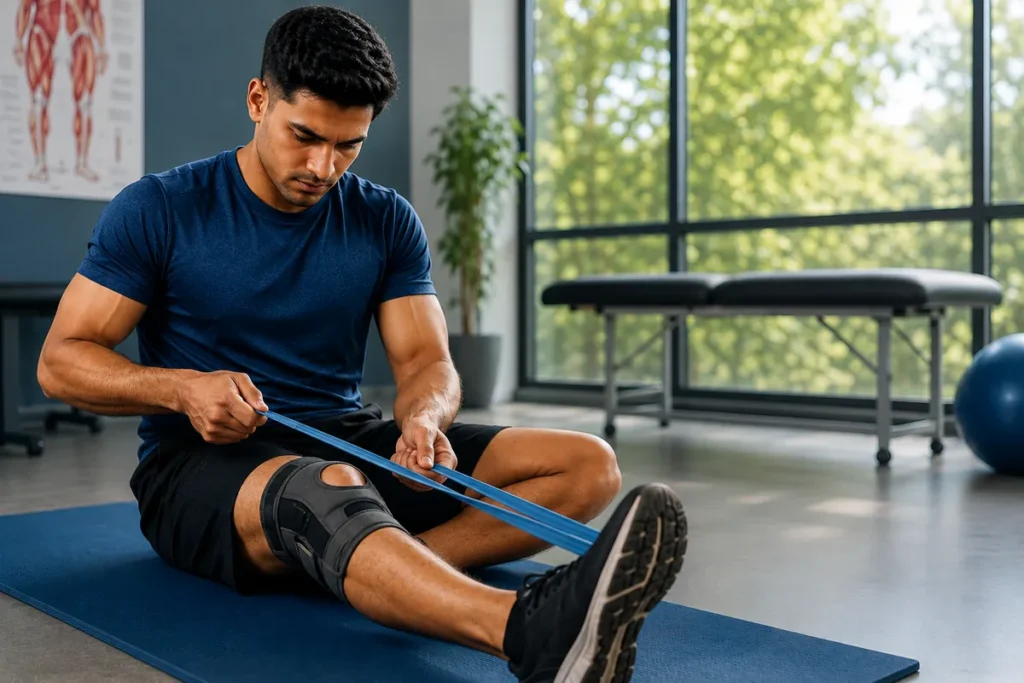
Pain easing off is often mistaken for the knee being fully recovered, when it usually just means the acute inflammation has settled. Strength and stability take much longer to rebuild than pain takes to fade, so stopping rehab exercises at this stage is a common way people end up with a knee that feels fine at rest but still gives way under real activity.
10. Assuming Surgery Is Always Necessary, or Never Necessary
Both extremes cause problems. Assuming surgery is unavoidable can lead to rushing into an operation before trying a structured non-surgical program that might have worked. Assuming it is never needed can mean years of repeated instability episodes that quietly damage the knee. According to Mayo Clinic, the right approach depends heavily on activity level, age, and the extent of the tear, which is why this decision works best with a specialist’s input rather than a general assumption either way.
The Bottom Line
Most of these 10 mistakes to avoid after an ACL injury come down to one theme: trusting how the knee feels over what has actually been diagnosed and confirmed. Protecting the joint, getting a proper assessment early, and following a structured plan rather than guessing gives the knee the best chance of a smooth recovery, whichever treatment path it ends up needing.