Arthroscopic surgery is one of the most remarkable advancements in modern orthopedic care. It allows doctors to diagnose and treat joint problems using a minimally invasive approach meaning smaller cuts, faster recovery, and less pain compared to traditional open surgery. In this article, we’ll break down what arthroscopy is, how it works, what conditions it treats, and what recovery looks like.
What Is Arthroscopic Surgery?
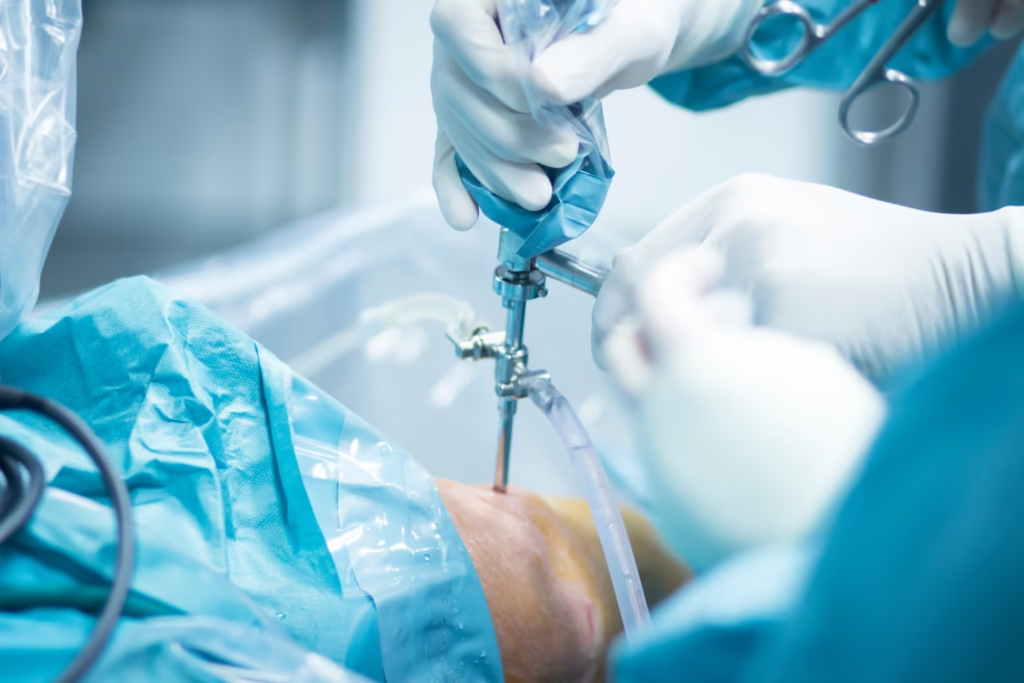
Arthroscopy (derived from the Greek words “arthro,” meaning joint, and “skopein,” meaning to look) literally means “to look inside the joint.” It’s a surgical technique where an orthopedic surgeon inserts a tiny camera called an arthroscope through a small incision to view, diagnose, and even repair the inside of a joint.
The arthroscope projects images on a monitor, allowing the surgeon to see detailed visuals of the joint’s structure, including cartilage, ligaments, and tendons. This makes it easier to detect damage or disease without the need for large incisions.
Why Arthroscopy Is Done
Arthroscopic surgery is used to both diagnose and treat various joint conditions. It is commonly performed on the knee, shoulder, hip, ankle, wrist, and elbow.
Common conditions treated with arthroscopy include:
- Knee problems: Torn meniscus, ACL or PCL tears, loose bone fragments, inflamed joint lining.
- Shoulder issues: Rotator cuff tears, shoulder impingement, labral tears, and shoulder instability.
- Hip problems: Labral tears, femoroacetabular impingement (FAI), and cartilage damage.
- Wrist or elbow pain: Carpal tunnel release, loose bodies, or tennis elbow repair.
“Arthroscopy helps surgeons treat the root cause of joint pain—without putting patients through the trauma of open surgery.”
How Arthroscopic Surgery Works
The procedure typically follows these steps:
- Anesthesia: Depending on the joint and extent of repair, local, regional, or general anesthesia is given.
- Small incisions: One or more small cuts (about the size of a buttonhole) are made around the affected joint.
- Inserting the arthroscope: A tiny camera is inserted to transmit live images to a monitor.
- Diagnosis or treatment: Specialized miniature instruments are used to trim, repair, or remove damaged tissues.
- Closing the incision: Once the procedure is complete, incisions are closed with sutures or adhesive strips and covered with a sterile dressing.
The entire process may take anywhere from 30 minutes to 2 hours, depending on the complexity of the joint and the repair needed.
Benefits of Arthroscopic Surgery
Compared to traditional open surgery, arthroscopy offers several key benefits:
- Smaller incisions and minimal scarring
- Less postoperative pain
- Faster recovery and rehabilitation
- Lower risk of infection
- Reduced hospital stay — often performed as an outpatient procedure
“Most patients walk out of the hospital the same day — and return to work or sports within weeks, not months.”
Risks and Complications
Like any surgical procedure, arthroscopy carries some risks, although they are rare. Possible complications include:
- Infection at the incision site
- Blood clots (deep vein thrombosis)
- Bleeding or swelling inside the joint
- Stiffness or temporary nerve injury
Choosing an experienced orthopedic surgeon significantly reduces the likelihood of complications and ensures the best outcomes.
Recovery After Arthroscopic Surgery
Recovery depends on the type of joint treated and the extent of the repair. Most patients can return home the same day. Initially, mild swelling and discomfort are expected, which improve over a few days with rest, ice, and pain medication.
Physical therapy is a crucial part of the recovery process. A customized rehabilitation plan helps restore joint movement, strength, and flexibility. In minor cases, full recovery may take a few weeks, while complex repairs may require a few months.
How to Prepare for Arthroscopic Surgery
Before the procedure, your doctor may advise:
- Getting routine blood tests or imaging scans
- Avoiding food and drink for several hours before surgery
- Stopping blood-thinning medications temporarily
- Arranging for someone to drive you home after surgery
Life After Arthroscopy
Most patients experience significant improvement in joint pain and mobility after arthroscopy. However, long-term success depends on following the doctor’s recovery plan and maintaining joint health through proper exercise, posture, and weight management.
In cases like severe arthritis, where the joint surfaces are extensively damaged, arthroscopy might not be sufficient. In such cases, joint replacement surgery may be recommended as the next step.
When to Consult a Specialist
If you’re struggling with persistent joint pain, stiffness, or limited motion that doesn’t improve with rest, physiotherapy, or medications, it’s time to see an orthopedic specialist. Early diagnosis and treatment can prevent long-term damage and improve quality of life.
“Don’t ignore joint pain—it’s your body’s way of saying something needs attention.”
Conclusion
Arthroscopic surgery has revolutionized the way joint problems are diagnosed and treated. Its minimally invasive nature means patients experience less pain, smaller scars, and quicker recovery. Whether it’s a torn ligament, cartilage damage, or unexplained joint pain, arthroscopy offers a safe and effective solution that gets you back on your feet faster.